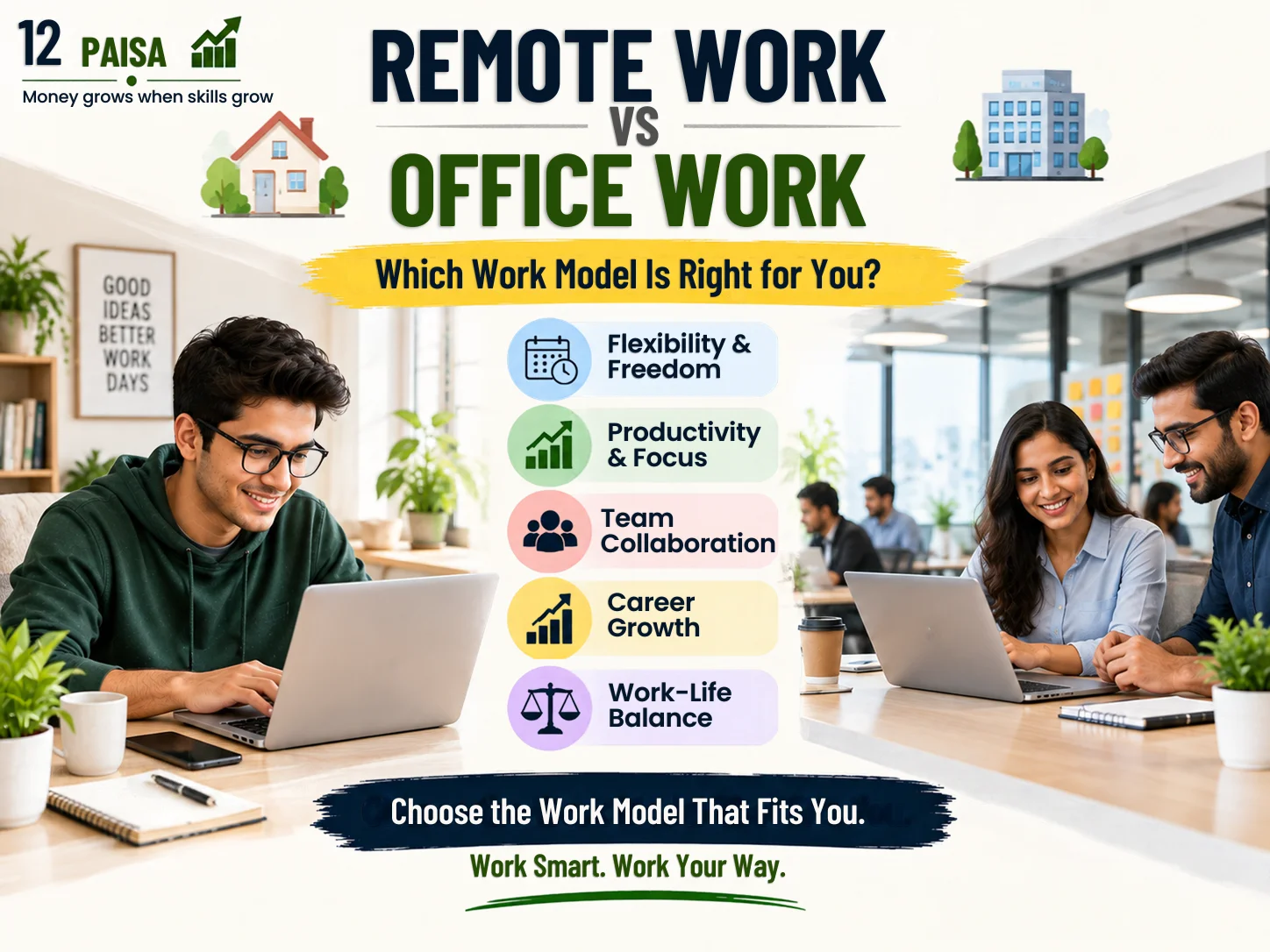
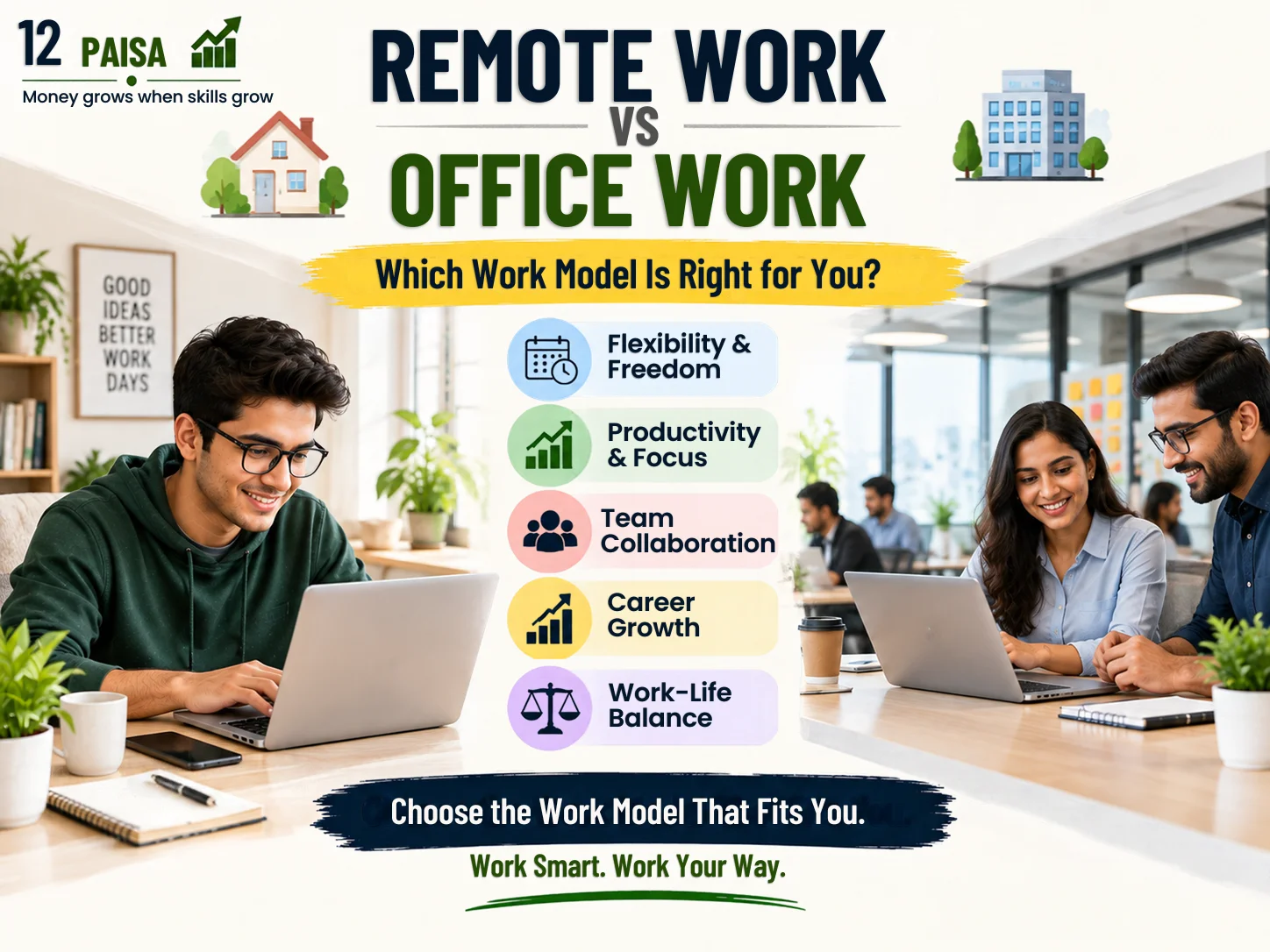
Remote Work vs Office Work. Remote work employees को location flexibility और greater autonomy दे सकता है, जबकि office work face-to-face collaboration, direct communication और structured work environment provide कर सकता है. दोनों models के benefits और challenges हैं. सही choice job role, employee preferences, team requirements, company culture और work की nature पर depend करती है.
इस लेख का प्राथमिक फोकस Remote Work vs Office Work की सीधी तुलना पर रहेगा—किस मॉडल में flexibility, productivity, communication, collaboration, cost, career visibility और work-life boundaries कैसी हो सकती हैं। साथ ही, दोनों work models की practical comparison और किस situation में कौन-सा model बेहतर हो सकता है, इसे आसान उदाहरणों के साथ समझाया गया है।
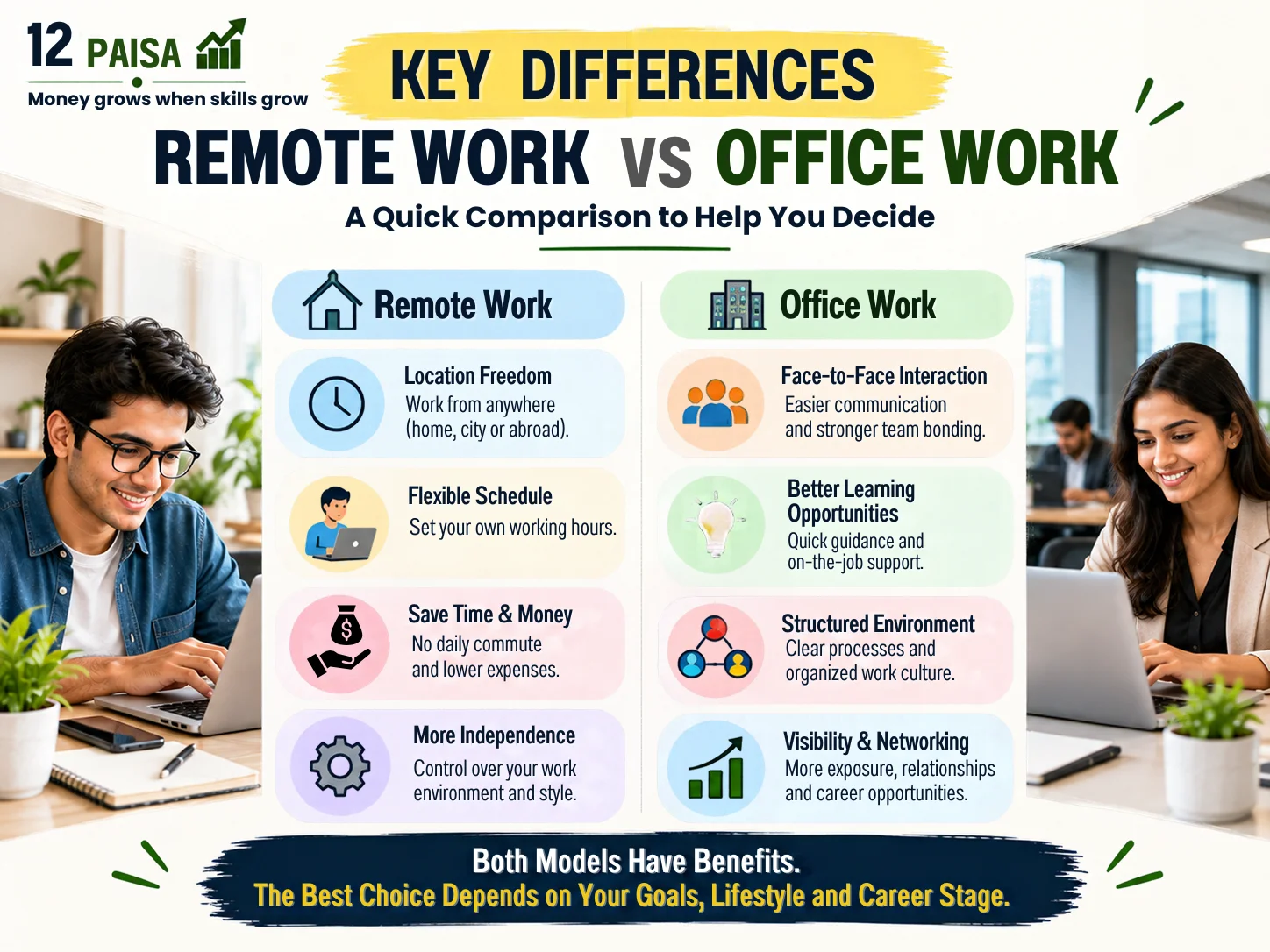
Remote work may offer flexibility, focused work and lower commuting demands, while office work can support face-to-face collaboration, informal learning and networking.
कुछ साल पहले तक अधिकांश professionals के लिए एक simple assumption था:
काम करना है तो office जाना है।
लेकिन remote work के बढ़ते adoption ने इस assumption को बदल दिया।
अब एक professional के सामने कई possibilities हो सकती हैं:
- Office Work
- Remote Work
- Hybrid Work
लेकिन सवाल सिर्फ यह नहीं है कि:
“घर से काम करना बेहतर है या office से?”
असल सवाल है:
“किस व्यक्ति, किस job और किस situation के लिए कौन–सा work model ज्यादा suitable है?”
क्योंकि remote और office work दोनों के अपने advantages और limitations हैं।
Remote work flexibility दे सकता है, लेकिन isolation और communication challenges भी हो सकते हैं।
Office work collaboration और face-to-face interaction आसान बना सकता है, लेकिन commute और fixed schedules की limitation हो सकती है।
इसलिए इस comparison को:
Remote vs Office = Good vs Bad
के रूप में देखना सही नहीं होगा।
Better approach है:
Right Work Model = Right Person + Right Role + Right Work Requirements
Quick Summary
- Remote work में employee primarily अपने home या दूसरे suitable location से काम करता है।
- Office work में employee निर्धारित workplace से काम करता है।
- Remote work flexibility और commute reduction जैसे benefits दे सकता है।
- Office work face-to-face communication और spontaneous collaboration को आसान बना सकता है।
- Remote work में self-discipline और digital communication ज्यादा important हो सकते हैं।
- Office work में fixed structure और physical presence useful हो सकती है।
- हर job remote work के लिए suitable नहीं होती।
- Best work model का decision role और requirements के आधार पर होना चाहिए।
What Is Remote Work?
Remote Work का मतलब है कि employee अपना काम traditional office location के बाहर से करता है।
यह work हो सकता है:
- Home से
- Co-working space से
- किसी दूसरे city से
- या company-approved दूसरी location से
Remote work में employees को अपने work के लिए:
- Internet
- Digital Tools और
- Online Communication
पर depend करना पड़ सकता है।
Remote work is a work arrangement where employees perform their job outside the traditional office, usually using digital communication and collaboration tools.
What Is Office Work?
Office Work में employee company द्वारा निर्धारित physical workplace से काम करता है।
Employee:
- Office आता है
- Team members के साथ physically interact करता है
- Meetings attend करता है
- Workplace resources use करता है
- निर्धारित work environment में tasks complete करता है
Office work is a traditional work arrangement where employees perform their duties from a designated physical workplace.
What Is Hybrid Work?
Remote और office के बीच एक तीसरा model भी है Hybrid Work
इसमें employee कुछ दिन Offic और कुछ दिन Remote से काम कर सकता है।
Example:
Monday → Office
Tuesday → Remote
Wednesday → Office
Thursday → Remote
Friday → Office
लेकिन hybrid schedule company और role के अनुसार अलग हो सकता है।
Remote vs Office vs Hybrid
| Feature | Remote Work | Office Work | Hybrid Work |
| Main Location | Outside office | Physical office | Office + Remote |
| Flexibility | Generally higher | Generally lower | Moderate to high |
| Commute | Usually reduced | Required | Some days required |
| Face-to-Face Interaction | Limited | High | Moderate |
| Self-Management | High importance | Moderate | High |
| Digital Communication | Essential | Useful | Essential |
| Physical Collaboration | Limited | Easier | Planned |
| Schedule | Can be flexible in some roles | Usually structured | Mixed |
| Suitable For | Remote-compatible roles | Presence-based roles | Organizations balancing both |
Remote Work: Major Advantages
1. Less Commuting
Remote employee को daily office commute नहीं करना पड़ सकता।
इससे Travel Time और कुछ cases में Travel Cost कम हो सकता है।
मान लीजिए employee रोज़ 1.5 घंटे commute करता है।
Five-day workweek में: 1.5 × 5 = 7.5 hours हर week travel में जा सकते हैं।
Remote work में यह time potentially बच सकता है।
लेकिन saved time automatically productive work में convert नहीं होता।
Employee को उसे effectively use भी करना होता है।
2. Greater Location Flexibility
Remote work employee को traditional office location से बाहर काम करने की flexibility दे सकता है।
यह खासकर उन jobs में useful हो सकता है जिनमें:
Physical Presence की आवश्यकता कम है।
उदाहरण:
- Software Development
- Content Writing
- Digital Marketing
- Graphic Design
- Consulting
- कुछ Customer Support Roles
हालांकि actual remote eligibility employer और role पर depend करती है।
3. Flexible Work Environment
Remote employee अपने workspace को अपनी जरूरत के अनुसार arrange कर सकता है।
उदाहरण:
- Quiet Room
- Home Office
- Co-working Space
कुछ professionals के लिए personalized environment concentration में मदद कर सकता है।
लेकिन home environment में:
- Family Responsibilities
- Noise
- Distractions
भी हो सकती हैं।
इसलिए remote work का benefit हर व्यक्ति के लिए same नहीं होता।
4. Potentially Better Schedule Control
कुछ remote roles में employees को अपने workday को थोड़ा ज्यादा flexibly manage करने की opportunity मिल सकती है।
उदाहरण:
अगर employee को morning में ज्यादा focus मिलता है, तो वह deep work उस period में schedule कर सकता है—यदि company और role इसकी अनुमति देते हैं।
लेकिन:
Remote ≠ Automatically Flexible
कई remote jobs में working hours fixed हो सकते हैं।
5. More Control Over the Work Environment
Office में:
- Noise
- Meetings
- Interruptions
का level employee के control में कम हो सकता है।
Remote environment में employee कुछ distractions control कर सकता है।
लेकिन दूसरी तरफ Home Distractions भी सामने आ सकती हैं।
इसलिए remote work का real advantage Control हो सकता है, लेकिन इसका effective use self-management मांगता है।
Remote Work: Major Challenges
1. Isolation
Remote employee को रोज़ colleagues से face-to-face interaction नहीं मिल सकता।
इससे कुछ people को Social Disconnection या Team Isolation feel हो सकता है।
हर employee का experience अलग हो सकता है।
2. Communication Can Become More Deliberate
Office में employee simply desk के पास जाकर पूछ सकता है:
“एक मिनट, यह task कैसे करना है?”
Remote environment में शायद Message या Call करना पड़े।
इसलिए remote work में communication को:
Clear, Concise, और Documented रखना useful हो सकता है।
3. Work-Life Boundaries
Remote work में Home और Workplace एक ही location हो सकती है।
इससे boundary blur हो सकती है।
Example:
Laptop बंद करने के बाद भी Email या Work Messages आ सकते हैं।
इसलिए remote employee को:
Work Hours, Breaks, और End-of-Day Routine जैसी boundaries create करनी पड़ सकती हैं।
4. Self-Discipline Required
Office में environment naturally work-oriented होता है।
Home में:
- TV
- Phone
- Family
- Household Tasks
जैसे distractions हो सकते हैं।
इसलिए remote employee को खुद:
Priority, Time, और Attention manage करना पड़ सकता है।
Office Work: Major Advantages
1. Face-to-Face Communication
Office में employee directly colleagues से interact कर सकता है।
यह useful हो सकता है:
- Complex discussions
- Brainstorming
- Relationship building
- Mentoring
- Team coordination
के लिए।
2. Easier Spontaneous Collaboration
Office में कई useful conversations formally scheduled नहीं होतीं।
Example:
एक colleague casually पूछता है “हम इस problem को दूसरे तरीके से solve कर सकते हैं।”
और अचानक New Idea मिल सकता है। इसे Spontaneous Collaboration कहा जा सकता है।
Remote environment में ऐसी interactions intentionally create करनी पड़ सकती हैं।
3. Clear Work Environment
Office Work के लिए designated environment provide करता है।
Employee घर की responsibilities से comparatively अलग space में रह सकता है।
कुछ people के लिए यह Focus और Routine maintain करने में मदद कर सकता है।
4. Easier Access to Colleagues
अगर manager या colleague nearby है, तो quick discussion आसान हो सकती है।
Example:
Question
↓
Face-to-Face Discussion
↓
Immediate Clarification
Remote work में यही process:
Message
↓
Wait
↓
Call
हो सकता है।
हालांकि अच्छी remote communication systems इस difference को काफी reduce कर सकती हैं।
5. Learning Through Observation
Office में नए employee को experienced colleagues को observe करके सीखने के opportunities मिल सकती हैं।
उदाहरण:
- Meeting behaviour
- Client interaction
- Team communication
- Problem solving
- Workplace etiquette
इसे Informal Learning कहा जा सकता है।
Remote workplace में informal learning को:
- Mentorship
- Shadowing Calls
- Recorded Knowledge
के जरिए intentionally create करना पड़ सकता है।
Office Work: Major Challenges
1. Commute
Daily travel Time, Money और Energy consume कर सकता है।
Long commute employee के workday को significantly extend कर सकता है।
2. Fixed Structure
Office schedules generally अधिक structured हो सकते हैं।
कुछ employees के लिए यह useful है।
लेकिन कुछ लोग Flexible Working Style prefer कर सकते हैं।
इसलिए fixed schedule:
Benefit भी हो सकता है और Limitation भी।
3. Workplace Distractions
Office में distractions भी हो सकती हैं:
- Unplanned conversations
- Meetings
- Noise
- Interruptions
- Open-office activity
इसलिए office में होना automatically high productivity guarantee नहीं करता।
4. Less Location Flexibility
अगर job physical office presence मांगती है, तो employee को:
Specific Location तक regularly travel करना पड़ सकता है।
इससे employee की location freedom कम हो सकती है।
5. Work-Life Separation Can Still Be Difficult
Office work में home और workplace physically अलग होते हैं।
लेकिन:
- Long Commute
- Overtime
- After-Hours Emails या
- Work Pressure
फिर भी work-life balance को affect कर सकते हैं।
इसलिए:
Office Work ≠ Automatically Better Work-Life Balance
Remote Work vs Office Work: First Comparison
| Factor | Remote Work | Office Work |
| Commute | Low/None | Regular |
| Location Flexibility | Higher | Lower |
| Face-to-Face Interaction | Lower | Higher |
| Self-Discipline | High | Moderate |
| Informal Interaction | Lower | Higher |
| Home Distractions | Possible | Usually lower |
| Office Distractions | None | Possible |
| Work Environment Control | Higher | Lower |
| Team Presence | Virtual | Physical |
| Social Interaction | Intentional | More Natural |
| Schedule Flexibility | Role-dependent | Usually more structured |
| Physical Collaboration | Limited | Easier |
यह table “कौन better है” decide नहीं करती।
यह केवल दोनों models के typical characteristics दिखाती है।
Which Work Model Is Better?
इसका universal answer नहीं है।
किसी employee के लिए Remote Work best हो सकता है।
दूसरे के लिए Office Work better हो सकता है।
और तीसरे के लिए Hybrid Work ideal हो सकता है।
इसलिए सही question “Remote या Office—कौन बेहतर है?”
नहीं।
Better question:
“मेरे role, personality, work style और team requirements के लिए कौन–सा model suitable है?”
Role Matters More Than Preference
Work model decide करते समय job की nature सबसे important factors में से एक है।
Software Developer
Remote work possible हो सकता है।
Factory Worker
Physical presence essential हो सकती है।
Doctor
Patient-facing work के लिए physical presence जरूरी हो सकती है।
Graphic Designer
Remote work कई situations में possible हो सकता है।
Restaurant Manager
On-site presence important हो सकती है।
इसलिए Work Model Should Fit the Work.
Personality Also Matters
दो employees का same job हो सकता है।
लेकिन उनकी preferences अलग हो सकती हैं।
Employee A
Quiet environment में best काम करता है।
उसे remote work पसंद हो सकता है।
Employee B
Team interaction से energy लेता है।
उसे office work ज्यादा suitable लग सकता है।
इसलिए:
Same Job ≠ Same Best Work Model
Career Stage Also Matters
Career stage भी work model की suitability को influence कर सकती है।
Beginner
Office environment में mentoring और observation useful हो सकते हैं।
Mid-Career Professional
Remote flexibility valuable हो सकती है।
Senior Professional
Autonomy और focused work important हो सकता है।
यह universal rule नहीं है।
लेकिन career stage को decision में consider करना useful हो सकता है।
Remote Work vs Office Work for Beginners
अगर कोई student पहली बार professional environment में enter कर रहा है, तो office environment में:
- Observation
- Mentoring
- Networking
- Informal Learning
के opportunities मिल सकती हैं।
लेकिन remote role भी effective हो सकता है अगर company:
- Structured onboarding देती हो
- Mentorship provide करती हो
- Regular feedback देती हो
- Documentation strong हो
इसलिए beginner के लिए:
Work Model से ज्यादा Learning Environment important हो सकता है।
Remote Work vs Office Work for Experienced Professionals
Experienced professionals के पास generally:
Role Knowledge और Self-Management ज्यादा हो सकती है।
इसलिए remote work की autonomy कुछ professionals के लिए valuable हो सकती है।
लेकिन senior roles में:
- Leadership
- Client Interaction
- Team Collaboration
important होने के कारण office या hybrid presence भी useful हो सकती है।
Practical Example 1: Software Developer
मान लीजिए developer को:
- Coding
- Documentation
- Code Review
करना है।
इनमें से काफी work digitally किया जा सकता है।
Remote work suitable हो सकता है।
लेकिन अगर:
Architecture Workshop
या
Complex Team Planning
हो, तो real-time collaboration useful हो सकती है।
इसलिए:
Remote + Planned Collaboration
एक effective combination हो सकता है।
Practical Example 2: Sales Professional
Sales professional को:
- Client Meetings
- Relationship Building
- Negotiation
करनी पड़ सकती है।
कुछ work Remote हो सकता है। कुछ In-Person हो सकता है।
इसलिए hybrid arrangement useful हो सकता है।
Practical Example 3: Factory Employee
Factory employee को:
- Machines
- Production Floor
- Physical Equipment
के साथ काम करना पड़ सकता है।
यह role remote नहीं किया जा सकता।
यहाँ Office vs Remote का comparison ही relevant नहीं।
यह example दिखाता है कि work model हमेशा job requirements से शुरू होना चाहिए।
Common Mistakes
1. Remote Work को Automatically Better मानना
Flexibility useful है, लेकिन हर employee के लिए best नहीं।
2. Office Work को Automatically More Productive मानना
Physical presence productivity की guarantee नहीं।
3. Job Role Ignore करना
हर profession remote-compatible नहीं।
4. केवल Salary देखकर Work Model चुनना
Commute, time, flexibility, learning और career growth भी consider करें।
5. Remote Work में Self-Discipline को Ignore करना
Freedom के साथ responsibility भी आती है।
6. Office Work में Commute Cost Ignore करना
Daily travel total work experience को affect कर सकता है।
7. Hybrid Work को Perfect Middle Ground मानना
Poorly designed hybrid model communication और coordination problems create कर सकता है।
8. Career Stage Ignore करना
Beginner और experienced professional की needs अलग हो सकती हैं।
9. Team Requirements Ignore करना
Individual preference के साथ team workflow भी important है।
10. Work Model को Permanent मान लेना
Company और role requirements बदल सकती हैं।
Practical Checklist: Which Work Model Fits You?
हर question का answer:
Yes / No
Work Style
- क्या मैं बिना direct supervision के focused रह सकता हूँ?
- क्या मैं अपना schedule effectively manage कर सकता हूँ?
- क्या मुझे quiet environment में काम करना पसंद है?
Communication
- क्या मैं written communication clearly कर सकता हूँ?
- क्या मैं online meetings में effectively collaborate कर सकता हूँ?
Career
- क्या मुझे frequent mentoring की जरूरत है?
- क्या मेरे लिए networking important है?
Role
- क्या मेरा काम digitally perform हो सकता है?
- क्या मेरे role में physical presence जरूरी नहीं?
Lifestyle
- क्या मेरे घर में suitable workspace है?
- क्या remote work से मेरा commute significantly reduce होगा?
अगर remote-oriented questions के answers ज्यादा Yes हैं, तो remote work आपके लिए potentially suitable हो सकता है।
अगर physical collaboration, mentoring और structured environment ज्यादा important हैं, तो office या hybrid model बेहतर fit हो सकता है।
Remote Work Decision Formula
एक simple framework:
Role Requirements
+
Work Style
+
Career Needs
+
Team Requirements
+
Lifestyle
=
Best-Fit Work Model
यह formula किसी specific model को universally better नहीं मानता।
इसका उद्देश्य Fit identify करना है।
Action Plan-1: Your Work Model Scorecard
यह इस article का unique action exercise है।
Remote और office को सिर्फ पसंद/नापसंद से judge करने के बजाय दोनों को score करें।
हर factor को 1 से 5 score दें।
| Factor | Remote | Office |
| Focus | /5 | /5 |
| Communication | /5 | /5 |
| Flexibility | /5 | /5 |
| Collaboration | /5 | /5 |
| Learning | /5 | /5 |
| Work-Life Boundaries | /5 | /5 |
| Career Networking | /5 | /5 |
| Commute Convenience | /5 | /5 |
अब total score निकालें।
फिर खुद से पूछें:
“जिस model का score ज्यादा है, क्या वह वास्तव में मेरे job requirements के साथ भी aligned है?”
अगर answer No है, तो सिर्फ score के आधार पर decision न लें।
Key Takeaways
- Remote work और office work दोनों के अलग advantages और limitations हैं।
- Remote work flexibility, location freedom और commute reduction दे सकता है।
- Office work face-to-face communication और spontaneous collaboration को आसान बना सकता है।
- Remote work में self-management और digital communication की importance बढ़ सकती है।
- Office work structured environment और informal learning provide कर सकता है।
- Remote work isolation और blurred work-life boundaries जैसी challenges create कर सकता है।
- Office work commute और fixed structure जैसी limitations ला सकता है।
- Hybrid work दोनों models के elements combine कर सकता है।
- हर job remote work के लिए suitable नहीं होती।
- Work model choose करते समय role requirements को employee preference से पहले consider करना useful है।
- Career stage भी work model की suitability को influence कर सकती है।
- Beginners के लिए learning, mentorship और feedback work model से ज्यादा important हो सकते हैं।
- Experienced professionals के लिए autonomy और flexibility valuable हो सकती है।
- Productivity को केवल location के आधार पर judge नहीं किया जा सकता।
- सही सवाल “Remote या Office?” नहीं, बल्कि “मेरे लिए कौन–सा work model best fit है?” होना चाहिए।
Conclusion
Remote work और office work को अक्सर Opposites की तरह present किया जाता है।
लेकिन reality में दोनों अलग work environments हैं, जिनकी suitability:
- Job
- Employee
- Team
- Organization
के हिसाब से बदल सकती है।
Remote work आपको Flexibility और Location Freedom दे सकता है।
लेकिन इसके साथ Self-Discipline और Intentional Communication की जरूरत बढ़ सकती है।
Office work आपको Structure Face-to-Face Interaction और Informal Learning दे सकता है।
लेकिन इसके साथ Commute और Fixed Environment जैसी limitations हो सकती हैं।
और फिर hybrid model इन दोनों के बीच एक option provide करता है।
इसलिए कोई universal winner नहीं है।
The Best Work Model Is the One That Fits the Work.
अगर job digitally perform हो सकती है, employee self-managed है और team communication systems strong हैं, तो remote work effective हो सकता है।
अगर role में physical equipment, direct customer interaction या regular face-to-face collaboration जरूरी है, तो office work ज्यादा appropriate हो सकता है।
और अगर दोनों की जरूरत है, तो hybrid model practical solution हो सकता है।
इसलिए career decision लेते समय सिर्फ यह मत देखें:
“कहाँ से काम करना है?”
यह भी देखें:
“कहाँ मैं बेहतर सीख सकता हूँ, perform कर सकता हूँ और long-term grow कर सकता हूँ?”
यही question work model को सिर्फ lifestyle preference से निकालकर career decision बना देता है।
अब तक आपने Remote Work, Office Work और Hybrid Work को समझा और देखा कि सही work model हर व्यक्ति के लिए अलग हो सकता है।
अब सवाल है—क्या remote employees ज्यादा productive होते हैं? क्या office में career growth बेहतर होती है? क्या remote work work-life balance improve करता है? और employers के लिए कौन-सा model ज्यादा practical है?
इन questions का answer simple “yes” या “no” नहीं है। Work model का impact job role, team structure, management style और employee की working habits पर depend करता है।
Remote Work vs Office Work: The Real Comparison
अब दोनों models को सिर्फ location के आधार पर नहीं, बल्कि actual work experience के आधार पर compare करते हैं।
1. Productivity: Remote vs Office
Productivity को अक्सर इस सवाल से judge किया जाता है:
“Employee घर से ज्यादा काम करता है या office से?”
लेकिन productivity केवल location पर depend नहीं करती।
यह depend कर सकती है:
- Work environment
- Task complexity
- Employee experience
- Management style
- Communication quality
- Technology
- Distractions
- Personal work habits
इसलिए एक employee remote environment में highly productive हो सकता है, जबकि दूसरा office environment में बेहतर perform कर सकता है।
Remote Work and Productivity
Remote environment में employee को:
- Commute नहीं करना पड़ सकता
- Personal workspace customize करने का option मिल सकता है
- कुछ interruptions control किए जा सकते हैं
- Deep work के लिए quiet environment बनाया जा सकता है
लेकिन दूसरी तरफ:
- Home distractions
- Family interruptions
- Social media
- Poor workspace
- Difficulty switching off
productivity को affect कर सकते हैं।
इसलिए:
Remote Work + Poor Discipline = Low Productivity
लेकिन:
Remote Work + Strong Work System = High Productivity
हो सकता है।
Office Work and Productivity
Office में:
- Work environment clearly defined होता है
- Team members nearby होते हैं
- Manager से quick clarification मिल सकती है
- Work routine structured हो सकती है
लेकिन:
- Meetings
- Noise
- Interruptions
- Long commute
भी productivity reduce कर सकते हैं।
इसलिए:
Office Presence ≠ Automatic Productivity
2. Deep Work: कौन बेहतर हो सकता है?
कुछ tasks को लंबे uninterrupted focus की जरूरत होती है।
जैसे:
- Coding
- Writing
- Research
- Financial analysis
- Designing
- Strategic planning
ऐसे tasks के लिए quiet remote environment useful हो सकता है।
लेकिन कुछ tasks में continuous interaction जरूरी होती है।
जैसे:
- Team brainstorming
- Negotiation
- Training
- Client meetings
- Complex collaboration
इनमें office environment useful हो सकता है।
इसलिए:
Task Type Should Influence Work Location.
3. Communication: कौन बेहतर है?
Communication में दोनों models की अलग strengths हैं।
Office Communication Immediate + Face-to-Face हो सकती है।
Remote Communication Digital + Deliberate होती है।
Remote environment में employee को message लिखते समय context ज्यादा clearly देना पड़ सकता है।
उदाहरण:
कम useful message:
“Please check this.”
Better message:
“Please review the sales figures in the second section and confirm whether the March numbers are correct.”
Remote work में Clear Writing Becomes More Important.
4. Collaboration
Office collaboration naturally हो सकती है।
एक colleague दूसरे के पास जाकर:
Question → Discussion → Solution
कर सकता है।
Remote collaboration में:
Message → Call → Shared Document → Follow-up
जैसी process हो सकती है।
लेकिन strong remote teams इस process को structured बना सकती हैं।
उदाहरण:
- Shared project boards
- Clear documentation
- Regular check-ins
- Defined communication channels
इससे remote collaboration काफी effective हो सकती है।
5. Creativity and Brainstorming
कुछ creative work के लिए physical presence useful हो सकती है।
क्यों?
क्योंकि team members:
- Ideas तुरंत share कर सकते हैं
- Body language देख सकते हैं
- Discussion naturally flow कर सकती है
- Unexpected ideas सामने आ सकती हैं
लेकिन remote brainstorming भी effective हो सकती है अगर team:
Digital Whiteboards
Shared Documents
Structured Sessions
use करे।
इसलिए creative collaboration में:
Process अक्सर Location से ज्यादा Important हो सकता है।
6. Career Growth
यह एक बहुत important question है:
क्या office employees का career growth remote employees से बेहतर होता है?
इसका universal answer नहीं है।
Career growth generally depend कर सकती है:
- Performance
- Skills
- Results
- Visibility
- Communication
- Leadership
- Networking
- Learning
- Opportunities
Remote employee को एक extra challenge हो सकता है Visibility
Office में manager आपको naturally देख सकता है।
Remote environment में आपका contribution automatically visible नहीं हो सकता।
इसलिए remote employee को:
- Progress communicate करना
- Achievements document करना
- Meetings में contribute करना
- Feedback लेना
- Relevant stakeholders से connect रहना
सीखना useful हो सकता है।
7. Networking
Office environment networking के लिए naturally opportunities create कर सकता है।
उदाहरण:
- Lunch Conversation
- Coffee Break
- Informal Discussion
- Office Event
इनसे professional relationships develop हो सकते हैं।
Remote employees को networking अधिक intentionally करनी पड़ सकती है।
जैसे:
- Virtual coffee chats
- Team discussions
- Professional communities
- Mentorship calls
- Online events
इसलिए:
Office = Passive Networking
Remote = Intentional Networking
कहा जा सकता है।
8. Mentorship
Beginners के लिए mentorship important हो सकती है।
Office में junior employee:
Observe → Ask → Practice → Learn
कर सकता है।
Remote environment में mentorship को structured बनाना पड़ सकता है।
Example:
Weekly 30-Minute Mentorship Call
Shared Learning Document
Regular Feedback
इससे remote employee भी strong learning environment पा सकता है।
9. Learning Through Observation
Office का एक hidden benefit है:
Learning by Watching Others Work
एक beginner देख सकता है:
- Senior employee client से कैसे बात करता है
- Manager meeting कैसे conduct करता है
- Difficult situation कैसे handle होती है
- Team conflict कैसे resolve होता है
Remote work में ऐसी learning naturally कम हो सकती है।
इसलिए remote organizations को:
- Shadowing
- Recorded Sessions
- Mentorship
- Knowledge Documentation
जैसे methods intentionally use करने चाहिए।
10. Work-Life Balance
Remote work को अक्सर work-life balance के लिए better माना जाता है।
लेकिन reality more complicated है।
Remote Advantage
Commute कम।
Remote Challenge
Work और home same location
Office Advantage
Workplace और home physically अलग।
Office Challenge
Commute और fixed schedule
इसलिए work-life balance का real formula location से ज्यादा:
Boundaries + Workload + Schedule + Personal Habits
पर depend कर सकता है।
Remote Work Boundary System
Remote employee के लिए useful system:
Start Time
↓
Dedicated Workspace
↓
Focused Work
↓
Break
↓
End-of-Day Shutdown
↓
Work Devices Away
इससे brain को signal मिलता है:
“अब workday खत्म हो गया।”
11. Employee Autonomy
Remote work में कई employees को अधिक autonomy मिल सकती है।
उन्हें अपने:
- Workspace
- Schedule
- Work routine
- Breaks
को कुछ extent तक manage करने की flexibility मिल सकती है।
लेकिन autonomy के साथ Accountability भी जरूरी है।
अगर employee freedom को responsibility के बिना use करता है, तो productivity प्रभावित हो सकती है।
12. Employer Perspective
अब employee के बजाय employer की perspective से देखें।
Company के लिए remote work के potential benefits:
- Wider talent pool
- Less dependence on large office space
- Flexible workforce structure
- Potentially lower location-related costs
लेकिन challenges:
- Team coordination
- Employee onboarding
- Company culture
- Security
- Communication
- Performance management
हो सकते हैं।
Office Work: Employer Perspective
Office model employers को provide कर सकता है:
- Centralized workplace
- Direct supervision
- Physical collaboration
- Easier team interaction
- Shared infrastructure
लेकिन इसमें:
- Office rent
- Utilities
- Maintenance
- Commute-related employee burden
जैसी considerations हो सकती हैं।
Employer Comparison
| Factor | Remote Work | Office Work |
| Talent Pool | Potentially wider | More location-dependent |
| Office Cost | Potentially lower | Generally higher |
| Direct Interaction | Lower | Higher |
| Team Coordination | Requires systems | Often easier |
| Culture Building | Needs intentional effort | More natural interaction |
| Employee Flexibility | Generally higher | Generally lower |
| Security Management | Digital controls important | Physical + digital controls |
| Onboarding | Needs structured process | Easier physical guidance |
| Monitoring | Often technology-based | Physical visibility + systems |
| Commute | Reduced | Required |
13. Company Culture
Work model company culture को influence कर सकता है।
Office में culture naturally develop हो सकती है through:
Daily Interaction
Informal Conversations
Shared Experiences
Remote environment में culture को intentionally build करना पड़ता है।
उदाहरण:
- Team rituals
- Virtual celebrations
- Regular one-on-one meetings
- Knowledge-sharing sessions
- Online social activities
इसलिए:
Remote Culture Doesn’t Happen Automatically.
14. Employee Trust
Remote work successful होने के लिए trust important है।
Manager अगर हर minute track करना चाहता है:
Trust ↓ हो सकता है।
Better approach:
Clear Goals
↓
Defined Deadlines
↓
Regular Check-ins
↓
Outcome-Based Evaluation
यह approach employee autonomy और accountability दोनों support कर सकती है।
15. Output vs Hours
Office environment में एक common assumption हो सकती है:
“जो employee ज्यादा hours office में रहता है, वह ज्यादा productive है।”
लेकिन:
Hours ≠ Output
एक employee 9 hours office में रहकर भी कम meaningful work कर सकता है।
दूसरा employee 7 hours में high-quality result deliver कर सकता है।
इसलिए modern performance evaluation में:
- Quality
- Impact
- Results
- Reliability
को भी consider करना चाहिए।
16. Remote Work and Employee Expenses
Remote employee commute पर कम खर्च कर सकता है।
लेकिन home working में कुछ personal costs हो सकते हैं:
- Internet
- Electricity
- Workspace
- Equipment
इनकी responsibility employer policy और local arrangements पर depend करती है।
इसलिए remote work का financial advantage calculate करते समय:
Total Cost देखना चाहिए, सिर्फ commute नहीं।
17. Office Work and Hidden Costs
Office job की salary देखते समय employee को सिर्फ:
Monthly Salary नहीं देखना चाहिए।
Additional factors:
- Transport
- Travel Time
- Food
- Daily Expenses
- Energy Cost
भी consider किए जा सकते हैं।
उदाहरण:
अगर office commute रोज़ 2 घंटे है 2 × 5 = 10 hours/week सिर्फ travel में जा सकते हैं।
एक महीने में यह substantial time बन सकता है।
इसलिए job offer compare करते समय Salary + Time + Expenses तीनों देखें।
18. Remote Work and Professional Visibility
Remote employee के लिए एक important career habit है:
Make Your Work Visible
इसका मतलब self-promotion नहीं।
बल्कि:
- Progress updates
- Completed projects
- Measurable results
- Useful contributions
- Documentation
share करना।
Example:
Instead of “I completed the project.”
Better:
“The project is complete, the reporting process has been simplified, and the final dashboard is now ready for the team.”
इससे contribution ज्यादा clearly communicate होता है।
19. Office Work and Visibility
Office employee को natural visibility मिल सकती है क्योंकि manager और colleagues उसे regularly interact करते देखते हैं।
लेकिन सिर्फ Being Present career growth guarantee नहीं करता।
अगर employee Visible but Low Impact है, तो presence alone पर्याप्त नहीं।
इसलिए Visibility + Performance दोनों important हैं।
20. Remote vs Office: Career Growth Comparison
| Career Factor | Remote | Office |
| Mentoring | Needs planning | Often easier informally |
| Networking | Intentional | More natural |
| Visibility | Needs communication | More naturally visible |
| Deep Work | Can be strong | Can face interruptions |
| Team Interaction | Digital | Face-to-face |
| Autonomy | Often higher | Often moderate |
| Learning by Observation | More limited | Stronger |
| Leadership Exposure | Needs intentional access | Can happen naturally |
| Flexibility | Often higher | Usually lower |
यह table general tendency दिखाती है, universal rule नहीं।
Which Model Is Better for Career Growth?
अगर employee:
Self-driven है और organization strong remote systems provide करती है, तो remote work में भी excellent career growth possible है।
अगर employee Early Career में है और उसे:
Mentoring + Networking + Observation
की जरूरत ज्यादा है, तो office environment useful हो सकता है।
इसलिए:
Career Growth Depends More on Opportunity Quality Than Office Location.
21. Hybrid Work as a Middle Ground
Hybrid model का सबसे बड़ा potential advantage है:
Flexibility + Physical Collaboration का combination
Example:
Monday
Office — Team Planning
Tuesday
Remote — Deep Work
Wednesday
Remote — Individual Tasks
Thursday
Office — Collaboration
Friday
Remote — Weekly Review
यह सिर्फ एक example है।
Actual schedule company के हिसाब से अलग हो सकता है।
But Hybrid Can Also Fail
Hybrid work automatically perfect नहीं।
अगर कुछ employees office में और कुछ employees remote हैं, लेकिन meetings और information sharing office employees के हिसाब से design की गई हैं, तो remote employees disadvantage में हो सकते हैं।
इसे Proximity Bias से जुड़ी challenge के रूप में समझा जा सकता है।
इसलिए hybrid workplace में:
Equal Information Access
Clear Documentation
और
Outcome-Based Evaluation
important हो सकते हैं।
22. Remote-First vs Office-First
दो organizations दोनों hybrid हो सकती हैं लेकिन उनका philosophy अलग हो सकता है।
Remote-First
Default assumption:
Work can happen remotely unless physical presence is necessary.
Office-First
Default assumption:
Team generally works from office unless remote work is appropriate.
Hybrid-by-Design
Organization पहले से define करती है कौन-सा काम कहाँ बेहतर होता है।
तीसरा approach कई teams के लिए ज्यादा structured हो सकता है।
Decision Matrix: Which Model Fits Which Work?
| Work Requirement | Potentially Suitable Model |
| Deep individual work | Remote |
| Physical equipment | Office |
| Frequent face-to-face collaboration | Office / Hybrid |
| Digital project work | Remote / Hybrid |
| Customer-facing physical service | Office / On-site |
| Global distributed team | Remote / Hybrid |
| Intensive mentoring | Office / Hybrid |
| Highly independent work | Remote |
| Mixed collaboration + focused work | Hybrid |
“Potentially” important है क्योंकि actual suitability organization और role पर depend करेगी।
Common Mistakes
1. सिर्फ Flexibility देखकर Remote Job चुनना
Job role और management style भी evaluate करें।
2. Office Job को Automatically Better Career मानना
Career growth performance और opportunity quality पर भी depend करती है।
3. Remote Work में Visibility Ignore करना
Good work को clearly communicate करना useful है।
4. Hybrid को Automatically Perfect मानना
Poor coordination hybrid model को difficult बना सकती है।
5. Salary को अकेला Decision Factor बनाना
Time और commuting cost भी calculate करें।
6. Work Style Ignore करना
अगर आपको constant supervision चाहिए, fully remote work challenging हो सकता है।
7. Communication Skills को Ignore करना
Remote work में written communication especially important हो सकती है।
8. Mentoring की जरूरत को Ignore करना
Career stage के अनुसार learning environment evaluate करें।
9. “More Hours = More Productivity” मानना
Results और quality ज्यादा meaningful measures हो सकते हैं।
10. Company Policy को पढ़े बिना Remote Job Accept करना
Remote location, working hours, equipment, meetings और attendance expectations पहले समझें।
Practical Example: Two Employees
मान लीजिए:
Employee A
- Experienced
- Self-disciplined
- Individual analytical work
- Strong written communication
इस employee के लिए remote work highly suitable हो सकता है।
Employee B
- Career की शुरुआत
- Frequent mentoring चाहिए
- Team interaction पसंद
- Informal learning important
इस employee के लिए office या hybrid model ज्यादा useful हो सकता है।
दोनों equally capable हो सकते हैं।
Difference सिर्फ Work-Style Fit का है।
Practical Example: Same Employee, Different Tasks
एक ही employee को:
Monday → Deep Analysis
करना है।
Remote environment useful हो सकता है।
लेकिन:
Tuesday → Team Strategy Workshop
है।
Office useful हो सकता है।
इससे पता चलता है कि:
Work Model को Task Level पर भी Design किया जा सकता है।
Action Plan-2: Work Model Decision Audit
अपनी current या future job के लिए यह 5-step audit करें।
Step 1 — Identify Your Core Work
आपका 60–70% काम किस type का है?
Individual / Collaborative / Physical / Customer-facing
Step 2 — Identify Your Growth Needs
आपको अभी ज्यादा जरूरत है:
Flexibility या Mentoring + Networking की?
Step 3 — Calculate Hidden Costs
Monthly:
Commute Cost
Travel Time
Work-Related Personal Expenses
calculate करें।
Step 4 — Evaluate Company Systems
Check करें:
- Communication
- Management
- Mentorship
- Performance evaluation
- Remote support
Step 5 — Make a Fit Score
हर factor को 1–5 score दें:
- Productivity
- Learning
- Career Growth
- Flexibility
- Communication
- Work-Life Balance
- Cost
फिर total score के साथ qualitative factors भी देखें।
Remote Work Readiness Checklist
अगर आप remote job consider कर रहे हैं:
- Dedicated workspace है।
- Stable internet है।
- Independent work कर सकता हूँ।
- Written communication अच्छी है।
- Time management कर सकता हूँ।
- Digital meetings में comfortable हूँ।
- Work और personal time अलग रख सकता हूँ।
- Progress proactively communicate कर सकता हूँ।
Office Work Readiness Checklist
Office role consider करते समय:
- Commute manageable है।
- Fixed schedule मेरे लिए suitable है।
- Face-to-face collaboration useful है।
- Team environment में comfortable हूँ।
- Office-based learning मेरे career के लिए useful है।
- Networking opportunities मेरे लिए valuable हैं।
- Daily travel का cost/time acceptable है।
Key Takeaways
- Remote और office productivity employee, task और environment पर depend कर सकती है।
- Deep individual work के लिए remote environment useful हो सकता है।
- High-collaboration work के लिए office या hybrid model useful हो सकता है।
- Remote work में clear written communication की importance बढ़ सकती है।
- Office work informal collaboration और observation-based learning को support कर सकता है।
- Career growth केवल office presence पर depend नहीं करती।
- Remote employees को अपनी achievements और progress intentionally communicate करनी पड़ सकती है।
- Networking office में naturally हो सकती है, जबकि remote environment में उसे intentionally build करना पड़ सकता है।
- Work-life balance location से ज्यादा workload और boundaries पर depend कर सकता है।
- Employers के लिए remote work wider talent access दे सकता है, लेकिन strong systems की जरूरत होती है।
- Office work direct interaction provide करता है, लेकिन office-related costs और commute भी होते हैं।
- Hybrid model flexibility और collaboration को combine कर सकता है, लेकिन poor design से proximity bias हो सकती है।
- Salary compare करते समय time और hidden costs भी calculate करने चाहिए।
- Remote-first, office-first और hybrid-by-design अलग approaches हैं।
- सही work model चुनने का सबसे अच्छा तरीका है role + growth needs + work style + team requirements + lifestyle को एक साथ evaluate करना।
Conclusion
Remote Work और Office Work की debate अक्सर एक simple question में बदल जाती है:
“कौन बेहतर है?”
लेकिन असली answer इतना simple नहीं है।
Remote work उन professionals के लिए valuable हो सकता है जिन्हें:
- Flexibility
- Focused Work
- Location Freedom
की जरूरत है।
Office work उन situations में strong हो सकता है जहाँ:
- Physical Collaboration
- Mentoring
- Networking
- Informal Learning
important हैं।
और hybrid model उन roles में useful हो सकता है जहाँ दोनों की जरूरत है।
इसलिए किसी job को सिर्फ इस आधार पर judge करना कि:
“यह remote है” या “यह office-based है”
अधूरा evaluation होगा।
एक better approach है:
Step 1
काम की nature समझें।
Step 2
अपनी working style समझें।
Step 3
अपनी career stage और learning needs देखें।
Step 4
Company का management और communication system evaluate करें।
Step 5
Commute, time और personal costs calculate करें।
फिर decision लें।
क्योंकि एक excellent remote job खराब fit हो सकती है अगर employee को constant mentoring चाहिए।
और एक excellent office job खराब fit हो सकती है अगर employee का काम highly independent है और daily commute बहुत ज्यादा है।
इसलिए:
Don’t Choose a Workplace Model. Choose a Work Environment That Helps You Perform and Grow.
और सबसे important बात:
Remote work flexibility दे सकता है।
Office work connection दे सकता है।
Hybrid work दोनों को combine कर सकता है।
लेकिन long-term career success का foundation फिर भी वही रहेगा:
- Skills
- Performance
- Learning
- Communication
- Adaptability
इसलिए work model आपकी career journey का एक हिस्सा है—पूरी career strategy नहीं।

अब तक आपने Remote Work, Office Work और Hybrid Work को समझा और उनकी basic differences देखीं।
और productivity, communication, collaboration, career growth, networking, mentoring, work-life balance और employer perspective से दोनों models को compare किया।
अब सबसे important सवाल पर आते हैं:
Future में work models किस दिशा में जा सकते हैं और एक employee या company को सही model कैसे design करना चाहिए?
क्योंकि आने वाले समय में debate सिर्फ Remote vs Office की नहीं होगी।
Debate ज्यादा practical होगी:
What Work Should Be Done Where, When and Why?
The future of work may not be about choosing remote or office work universally. Different tasks may require different environments. Focused individual work can often be done remotely, while collaboration, mentoring and relationship-building may benefit from in-person interaction. Hybrid and flexible models can combine both, but success depends on clear expectations, technology, management, communication and employee accountability.
Quick Summary
- Future workplace में एक ही work model सभी jobs के लिए suitable नहीं होगा।
- कुछ tasks remote environment में बेहतर perform हो सकते हैं।
- कुछ activities face-to-face interaction से अधिक effective हो सकती हैं।
- Hybrid work task-based flexibility provide कर सकता है।
- Remote success के लिए trust, communication और accountability जरूरी हैं।
- Office success के लिए भी purposeful meetings और outcome-focused management जरूरी हैं।
- Employers को presence के बजाय work outcomes पर ज्यादा focus करना चाहिए।
- Employees को work model के साथ अपनी skills और working habits भी adapt करनी होंगी।
The Future May Be About Work Design, Not Work Location
Remote vs Office debate का सबसे बड़ा limitation यह है कि यह पूछती है:
“Employee कहाँ काम करेगा?”
लेकिन future workplace को ज्यादा useful question पूछना चाहिए:
“किस तरह का काम किस environment में सबसे अच्छा होगा?”
उदाहरण:
Deep Focus → Remote
Team Brainstorming → Office / Live Collaboration
Client Meeting → Remote or In-Person
Training → Depends on topic
Physical Work → On-site
Documentation → Digital
इस approach को Task-Based Work Design के रूप में समझा जा सकता है।
23. Not Every Task Needs the Same Environment
एक ही job में अलग-अलग types के tasks हो सकते हैं।
मान लीजिए एक product manager का काम है:
- Data analysis
- Writing
- Team discussion
- Client meeting
- Strategic planning
इन सभी activities के लिए same environment जरूरी नहीं।
Individual Analysis Remote suitable हो सकता है।
Team Strategy Office useful हो सकता है।
Client Presentation Remote या in-person दोनों possible हो सकते हैं।
इसलिए:
One Job Can Have Multiple Ideal Work Environments.
24. Hybrid Work May Become More Task-Oriented
Hybrid work को केवल:
“Monday और Wednesday office”
जैसे fixed schedule के रूप में design करने के बजाय organizations कुछ situations में task-based approach consider कर सकती हैं।
उदाहरण:
Collaboration Day
जब team को साथ बैठना जरूरी हो।
Focus Day
जब employees uninterrupted individual work करें।
Client Day
जब customer interaction हो।
Learning Day
जब mentoring या training हो।
इस approach में:
Purpose Determines Presence.
25. Remote Work Requires Stronger Systems
Remote team successful बनाने के लिए केवल:
Video Calling काफी नहीं।
Strong remote environment में चाहिए:
- Clear goals
- Good documentation
- Defined responsibilities
- Reliable communication
- Project tracking
- Regular feedback
- Digital security
- Trust
इसलिए remote work का infrastructure:
Technology + Management System
दोनों का combination है।
26. Documentation Becomes More Important
Office में employee किसी colleague से पूछ सकता है:
“यह process कैसे होता है?”
Remote environment में हर सवाल के लिए call करना inefficient हो सकता है।
इसलिए organizations को:
- FAQs
- Process Documents
- Knowledge Bases
- Project Notes
- Decision Records
maintain करने चाहिए।
इससे information:
Person-Dependent कम और System-Available ज्यादा हो सकती है।
27. Remote Teams Need Async Communication
हर communication को immediate response की जरूरत नहीं होती।
कुछ information Asynchronous तरीके से share की जा सकती है।
Example:
Instead of:
“Can we have a meeting?”
Team member लिख सकता है:
“Here is the project update, three completed tasks, two pending issues and one decision needed.”
अब recipient अपनी availability के अनुसार respond कर सकता है।
इससे unnecessary meetings reduce हो सकती हैं।
Synchronous vs Asynchronous Work
| Synchronous | Asynchronous |
| Everyone participates at the same time | People respond at different times |
| Video meeting | Written update |
| Live brainstorming | Shared document |
| Real-time discussion | Project board |
| Immediate decision | Documented review |
| Useful for complex discussions | Useful for routine updates |
एक strong remote team दोनों methods को appropriately use कर सकती है।
28. Office Work Also Needs Better Design
Office को सिर्फ “सबको desk पर बुलाओ” के model पर नहीं चलना चाहिए।
अगर employee office में पूरा दिन:
Emails
Online Meetings
Individual Computer Work
ही कर रहा है, तो physical office का पूरा advantage use नहीं हो रहा।
Office का strongest value अक्सर हो सकता है:
- Collaboration
- Mentoring
- Relationship Building
- Creative Interaction
- Complex Discussion
इसलिए:
Office Time Should Have a Purpose.
29. The Office of the Future May Be More Collaborative
Future office में individual desk के साथ:
- Meeting spaces
- Collaboration zones
- Training areas
- Creative spaces
- Quiet work areas
का mix हो सकता है।
इससे office Individual Work Location से Collaboration Hub की तरफ move कर सकता है।
30. Remote Work Changes Management Style
Traditional management में manager employee को physically देख सकता था।
Remote management में manager को ज्यादा focus करना पड़ सकता है:
What needs to be done?
By when?
What does success look like?
What support is needed?
इससे management:
Presence-Based से Outcome-Based हो सकती है।
31. Outcome-Based Management
एक manager employee को यह कहने के बजाय:
“आज पूरे दिन online रहना।”
यह define कर सकता है:
“Friday तक customer analysis report complete करनी है और उसमें three key recommendations होनी चाहिए।”
दूसरा approach Output को clearer बनाता है।
लेकिन role के हिसाब से availability requirements अलग हो सकती हैं।
32. Trust and Accountability Must Work Together
Remote work में सिर्फ trust काफी नहीं।
और सिर्फ monitoring भी effective solution नहीं।
Better combination:
Trust + Clear Expectations + Accountability
हो सकता है।
Employee को पता होना चाहिए:
क्या करना है।
कब करना है।
Quality कैसी होनी चाहिए।
Manager को पता होना चाहिए Progress कहाँ है।
इससे excessive monitoring की जरूरत कम हो सकती है।
33. Remote Work Can Change Employee Independence
Remote environment employee को ज्यादा autonomy दे सकता है।
लेकिन autonomy का मतलब:
“जो मन करे करो।”
नहीं।
Autonomy का मतलब:
Defined goals के भीतर अपने काम को responsibly manage करना।
इसलिए remote professional में:
- Time management
- Priority setting
- Communication
- Self-motivation
- Accountability
useful capabilities हो सकती हैं।
34. Office Work Can Build Social Capital
Workplace में relationships केवल friendship के लिए important नहीं।
Professional relationships create कर सकते हैं:
- Trust
- Knowledge Sharing
- Mentorship
- Collaboration
- Opportunity
इसे broadly Social Capital से समझा जा सकता है।
Office environment में social capital naturally develop हो सकता है।
Remote employees को इसे अधिक intentionally build करना पड़ सकता है।
35. Career Visibility Needs a New Definition
Future workplace में visibility का मतलब:
Office में ज्यादा समय बिताना नहीं होना चाहिए।
Better definition:
People Know the Value You Create.
इसमें शामिल हो सकते हैं:
- Strong project results
- Clear communication
- Useful contributions
- Problem solving
- Leadership
- Reliability
इसलिए remote employee भी highly visible हो सकता है अगर उसका impact clearly understood हो।
36. Managers Must Avoid Proximity Bias
अगर manager office में मौजूद employees को ज्यादा frequently देखता है, तो unconscious bias हो सकता है:
“जो सामने दिख रहा है, वही ज्यादा involved है।”
लेकिन:
Visibility ≠ Performance
इसलिए hybrid teams में managers को evaluate करना चाहिए:
- Results
- Quality
- Contribution
- Impact
के आधार पर।
38. Hybrid Work Needs Equality
Hybrid meeting में 5 लोग office room में
और 1 person online हो सकता है।
अगर discussion पूरी तरह room में होती है, तो remote employee unintentionally exclude हो सकता है।
Better approach:
- Everyone joins digitally
- Shared documents
- Equal speaking opportunities
- Decisions documented
- Meeting notes available
इससे:
Remote Participants Are Part of the Meeting, Not Observers.
39. Remote Work Can Expand Talent Access
Companies जिन roles को remotely perform करा सकती हैं, वे potentially wider geographical talent pool तक पहुँच सकती हैं।
इससे company को More Candidate Options मिल सकते हैं।
लेकिन wider talent pool के साथ:
- More competition
- More complex hiring
- Different time zones
- Cross-location management
जैसी challenges भी हो सकती हैं।
इसलिए remote hiring केवल: “More people available” नहीं।
यह Different Talent Strategy भी है।
40. Office Work Can Strengthen Organizational Identity
जब employees physically interact करते हैं, तो organization की:
- Culture
- Rituals
- Shared Experiences
- Identity
strong हो सकती है।
लेकिन office में होना alone culture create नहीं करता।
Culture के लिए:
- Leadership
- Values
- Behaviour
- Employee Experience
भी जरूरी हैं।
41. Remote Culture Must Be Designed
Remote company में culture बनाने के लिए organizations को intentional systems बनाने पड़ सकते हैं।
Examples:
- Regular one-on-one conversations
- Team rituals
- Virtual learning
- Recognition systems
- Open communication
- Knowledge sharing
इससे:
Distance Doesn’t Automatically Become Disconnection.
42. Technology Will Continue to Blur the Difference
जैसे-जैसे digital collaboration improve होती है, remote और office work के बीच कुछ differences कम हो सकते हैं।
AI assistants Information Retrieval में help कर सकती हैं।
Collaboration platforms Shared Work enable कर सकते हैं।
Virtual meeting tools Real-Time Communication provide कर सकते हैं।
लेकिन physical interaction के सभी aspects को technology completely reproduce कर पाएगी—यह निश्चित नहीं है।
इसलिए:
Technology Can Reduce Distance, But It Does Not Eliminate the Value of Human Interaction.
43. The Best Future Workplace May Be Flexible
एक rigid approach:
“Everyone must always work remotely.”
या:
“Everyone must always work from office.”
दोनों हर organization के लिए ideal नहीं हो सकते।
एक flexible approach:
“Choose the environment that best supports the work.”
ज्यादा practical हो सकती है।
Future Work Model Framework
एक organization यह decide कर सकती है:
Step 1 — Task
काम किस type का है?
Step 2 — Collaboration
क्या दूसरों के साथ real-time interaction चाहिए?
Step 3 — Physical Presence
क्या physical location जरूरी है?
Step 4 — Focus
क्या uninterrupted concentration चाहिए?
Step 5 — Customer Need
क्या customer को in-person service चाहिए?
Step 6 — Team Need
क्या team को साथ होना useful है?
फिर decide करें:
Remote / Office / Hybrid
44. Remote Work Is Not a Benefit for Everyone
Remote work के benefits real हैं।
लेकिन कुछ employees के लिए Home Environment ideal नहीं हो सकता।
Reasons:
- Limited workspace
- Family responsibilities
- Noise
- Poor internet
- Lack of social interaction
इसलिए employer को यह assume नहीं करना चाहिए कि:
Everyone wants to work remotely.
Employee preferences अलग हो सकती हैं।
45. Office Work Is Not a Benefit for Everyone
इसी तरह office work भी हर employee के लिए ideal नहीं।
Challenges:
- Long commute
- Fixed schedule
- High travel cost
- Less control over environment
- Frequent interruptions
इसलिए:
Everyone wants to return to office
यह assumption भी गलत हो सकता है।
46. Employee Choice Can Become a Competitive Advantage
अगर company role requirements के भीतर reasonable flexibility देती है, तो यह employee experience को improve कर सकती है।
Flexibility employee को Choice दे सकती है।
लेकिन choice के साथ Clear Accountability भी जरूरी है।
इसलिए flexible workplace का formula:
Choice + Responsibility
हो सकता है।
47. Work Model Can Affect Employee Retention
अगर employee का preferred work arrangement और company का required arrangement बहुत अलग है, तो dissatisfaction बढ़ सकती है।
लेकिन retention केवल remote policy पर depend नहीं करती।
Employees के लिए:
- Salary
- Growth
- Management
- Learning
- Culture
- Recognition
- Flexibility
भी important हो सकते हैं।
इसलिए:
Work Model Is One Part of Employee Experience.
48. Job Seekers Should Evaluate More Than “Remote”
अगर job listing में लिखा है:
Remote
तो सिर्फ excitement में apply या accept नहीं करना चाहिए।
पूछें:
- Working hours क्या हैं?
- कितनी meetings होती हैं?
- Time-zone expectations क्या हैं?
- Equipment कौन provide करता है?
- Performance कैसे measure होती है?
- Team कितनी frequently interact करती है?
- Career progression कैसे होती है?
- क्या occasional office visits required हैं?
यानी:
Remote Label के पीछे की Reality समझें।
49. Same Rule Applies to Office Jobs
Office job के लिए भी पूछें:
- Daily working hours?
- Commute?
- Overtime expectations?
- Meeting culture?
- Flexibility?
- Learning opportunities?
- Team environment?
- Performance evaluation?
इससे candidate Job Title से आगे जाकर Actual Work Experience evaluate कर सकता है।
Remote vs Office: Final Comparison
| Area | Remote Work | Office Work |
| Flexibility | Generally higher | Generally lower |
| Commute | Minimal/none | Regular |
| Focused Work | Can be strong | Depends on environment |
| Face-to-Face Interaction | Limited | Strong |
| Informal Learning | Needs effort | More natural |
| Autonomy | Often higher | Usually more structured |
| Networking | Intentional | More spontaneous |
| Visibility | Needs communication | More naturally visible |
| Physical Collaboration | Limited | Easier |
| Talent Access | Potentially wider | More location-dependent |
| Culture Building | Requires design | Physical interaction helps |
| Management | Outcome-focused | Can be more presence-oriented |
| Work-Life Boundaries | Need intentional habits | Physical separation helps |
| Best Fit | Digital, independent work | Physical/collaborative work |
| Main Risk | Isolation / blurred boundaries | Commute / interruptions |
What About Hybrid Work?
Hybrid work इस comparison में एक important third option है।
यह:
Remote Flexibility और Office Collaboration को combine कर सकता है।
लेकिन hybrid का success इस बात पर depend करता है कि:
Office Days का purpose clear है या नहीं।
Remote Employees को equal access मिलता है या नहीं।
Information properly documented है या नहीं।
और:
Performance fairly measured होती है या नहीं।
इसलिए:
Hybrid Is Not a Compromise. It Is a Work Design Choice.
Common Mistakes
1. Remote को Automatically Future मानना
Future workplace अलग roles के लिए अलग models use कर सकता है।
2. Office को Automatically Outdated मानना
Physical collaboration और relationship-building अभी भी useful हो सकते हैं।
3. Hybrid को सिर्फ “कुछ दिन घर, कुछ दिन office” समझना
असल challenge work design है।
4. Presence को Performance समझना
Employee का location उसकी productivity का complete measure नहीं।
5. Flexibility को Accountability से अलग करना
Freedom के साथ responsibility जरूरी है।
6. Employee Preference को अकेला Factor बनाना
Business और role requirements भी important हैं।
7. Company Culture को केवल Office से जोड़ना
Culture behaviour और leadership से भी बनती है।
8. Remote Work में Documentation Ignore करना
Distributed teams के लिए documentation बहुत important हो सकती है।
9. Job Listing में “Remote” देखकर बाकी details Ignore करना
Actual working expectations पहले समझें।
10. Work Model को Career Strategy समझ लेना
Career growth के लिए skills, performance, learning और relationships भी जरूरी हैं।
Practical Example: Designing a Hybrid Team
मान लीजिए एक 10-member digital marketing team है।
उनके tasks:
- Content Writing
- Analytics
- Campaign Planning
- Client Meetings
- Brainstorming
Organization decide करती है:
Monday
Office — Campaign Planning
Tuesday
Remote — Individual Work
Wednesday
Remote — Analytics & Content
Thursday
Office — Client Collaboration
Friday
Flexible — Weekly Review
यह सिर्फ example है।
इस model का principle है:
Location को task purpose से connect करना।
Practical Example: Why One Model Cannot Fit Everyone
एक company में तीन employees हैं:
Employee A
Software Developer
→ Remote-friendly
Employee B
HR Trainer
→ Hybrid-friendly
Employee C
Equipment Technician
→ Office / On-site
तीनों एक ही organization में काम कर सकते हैं।
लेकिन तीनों के लिए Same Work Model जरूरी नहीं।
इसलिए:
Workplace Flexibility Does Not Mean Identical Flexibility for Every Role.
Practical Example: Career Decision
मान लीजिए दो jobs offer हैं।
Job A
Higher salary
Remote
लेकिन:
- Limited mentoring
- Weak team communication
- Low learning opportunities
Job B
Slightly lower salary
Hybrid
लेकिन:
- Strong mentorship
- Better learning
- Clear career path
- Strong team
अगर आपका career early stage में है, तो Job B का total career value higher हो सकता है।
इसलिए:
Job Value ≠ Salary + Work Location Alone
Decision Framework for Job Seekers
किसी job offer को evaluate करते समय:
1. Compensation
Salary + benefits
2. Work Model
Remote / Office / Hybrid
3. Time Cost
Commute + working hours
4. Learning
Skills + mentorship
5. Career Growth
Promotion + responsibility
6. Culture
Management + team
7. Flexibility
Schedule + location
8. Stability
Role + organization
फिर overall picture देखें।
90-Day Work Model Review
अगर आप किसी नए remote, office या hybrid role में join करते हैं, तो तीन महीने बाद यह review करें:
Productivity
- क्या मैं effectively perform कर रहा हूँ?
Learning
- क्या मैं नई skills सीख रहा हूँ?
Relationships
- क्या मेरी team के साथ strong professional connections बन रहे हैं?
Growth
- क्या मुझे meaningful responsibilities मिल रही हैं?
Well-Being
- क्या मेरा work routine sustainable है?
Fit
- क्या यह work model मेरे लिए वास्तव में suitable है?
अगर कई answers negative हैं, तो problem केवल work location नहीं हो सकती।
यह:
- Role
- Management
- Workload
- Company Culture
से भी related हो सकती है।
Action Plan-3: Build Your Ideal Work Model
यह इस article का unique action plan है।
Step 1 — Identify Your Best Work
अपने top 5 tasks लिखें।
Step 2 — Assign Environment
हर task के सामने choose करें:
Remote
Office
Either
Step 3 — Identify Your Growth Needs
लिखें:
- मुझे किस तरह का mentoring चाहिए?
- Networking कितनी important है?
- क्या मुझे independent work पसंद है?
Step 4 — Identify Your Non-Negotiables
Example:
- Maximum commute time
- Required flexibility
- Learning opportunities
- Team interaction
Step 5 — Design Your Ideal Week
अपने लिए एक ideal workweek बनाएं:
- Focus Work
- Collaboration
- Learning
- Meeting
- Recovery
के लिए appropriate time रखें।
Step 6 — Review Reality
अपने current workplace से compare करें।
फिर पूछें:
“क्या मेरा current work model मेरे best work और long-term growth को support कर रहा है?”
Future-Ready Work Model Checklist
For Employees
- मैं अपने best working environment को समझता हूँ।
- मुझे पता है कि कौन-से tasks मुझे सबसे ज्यादा focus मांगते हैं।
- मैं remote communication effectively कर सकता हूँ।
- मैं office collaboration का value समझता हूँ।
- मैं अपने work की visibility maintain कर सकता हूँ।
- मैं clear boundaries बना सकता हूँ।
- मैं नई work arrangements के साथ adapt कर सकता हूँ।
For Employers
- हर role की physical presence requirement clearly defined है।
- Remote employees को equal information access मिलता है।
- Performance outcomes से measure होती है।
- Managers proximity bias से aware हैं।
- Hybrid meetings inclusive हैं।
- Documentation systems मजबूत हैं।
- Employees को appropriate flexibility मिलती है।
Key Takeaways
- Future workplace की debate सिर्फ remote vs office नहीं, बल्कि work design की भी होगी।
- अलग-अलग tasks के लिए अलग work environments suitable हो सकते हैं।
- Deep individual work कई situations में remote environment में effective हो सकता है।
- Mentoring, relationship building और complex collaboration के लिए physical interaction useful हो सकता है।
- Hybrid work को purpose-driven तरीके से design किया जा सकता है।
- Remote teams के लिए documentation और asynchronous communication important हो सकते हैं।
- Office work का strongest value purposeful collaboration में हो सकता है।
- Remote management में outcomes और accountability पर focus important है।
- Office presence को productivity का complete measure नहीं मानना चाहिए।
- Hybrid teams में remote employees को equal participation और information access मिलना चाहिए।
- Remote work talent access को expand कर सकता है, लेकिन management complexity भी बढ़ा सकता है।
- Work culture केवल physical office से नहीं बनती; leadership और behaviour भी important हैं।
- Employees को “Remote” या “Office” label से आगे जाकर actual job experience evaluate करना चाहिए।
- Work model employee experience का सिर्फ एक हिस्सा है।
- Career growth के लिए work location के साथ skills, learning, performance, relationships और adaptability भी important हैं।
- Flexibility तभी valuable है जब accountability और clear expectations भी हों।
- Future-ready employee को किसी एक work model से नहीं, बल्कि different work environments में effective होने की capability से advantage मिल सकता है।
- Future workplace का ideal model कई situations में task-based flexibility हो सकता है।

Final Conclusion
Remote Work और Office Work को लेकर discussion आने वाले समय में भी जारी रहेगा।
लेकिन शायद सबसे useful conclusion यह नहीं होगा कि:
“Remote जीत गया।”
या:
“Office वापस आ गया।”
असल transformation इससे ज्यादा practical है।
Work की nature बदल रही है।
Technology collaboration को आसान बना रही है।
Employees flexibility को value करते हैं।
Businesses talent access और productivity improve करना चाहते हैं।
और managers को अब एक नई challenge solve करनी है:
How Do We Design Work So People Can Perform, Collaborate and Grow?
इसका answer हर organization में अलग हो सकता है।
कुछ jobs में Remote best fit हो सकता है।
कुछ में Office जरूरी हो सकता है।
और बहुत-सी knowledge-based roles में Hybrid
एक practical option हो सकता है।
लेकिन सबसे important shift यह है कि organizations को Location से ज्यादा Work Requirements पर focus करना चाहिए।
अगर task को concentration चाहिए, तो quiet remote environment useful हो सकता है।
अगर task को intense collaboration चाहिए, तो office useful हो सकता है।
अगर दोनों की जरूरत है, तो hybrid model appropriate हो सकता है।
इसलिए future workplace का बेहतर principle है:
Put People Where the Work Works Best.
Employees के लिए भी यही lesson है।
Job choose करते समय केवल Salary या Remote/Office label मत देखें।
देखें:
क्या मैं यहाँ सीखूँगा?
क्या मैं grow करूँगा?
क्या मेरा work style fit होगा?
क्या team supportive है?
क्या work sustainable है?
और:
क्या यह role मुझे future के लिए stronger बनाएगा?
क्योंकि ultimately:
A Great Career Is Not Defined by Where You Work, But by What You Learn, Create and Contribute.
Remote work flexibility दे सकता है।
Office work connection दे सकता है।
Hybrid work दोनों के strengths combine कर सकता है।
लेकिन long-term success की foundation फिर भी:
- Skills
- Performance
- Learning
- Communication
- Relationships
- Adaptability
पर बनी रहेगी।
इसलिए Remote vs Office का final answer है:
There Is No Universal Winner. There Is Only the Right Fit.
और यही modern workplace की सबसे practical सोच है:
Right Work + Right Environment + Right Skills + Right People = Better Work.
FAQs: Remote Work vs Office Work
1. Is remote work better than office work?
हर व्यक्ति या job के लिए remote work automatically better नहीं है। सही option job requirements, work style, career needs, team structure और company policies पर depend करता है।
2. Is office work better for career growth?
Office environment mentoring, networking और informal learning में मदद कर सकता है, लेकिन career growth केवल physical presence पर depend नहीं करती। Skills, performance, relationships और opportunities भी important हैं।
3. Is hybrid work the best option?
Hybrid work कुछ roles के लिए useful हो सकता है क्योंकि यह remote flexibility और office collaboration combine करता है। लेकिन poorly designed hybrid systems communication और coordination problems create कर सकते हैं।
4. Which work model is best for beginners?
Beginners के लिए learning, mentorship, feedback और team support especially important हो सकते हैं। इसलिए office या well-structured hybrid environment कुछ शुरुआती professionals के लिए useful हो सकता है।
5. Can remote employees get promoted?
हाँ। Remote employees भी career growth और promotions achieve कर सकते हैं। इसके लिए strong performance, communication, visible contributions और professional relationships important हो सकते हैं।
6. Does working from home increase productivity?
कुछ employees के लिए remote work focus और flexibility improve कर सकता है, जबकि others को distractions या isolation face हो सकता है। Productivity individual और role के अनुसार बदलती है।
7. What is task-based hybrid work?
Task-based hybrid work में employee की location इस आधार पर decide की जाती है कि उस समय का काम remote, office या दोनों में से कहाँ बेहतर perform होगा।
8. What skills are important for remote work?
Time management, written communication, self-discipline, digital collaboration, accountability और independent problem-solving useful skills हो सकती हैं।
9. What are the biggest challenges of remote work?
Common challenges में isolation, communication gaps, blurred work-life boundaries, home distractions और professional visibility maintain करना शामिल हो सकते हैं।
10. What are the biggest benefits of office work?
Office work face-to-face communication, informal learning, mentoring, spontaneous collaboration और relationship building में useful हो सकता है।