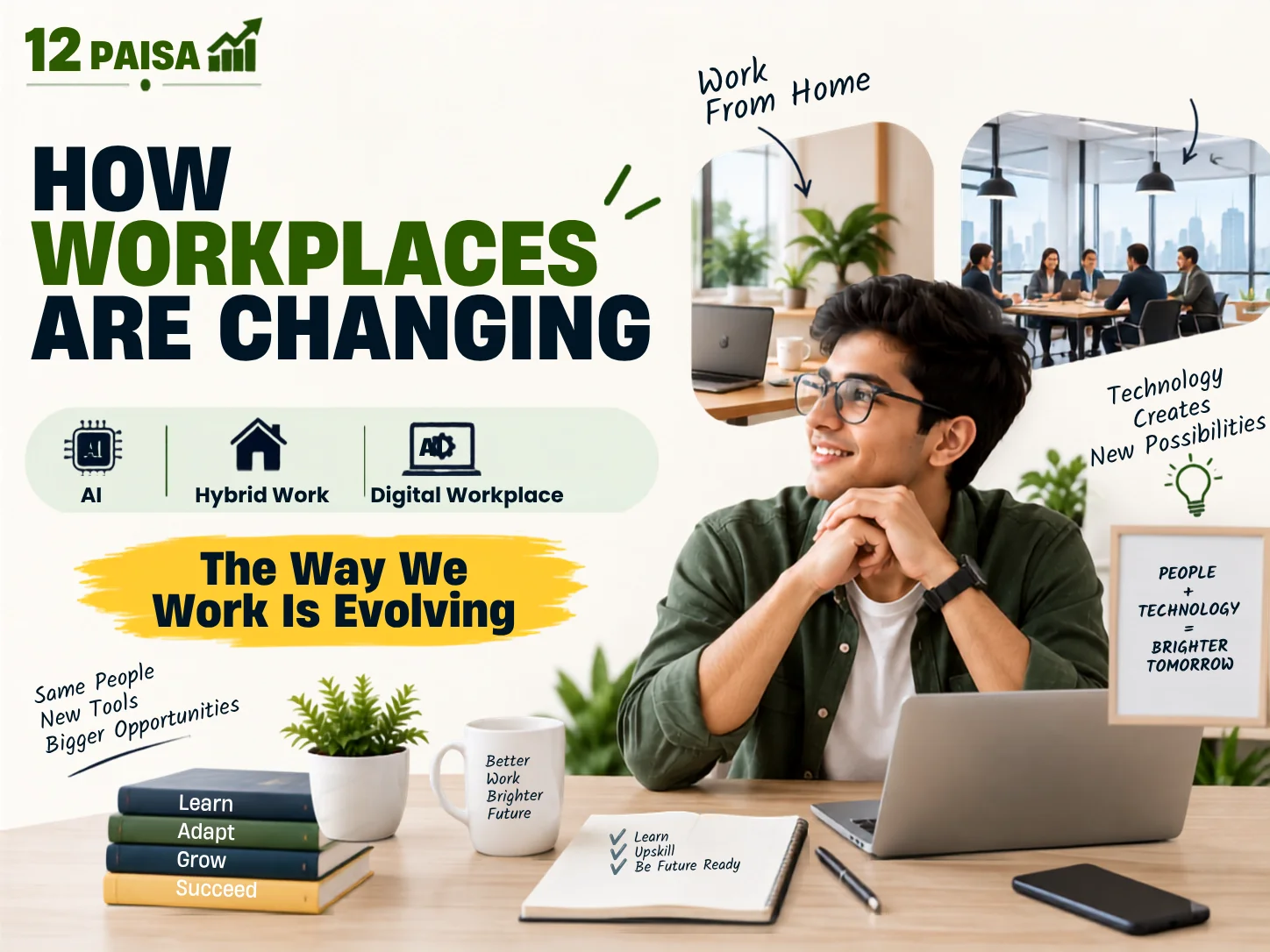
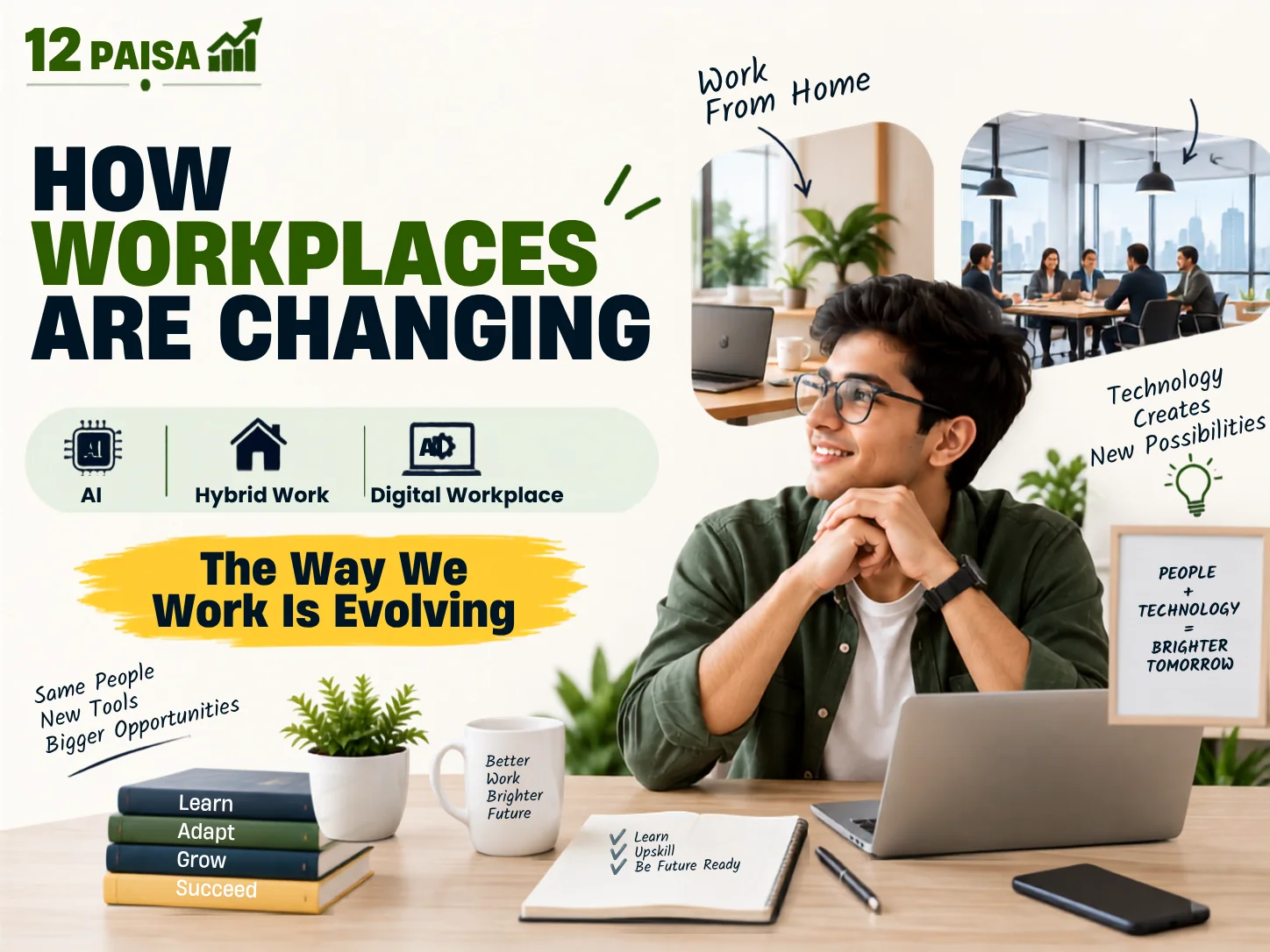
Workplaces are changing through AI, automation, digital collaboration, flexible work models and evolving employee expectations. Modern workplaces are increasingly becoming more technology-enabled, flexible and skills-focused. At the same time, human abilities such as communication, creativity, judgment and collaboration remain important as organizations adapt to new ways of working. (Source: World Economic Forum)
How Workplaces Are Changing का उद्देश्य यह समझाना है कि technology, AI, flexible work models, digital collaboration, changing employee expectations और new management practices की वजह से modern workplaces कैसे बदल रहे हैं और इसका employees तथा businesses पर क्या असर पड़ रहा है।
Quick Summary
- Modern workplaces अब केवल physical office तक सीमित नहीं हैं।
- AI और automation रोज़मर्रा के workflows को बदल रहे हैं।
- Remote और hybrid models ने workplace flexibility को बढ़ाया है।
- Digital collaboration tools teams के काम करने के तरीके बदल रहे हैं।
- Employees से केवल technical expertise नहीं, बल्कि adaptability और collaboration की भी अपेक्षा बढ़ रही है।
- Managers को technology के साथ people management भी समझना होगा।
- Workplaces धीरे-धीरे task-based और outcome-focused approaches की तरफ बढ़ सकते हैं।
- Continuous learning workplace culture का महत्वपूर्ण हिस्सा बन रहा है। (Source: World Economic Forum)
Who Should Read This Article?
यह article खास तौर पर useful है:
- Students जो future workplace समझना चाहते हैं
- Working Professionals जो workplace changes को समझना चाहते हैं
- Job Seekers जो modern work environment के लिए prepare होना चाहते हैं
- Freelancers जो changing work models explore कर रहे हैं
- Managers जो changing teams को effectively manage करना चाहते हैं
- Small Business Owners जो modern workplace practices समझना चाहते हैं
How Are Workplaces Changing?
Workplace को पहले अक्सर एक simple concept की तरह देखा जाता था:
Office + Employees + Fixed Working Hours
लेकिन modern workplace इससे कहीं ज्यादा complex हो चुका है।
आज एक organization में:
- कुछ employees office में हो सकते हैं।
- कुछ remote work कर सकते हैं।
- कुछ teams hybrid model में काम कर सकती हैं।
- AI tools कुछ tasks में assistance दे सकते हैं।
- Cloud systems information को कहीं से भी accessible बना सकते हैं।
- Employees लगातार नई skills सीख सकते हैं।
इसलिए workplace अब केवल:
“Where people work” नहीं है।
बल्कि:
“How people, technology and processes work together” भी है।
World Economic Forum के 2025 research के अनुसार technological change, digital access, AI और broader economic तथा demographic changes workplace और labour market transformation के major drivers हैं। (Source: World Economic Forum)
Why Are Workplaces Changing?
Workplace transformation के पीछे सिर्फ एक कारण नहीं है।
कई changes एक साथ काम कर रहे हैं।
1. Technology
Cloud platforms, automation और digital tools ने traditional processes को बदल दिया है।
2. Artificial Intelligence
AI अब केवल specialized technology नहीं रही; कई organizations इसे everyday workflows में integrate करने की कोशिश कर रही हैं। (Source: World Economic Forum)
3. Employee Expectations
Employees flexibility, meaningful work, learning opportunities और better work-life balance जैसी चीजों को अधिक महत्व दे सकते हैं।
4. Global Collaboration
Teams अलग-अलग cities और countries से collaborate कर सकती हैं।
5. Business Competition
Companies को faster, more efficient और adaptable बनने की जरूरत हो सकती है।
6. Changing Skills
Technology के कारण कई roles में required skills बदल रही हैं। WEF के अनुसार employers को 2030 तक workers की core skills में लगभग 39% बदलाव की उम्मीद है। (Source: World Economic Forum)
Change #1. The Office Is No Longer the Only Workplace
सबसे visible changes में से एक है:
Workplace की Location का बदलना
पहले:
Employee → Office → Desk → Computer
अब possibilities ज्यादा हैं:
Employee → Office
या
Employee → Home
या
Employee → Co-working Space
या
Employee → Multiple Locations
इस बदलाव को technology ने काफी आसान बनाया है।
Cloud documents, video meetings, project management software और instant messaging ने teams को physically एक ही जगह पर मौजूद हुए बिना collaborate करने की capability दी है।
Remote Work Changed the Meaning of Workplace
Remote work का सबसे बड़ा change सिर्फ location नहीं है।
यह एक fundamental question उठाता है:
अगर employee office में नहीं है, तो organization उसे effectively कैसे collaborate और manage करेगी?
इसका answer technology से ज्यादा:
Process + Communication + Trust में हो सकता है।
Remote Work का मतलब सिर्फ घर से काम करना नहीं
एक effective remote workplace के लिए employees को:
- Clear communication
- Time management
- Documentation
- Digital collaboration
- Self-management
- Accountability
की जरूरत हो सकती है।
इसलिए remote work ने workplace से एक physical layer हटाई है, लेकिन इसके बदले:
Digital Coordination Layer की importance बढ़ाई है।
Change #2. Hybrid Work Is Creating a New Workplace Model
Remote और office work के बीच:
Hybrid Work एक middle model बन गया है।
इसमें employee कुछ समय Office और कुछ समय Remote काम कर सकता है।
लेकिन hybrid workplace को सिर्फ schedule बनाकर successful नहीं बनाया जा सकता।
Hybrid Work Needs Better Coordination
मान लीजिए एक team में:
- 3 लोग office में हैं
- 2 लोग घर से काम कर रहे हैं
अगर important information सिर्फ office में हुई बातचीत में share होती है, तो remote employees पीछे रह सकते हैं।
इसलिए hybrid workplaces में:
- Documentation
- Shared Information
- Clear Communication और
- Equal Access
important हो जाते हैं।
Hybrid Workplace का Practical Rule
अगर कोई important decision लिया गया है:
उसे केवल verbal conversation में न छोड़ें।
उसे appropriate digital channel में document करें।
इससे Office Employee और Remote Employee
दोनों को समान information access मिल सकती है।
Change #3. AI Is Becoming Part of Everyday Work
AI workplace transformation का सबसे important technology-related changes में से एक है।
लेकिन इसका मतलब केवल:
“AI employees को replace करेगी।” नहीं है।
एक बड़ा बदलाव यह है कि AI:
Existing Workflows के अंदर integrate हो सकती है।
उदाहरण:
Marketing
Content ideas और research assistance
Customer Service
Response assistance
Finance
Data analysis
HR
Recruitment workflow support
Software
Coding assistance
Management
Information summarization
इसका मतलब AI एक अलग department होने के बजाय:
Everyday Work Tool बन सकती है।
LinkedIn/WEF analysis में AI skills adoption में तेज growth और workplace roles में broader skill changes दिखाई देते हैं। (Source: World Economic Forum)
AI Does Not Automatically Mean Job Replacement
यह distinction बहुत important है:
AI Can Change a Task लेकिन:
Task Change ≠ Entire Job Disappears
मान लीजिए employee का काम है:
Research + Analysis + Reporting
AI research और basic reporting को faster कर सकती है।
लेकिन employee को फिर भी:
- Context
- Interpretation
- Decision Making और
- Communication
की जरूरत हो सकती है।
इसलिए workplace में कई situations में:
Human + AI model ज्यादा relevant हो सकता है।
Change #4. Jobs Are Becoming More Task-Oriented
Traditional thinking में हम job title पर ज्यादा ध्यान देते हैं।
जैसे:
- Accountant
- Marketing Executive
- Teacher
- Designer
लेकिन workplace transformation को समझने के लिए:
Job के अंदर कौन–कौन से tasks हैं?
यह ज्यादा useful question है।
उदाहरण:
एक accountant के tasks हो सकते हैं:
- Data entry
- Reconciliation
- Reporting
- Analysis
- Client communication
Technology इन सभी tasks को same level पर impact नहीं करेगी।
इसलिए workplace में बदलाव अक्सर:
Task by Task होता है।
A Simple Example
मान लीजिए एक employee रोज़ 3 घंटे manual report बनाने में लगाता था।
नई technology के बाद:
Data Collection → Automated
Basic Formatting → Automated
लेकिन:
Analysis → Human
Recommendation → Human
Client Explanation → Human
हो सकता है।
इससे job का पूरा nature बदल सकता है, भले ही job title वही रहे।
Change #5. Work Is Becoming More Digital
Digital workplace का मतलब सिर्फ laptop और internet नहीं।
आज organizations कई digital systems use कर सकती हैं:
- Cloud storage
- Project management
- Digital communication
- Online meetings
- Digital payments
- Customer relationship systems
- Data dashboards
- AI tools
इन systems ने information को:
- Faster
- More Accessible और
- More Connected
बनाया है।
Digital Workplace का दूसरा Side
Technology convenience देती है।
लेकिन अगर सही तरीके से manage न की जाए तो:
- Too many notifications
- Information overload
- Meeting overload
- Constant messages
- Context switching
जैसी problems भी पैदा हो सकती हैं।
इसलिए:
More Technology ≠ Automatically More Productivity
Technology तभी useful है जब process भी अच्छी हो।
Change #6. Workplace Communication Is Changing
Traditional office communication में:
Face-to-Face Conversation का role बड़ा था।
अब communication कई channels में हो सकती है:
- Chat
- Video Call
- Project Comments
- Shared Documents
- Voice Messages
इससे communication faster हो सकती है।
लेकिन एक नई problem भी आती है:
किस information के लिए कौन–सा communication channel use करना चाहिए?
Communication Channel Example
Urgent Issue
→ Direct Call
Detailed Information
→ Email / Document
Quick Update
→ Team Chat
Complex Discussion
→ Meeting
Long-Term Decision
→ Document + Clear Record
इस तरह communication को purpose के अनुसार choose करना useful हो सकता है।
Change #7. Managers Are Becoming More Like Coaches
Traditional manager की image:
Task देने वाला व्यक्ति हो सकती थी।
Modern workplace में manager को कई roles निभाने पड़ सकते हैं:
- Goal Setter
- Coach
- Feedback Provider
- Problem Solver
- Team Coordinator
- Change Leader
और technology adoption के समय Change Facilitator भी।
WEF की workplace research में leaders को AI और organizational change के साथ teams को guide करने तथा upskilling support करने की जरूरत पर जोर दिया गया है। (Source: World Economic Forum)
Why Management Is Changing
अगर team remote या hybrid है, तो manager employee को हर समय physically observe नहीं कर सकता।
इसलिए management को Presence से:
Performance + Trust + Communication
की तरफ shift करना पड़ सकता है।
यह एक major mindset change है।
Old Management vs Emerging Management
| Traditional Approach | Emerging Approach |
| Hours tracked | Outcomes tracked |
| Physical presence | Effective contribution |
| Manager gives orders | Manager enables people |
| Fixed workflow | Adaptable workflow |
| Annual learning | Continuous learning |
| Information centralized | Information shared digitally |
यह comparison हर organization पर लागू नहीं होता, लेकिन workplace transformation की direction समझने में useful है।
Change #8. Employee Skills Are Expanding
एक employee की role-specific expertise अभी भी important है।
लेकिन modern workplace में उससे related additional capabilities भी useful हो सकती हैं।
उदाहरण:
एक marketer को Marketing के साथ:
- Data
- Digital Tools और
- AI Awareness
की basic understanding useful हो सकती है।
इसी तरह finance professional के लिए:
Finance + Analytics + Digital Tools
एक valuable combination हो सकता है।
WEF के 2025 findings में AI and big data, networks and cybersecurity तथा technological literacy के साथ creative thinking, resilience, flexibility and agility जैसी capabilities के बढ़ते importance को highlight किया गया है। (Source: World Economic Forum)
Change #9. Continuous Learning Is Entering the Workplace
पहले learning को अक्सर:
Education → Job के रूप में देखा जाता था।
अब:
Education → Job → Learn → Apply → Update → Learn Again
एक more realistic cycle बन सकता है।
Technology change होने पर employees को:
New Tool सीखना पड़ सकता है।
Role change होने पर New Skill develop करनी पड़ सकती है।
Industry change होने पर New Knowledge लेनी पड़ सकती है।
इसलिए:
Learning Is Becoming Part of Work
Practical Example: A Sales Employee
मान लीजिए एक salesperson पहले:
Phone Calls + Physical Meetings
पर ज्यादा depend करता था।
अब उसके workflow में:
- CRM
- Video Meetings
- Digital Analytics
- AI-Assisted Research और
- Online Communication
भी शामिल हो सकते हैं।
Job अभी भी sales है।
लेकिन काम करने का तरीका बदल गया।
यही workplace transformation का core idea है।
Change #10. Employee Expectations Are Changing
Workplace change केवल technology की वजह से नहीं हो रहा।
Employees भी organizations से अलग expectations रख सकते हैं।
जैसे:
- Flexible work
- Learning opportunities
- Career growth
- Meaningful work
- Recognition
- Better communication
- Work-life boundaries
इसलिए modern employer को केवल salary और job title के साथ:
Employee Experience पर भी ध्यान देना पड़ सकता है।
Employee Experience क्या है?
Employee experience का मतलब broadly है:
Employee का organization के साथ पूरा professional experience
इसमें शामिल हो सकते हैं:
Hiring
↓
Onboarding
↓
Daily Work
↓
Management
↓
Learning
↓
Career Growth
↓
Recognition
यह पूरी journey workplace culture को influence करती है।
Change #11. Workplace Culture Is Also Changing
Technology बदलने से culture automatically अच्छा नहीं हो जाता।
एक organization में अगर:
New AI Tools आ गए हैं लेकिन employees उन्हें use करने से डरते हैं, तो adoption कमजोर हो सकती है।
अगर employees questions नहीं पूछ सकते, तो mistakes छिप सकती हैं।
अगर feedback नहीं मिलता, तो improvement धीमी हो सकती है।
इसलिए future-ready workplace में:
Learning Culture + Psychological Safety + Open Communication important हो सकते हैं।
Common Mistakes
1. Workplace Change को केवल AI समझना
AI important है, लेकिन workplace transformation में work models, communication, management और employee expectations भी शामिल हैं।
2. Remote Work को Complete Solution मानना
Remote work flexibility दे सकता है, लेकिन coordination challenges भी हो सकते हैं।
3. Technology जोड़ना और Process न बदलना
नई technology पुराने inefficient process को automatically efficient नहीं बनाती।
4. Employees को Training के बिना New Tools देना
Technology adoption के लिए understanding और practice जरूरी हो सकती है।
5. Communication Channels बहुत ज्यादा करना
Too many tools information overload create कर सकते हैं।
6. Employee Productivity को केवल Hours से Measure करना
Knowledge work में output और impact ज्यादा useful measures हो सकते हैं।
7. Human Skills को Ignore करना
Technology के साथ communication, judgment और collaboration की जरूरत बनी रह सकती है।
Practical Example: Before vs Changing Workplace
मान लीजिए एक traditional small company है।
पहले
Employee office आता है।
↓
Manager tasks देता है।
↓
Employee manually काम करता है।
↓
Files local computer में रहती हैं।
↓
Meeting face-to-face होती है।
अब
Employee office या remote से काम कर सकता है।
↓
Tasks digital platform पर आते हैं।
↓
Files cloud में रहती हैं।
↓
AI कुछ repetitive tasks में assistance देती है।
↓
Team video call या chat से coordinate करती है।
↓
Performance output और goals से भी evaluate हो सकती है।
यह transformation overnight नहीं होता।
लेकिन workplace धीरे-धीरे:
Physical-Centric → Digital + Flexible + Connected हो सकता है।
Workplace Change Self-Assessment Checklist
अपने workplace या target workplace के लिए check करें:
- क्या work के लिए digital tools regularly use होते हैं?
- क्या remote/hybrid work possible है?
- क्या important information digitally documented होती है?
- क्या employees को नई technology की training मिलती है?
- क्या performance सिर्फ working hours से measure नहीं होती?
- क्या employees को feedback मिलता है?
- क्या learning के opportunities available हैं?
- क्या communication clear है?
- क्या managers employees को develop करने में help करते हैं?
- क्या organization technology के साथ human factors पर भी ध्यान देती है?
Action Plan-1: 5-Day Workplace Change Audit
Day 1 — Workplace Map
अपने current या target workplace में इस्तेमाल होने वाले:
Tools + Processes + Communication Channels की list बनाएं।
Day 2 — Location
Identify करें: Office / Remote / Hybrid में से कौन-सा model है और क्यों।
Day 3 — Technology
तीन ऐसे tasks identify करें जिनमें technology already मदद कर रही है या future में कर सकती है।
Day 4 — People
तीन human capabilities identify करें जो technology के बावजूद important रहेंगी।
Day 5 — Change
एक ऐसा workplace change चुनें जिसे आप personally better समझना या adapt करना चाहते हैं।
Final Output एक page पर लिखें:
“मेरे workplace में अगले 2–3 वर्षों में कौन–से बदलाव सबसे महत्वपूर्ण हो सकते हैं?”
Key Takeaways
- Workplace अब केवल physical office नहीं रहा।
- Remote और hybrid models ने workplace location को अधिक flexible बनाया है।
- AI existing workflows और tasks को transform कर सकती है।
- Job titles के बजाय individual tasks को समझना workplace transformation को बेहतर तरीके से explain करता है।
- Digital tools communication और collaboration को बदल रहे हैं।
- Technology के साथ नई workplace challenges भी पैदा हो सकती हैं।
- Managers का role task supervision से आगे बढ़कर coaching और change management तक जा सकता है।
- Employees को अपने core skills के साथ relevant digital capabilities भी develop करनी पड़ सकती हैं।
- Continuous learning increasingly workplace का हिस्सा बन रही है; WEF के अनुसार employers 2030 तक workers की core skills में 39% बदलाव की उम्मीद कर रहे हैं। (World Economic Forum)
- Future-ready workplace केवल technology-driven नहीं, बल्कि people + process + technology का combination होगा।
Conclusion
Workplace बदलने का मतलब सिर्फ यह नहीं कि:
“अब लोग घर से भी काम कर सकते हैं।”
असल बदलाव इससे कहीं बड़ा है।
काम की location बदल रही है।
काम के tools बदल रहे हैं।
काम के tasks बदल रहे हैं।
Managers का role बदल रहा है।
Employees की expectations बदल रही हैं।
और सबसे important:
Workplace में value create करने का तरीका बदल रहा है।
एक modern workplace में technology important है, लेकिन technology अकेले organization को successful नहीं बनाती।
जरूरत होती है:
Right Technology
Right Process
Skilled People
Clear Communication
Adaptable Culture की।
इसीलिए workplace का future केवल AI-powered नहीं होना चाहिए।
उसे:
Human-Centered + Technology-Enabled भी होना चाहिए।
अब तक आपने देखा कि modern workplace अब केवल office + fixed hours + manager supervision तक सीमित नहीं है। Remote work, hybrid models, AI, digital collaboration, changing employee expectations और continuous learning workplace के structure को बदल रहे हैं।
अब हम focus करेंगे कि इन changes का employees के daily work, productivity, communication, management और workplace culture पर practically क्या असर पड़ रहा है।
Quick Summary
- AI workplace में कई routine और information-heavy tasks को बदल रही है।
- Remote और hybrid work ने physical presence की importance को कई roles में कम किया है।
- Digital communication अब workplace का essential part बन चुकी है।
- Managers को employees को monitor करने के बजाय outcomes और development पर ज्यादा focus करना पड़ सकता है।
- Employee experience और workplace flexibility increasingly important हो सकते हैं।
- Continuous learning को daily work का हिस्सा बनाना जरूरी हो सकता है।
- Human judgment और collaboration technology के साथ भी महत्वपूर्ण रहेंगे।
- Modern workplace में trust, accountability और clear communication की importance बढ़ रही है।
Change #12. AI Is Changing the Daily Workflow
Workplace में AI का सबसे visible impact अक्सर किसी पूरे job को replace करने से पहले:
उस job के daily workflow को बदलने के रूप में दिखाई दे सकता है।
एक employee पहले किसी task को manually करता था।
अब workflow हो सकता है:
Human Input
↓
AI Assistance
↓
Human Review
↓
Final Output
यह model कई knowledge-work situations में useful हो सकता है।
Example: Preparing a Business Report
पहले
Data collect करें → Spreadsheet बनाएं → Calculations करें → Report लिखें → Review करें
AI-Assisted Workflow
Data collect करें → AI से initial analysis लें → Important patterns identify करें → Human verification करें → Final report तैयार करें
यहाँ AI ने पूरा responsibility नहीं लिया।
उसने workflow के कुछ हिस्सों को:
Faster या More Efficient बनाने में मदद की।
Change #13. AI Changes the Skill Requirement
जब technology routine work को आसान करती है, तो employee की value केवल:
Task करने में नहीं रहती। उसे Task को समझने और Output को evaluate करने की भी जरूरत हो सकती है।
इसलिए AI-enabled workplace में useful capabilities हो सकती हैं:
- Problem framing
- Critical thinking
- AI tool usage
- Verification
- Communication
- Decision making
- Domain expertise
Change #14. AI Literacy Will Matter
हर employee को AI engineer बनने की जरूरत नहीं।
लेकिन relevant professionals को basic questions समझने चाहिए:
AI क्या कर सकती है?
कहाँ use करना useful है?
कहाँ use नहीं करना चाहिए?
AI output को कैसे verify करें?
Sensitive information के साथ क्या सावधानी रखें?
यानी:
AI Literacy ≠ AI Programming
AI literacy का मतलब technology को intelligently use और evaluate करना भी हो सकता है।
Change #15. Automation Will Remove Some Routine Steps
Automation का उद्देश्य अक्सर:
Repeatable Work को reduce करना होता है।
उदाहरण:
- Automatic email responses
- Scheduled reports
- Invoice processing
- Data synchronization
- Appointment scheduling
- Basic notifications
इससे employee का time:
Routine Execution से Higher-Value Activities की ओर shift हो सकता है।
लेकिन automation को implement करने से पहले:
Accuracy, Security और Human Oversight consider करना जरूरी है।
Not Every Task Should Be Automated
यह एक important workplace principle है।
अगर कोई task:
High-risk
Highly sensitive
या
Human judgment-heavy
है, तो complete automation हमेशा appropriate नहीं हो सकती।
इसलिए organization को पूछना चाहिए:
“क्या यह task automate किया जा सकता है?” के साथ “क्या इसे automate करना चाहिए?” भी।
Change #16. Remote Work Is Changing Employee Independence
Remote workplace में manager employee को हर समय physically observe नहीं कर सकता।
इसलिए employee को:
- अपने tasks organize करने
- deadlines track करने
- communication maintain करने
- problems जल्दी report करने
- priorities manage करने
की जरूरत हो सकती है।
इससे Self-Management की importance बढ़ सकती है।
Remote Work and Accountability
Remote work में accountability का healthy model:
Clear Goal
↓
Clear Deadline
↓
Clear Ownership
↓
Regular Update
↓
Final Result
हो सकता है।
हर कुछ घंटों में employee से “क्या कर रहे हो?” पूछना effective management नहीं माना जाना चाहिए।
Change #17. Hybrid Work Creates a New Challenge
Hybrid workplace में एक team के कुछ लोग office में और कुछ remote हो सकते हैं।
इस situation में एक common problem है:
Information Inequality
अगर office में हुई informal conversation में important decision लिया गया और उसे document नहीं किया गया, तो remote employee miss कर सकता है।
इसलिए Documentation hybrid work का hidden superpower बन सकता है।
Documentation Is More Important Than Ever
Important information को appropriate shared system में रखना useful है:
- Decisions
- Project updates
- Responsibilities
- Deadlines
- Meeting outcomes
- Process changes
इससे: “किसने क्या कहा था?” जैसे confusion कम हो सकते हैं।
Change #18. Digital Communication Is Becoming Multi-Layered
Modern workplace में communication कई levels पर हो सकती है।
Quick Communication – Chat
Formal Communication – Email
Detailed Knowledge – Document
Real-Time Discussion – Meeting
Project Coordination – Project Management Platform
Problem तब आती है जब हर चीज हर channel पर होने लगे।
Communication Overload
एक employee के पास हो सकते हैं:
Team Chat
Project Notifications
Calendar
Video Meetings
AI Alerts
अगर हर channel constantly active हो, तो employee का attention fragmented हो सकता है।
इससे Context Switching बढ़ सकती है।
The Modern Communication Rule
एक useful approach:
Urgency के हिसाब से नहीं, purpose के हिसाब से channel choose करें।
Example:
Quick Question → Chat
Detailed Explanation → Email/Document
Complex Decision → Meeting
Permanent Record → Documentation
इससे communication ज्यादा organized रह सकती है।
Change #19. Meetings Are Being Reconsidered
Modern workplace में हर discussion के लिए meeting जरूरी नहीं।
Meeting useful हो सकती है जब:
- Complex discussion हो
- Decision लेना हो
- Multiple stakeholders की input चाहिए
- Sensitive topic discuss करना हो
- Brainstorming की जरूरत हो
लेकिन simple information sharing के लिए:
Document या Async Update काफी हो सकता है।
Change #20. Async Work Is Becoming More Important
Asynchronous Work का मतलब है कि सभी लोगों को एक ही समय पर available होना जरूरी नहीं।
Example:
Manager सुबह project update लिखता है।
Employee दोपहर में पढ़ता है।
फिर अपना response देता है।
इससे Different Schedules और Different Locations के बावजूद work आगे बढ़ सकता है।
Async Work vs Real-Time Work
| Async Work | Real-Time Work |
| Video Call | |
| Shared Document | Live Meeting |
| Project Update | Brainstorming |
| Recorded Presentation | Live Discussion |
| Task Comment | Immediate Decision |
दोनों useful हैं।
Goal होना चाहिए:
Right Work → Right Communication Mode
Change #21.Employee Experience Is Becoming Important
Workplace में employee सिर्फ salary के लिए नहीं आता।
उसका overall experience भी important हो सकता है:
Hiring
↓
Onboarding
↓
Daily Work
↓
Manager Relationship
↓
Learning
↓
Recognition
↓
Career Growth
एक poor experience employee engagement और retention को affect कर सकता है।
WEF के 2025 findings में employee well-being को talent availability improve करने के लिए employers की प्रमुख practices में शामिल किया गया है।
Change #22. Flexibility Is Becoming a Workplace Expectation
हर employee के लिए same flexibility possible नहीं।
उदाहरण:
Software Developer
Remote work possible हो सकता है।
Factory Worker
Physical presence जरूरी हो सकती है।
Nurse
On-site work essential हो सकता है।
इसलिए:
Flexible Workplace ≠ Same Flexibility for Everyone
Flexibility role और industry के according design करनी पड़ सकती है।
Change #23. Work-Life Boundaries Are Changing
Digital work का एक side effect है:
Work कभी पूरी तरह बंद होता हुआ महसूस नहीं होता।
Phone पर:
Messages
Notifications हर समय आ सकते हैं।
इसलिए employees को:
- Notification boundaries
- Working hours
- Breaks
- Personal time
- Leave boundaries
manage करने की जरूरत हो सकती है।
Always Available ≠ Productive
अगर employee हर message का तुरंत जवाब दे रहा है, इसका मतलब यह नहीं कि वह:
High Productivity achieve कर रहा है।
कभी-कभी Deep Focu और Notification-Free Work ज्यादा valuable हो सकता है।
इसलिए workplace productivity में Availability + Output के बजाय:
Focus + Quality + Results को भी consider करना useful हो सकता है।
Change #24. Managers Are Losing the “Visibility Advantage”
Traditional office में manager employee को physically देख सकता था।
Modern workplace में:
Physical Presence और Actual Productivity के बीच difference ज्यादा visible हो गया है।
इसलिए effective managers को:
“मैंने employee को कितने घंटे देखा?”
के बजाय:
“Employee ने क्या meaningful result deliver किया?”
पर focus करना पड़ सकता है।
Change #25. Trust Becomes More Important
Remote और hybrid workplaces में trust की जरूरत बढ़ सकती है।
लेकिन trust का मतलब “किसी को कभी check मत करो।” नहीं।
Healthy trust में:
Clear Expectations
Transparent Progress
Accountability
होती है।
Change #26. Management Is Moving From Control to Enablement
एक traditional approach:
Manager → Gives Instructions → Employee Executes
एक more modern approach:
Manager → Sets Direction → Removes Obstacles → Supports Employee → Reviews Outcomes
दूसरा model knowledge work में ज्यादा effective हो सकता है, हालांकि exact management approach organization और role पर depend करेगी।
Change #27. Continuous Learning Is Becoming Normal
Workplace technology बदलती है।
इसलिए employees को भी:
Learn
↓
Apply
↓
Improve
↓
Update
करना पड़ सकता है।
Learning अब केवल Promotion के लिए course नहीं। यह Job Performance का हिस्सा भी बन सकती है।
Example: New AI Tool at Work
मान लीजिए company एक AI tool introduce करती है।
Employee को सिर्फ “यह tool use करो” कहना पर्याप्त नहीं।
Better process:
Step 1
Tool क्यों introduce हुआ?
Step 2
यह क्या कर सकता है?
Step 3
कौन-से tasks में use करना है?
Step 4
कौन-सी information नहीं डालनी?
Step 5
Output कैसे verify करना है?
Step 6
Success कैसे measure होगी?
इससे adoption ज्यादा structured हो सकती है।
Change #28. Skills Are Becoming More Connected
Modern workplace में अलग-अलग departments के बीच boundaries कई situations में overlap कर सकती हैं।
एक professional को अपने core area के साथ:
- Technology
- Data
- Communication और
- Business Understanding
का basic knowledge useful लग सकता है।
इसे Cross-Functional Capability कहा जा सकता है।
Example: Modern Marketing Role
Traditional:
Marketing Knowledge
Modern:
Marketing
Data
Digital Platforms
AI Awareness
Communication
इसका मतलब marketer को data scientist बनना जरूरी नहीं।
लेकिन data-driven environment में basic data understanding useful हो सकती है।
Change #29. Workplace Is Becoming More Outcome-Focused
एक changing workplace में performance को केवल:
Hours Worked
से measure करना हमेशा sufficient नहीं हो सकता।
इसके बजाय:
- Goals
- Quality
- Deadlines
- Customer Impact
- Business Results
- Team Contribution
जैसे factors consider किए जा सकते हैं।
But Outcome-Based Work Needs Clear Goals
अगर organization outcomes measure करना चाहती है, तो employees को पता होना चाहिए:
What?
क्या deliver करना है?
When?
कब तक?
Why?
इसका purpose क्या है?
How?
कौन-से standards follow करने हैं?
Clear expectations के बिना outcome-based management confusing हो सकता है।
Change #30. Workplace Culture Is Changing Too
Technology खरीदना आसान हो सकता है।
Culture बदलना कठिन।
एक company के पास latest AI tools हो सकते हैं।
लेकिन अगर:
Employees Questions नहीं पूछ सकते
Mistakes छिपाई जाती हैं
Managers Feedback नहीं देते
Learning discourage होती है
तो technology का full benefit नहीं मिल सकता।
इसलिए:
Technology Transformation Needs Culture Transformation.
Change #31. Psychological Safety in Modern Workplaces
Psychological safety का practical meaning है:
Employee को reasonable confidence हो कि वह question, concern या mistake share कर सकता है बिना unnecessary humiliation या retaliation के डर के।
यह Learning, Innovation और Problem Solving को support कर सकता है।
Practical Example: A Team Mistake
एक employee ने report में error कर दिया।
Poor Culture
गलती छिपाई जाती है।
↓
Problem बाद में बड़ी हो जाती है।
Learning Culture
गलती identify होती है।
↓
Cause समझा जाता है।
↓
Process improve किया जाता है।
↓
Team सीखती है।
इसका मतलब mistakes को ignore करना नहीं।
बल्कि:
Mistake → Learning → Better Process
में convert करना है।
Change #32. Workplace Diversity of Work Styles
Modern teams में employees का काम करने का तरीका अलग हो सकता है।
कोई Morning Focus में best perform करता है।
दूसरा Afternoon में।
कोई Office Collaboration prefer करता है।
दूसरा Quiet Remote Work में better perform कर सकता है।
इसलिए organizations को जहाँ practical हो, different work styles को accommodate करने की जरूरत हो सकती है।
But Flexibility Needs Boundaries
Unlimited flexibility हमेशा effective नहीं।
अगर:
Meeting कभी भी
Messages कभी भी
Deadlines unclear
और
Responsibilities unclear
हों, तो flexibility chaos बन सकती है।
इसलिए Flexibility + Structure एक बेहतर combination हो सकता है।
Modern Workplace: Old vs New
| Earlier Workplace | Changing Workplace |
| Office-centric | Office + Remote + Hybrid |
| Fixed communication | Multiple digital channels |
| Manual workflows | Digital + Automated workflows |
| Manager supervision | Outcome-focused management |
| One-time training | Continuous learning |
| Job-specific work | Cross-functional collaboration |
| Physical files | Cloud-based information |
| Fixed processes | More adaptable processes |
| Hours-focused | Results-focused |
यह transition हर organization में same speed से नहीं होगा।
Common Mistakes
1. हर workplace को fully remote मानना
Different roles को different work models की जरूरत होती है।
2. AI को complete replacement समझना
AI कई tasks को change कर सकती है, लेकिन हर job का complete replacement निश्चित नहीं।
3. Too Many Digital Tools Use करना
More tools हमेशा better collaboration नहीं देते।
4. Employees को बिना training के AI देना
Technology adoption के लिए learning और guidelines जरूरी हो सकती हैं।
5. Meetings को हर problem का solution मानना
कई tasks asynchronous तरीके से बेहतर हो सकते हैं।
6. Remote Employee को Less Productive मानना
Location productivity का reliable measure नहीं है।
7. Flexibility Without Accountability
Flexible work के साथ clear ownership और deadlines जरूरी हैं।
8. Technology को Culture से अलग समझना
Successful transformation में people और processes भी important हैं।
9. Continuous Learning को Optional मानना
Changing workplace में skill development increasingly useful हो सकता है।
10. Human Skills Ignore करना
Technology के बावजूद judgment, communication और collaboration valuable रह सकते हैं।
Practical Workplace Change Checklist
अपने workplace को इस checklist से evaluate करें:
Technology
क्या relevant digital tools available हैं?
क्या employees को उनका training मिलता है?
क्या AI use के clear guidelines हैं?
Communication
क्या सही information सही channel पर जाती है?
क्या important decisions documented होते हैं?
क्या unnecessary meetings कम की जाती हैं?
Management
क्या goals clear हैं?
क्या employees को autonomy मिलती है?
क्या performance outcomes के आधार पर भी evaluate होती है?
Learning
क्या employees को upskilling opportunities मिलती हैं?
क्या new technology के साथ training होती है?
Culture
क्या employees questions पूछ सकते हैं?
क्या useful feedback encourage किया जाता है?
क्या mistakes से learning की जाती है?
Practical Scenario: A Changing Office
मान लीजिए एक company ने hybrid work शुरू किया।
पहले:
9 AM Office → Face-to-Face Meeting → Paper Files → Manager Monitoring
अब:
Hybrid Schedule → Digital Documents → Video Meetings → Project Dashboard → Outcome Tracking
लेकिन सिर्फ technology change करने से workplace automatically effective नहीं होगा।
Company को साथ में:
- Clear Policies
- Digital Training
- Documentation Rules
- Communication Norms और
- Performance Expectations
भी establish करनी होंगी।
यही workplace transformation को practical बनाता है।
Action Plan-2: Workplace Transformation Scorecard
अपने workplace को 1 से 5 score दें:
| Area | Score |
| Digital Tools | /5 |
| AI Readiness | /5 |
| Communication | /5 |
| Remote/Hybrid Coordination | /5 |
| Employee Learning | /5 |
| Management | /5 |
| Workplace Culture | /5 |
| Work-Life Boundaries | /5 |
अब सबसे कम score वाला area चुनें।
उसके लिए एक improvement idea लिखें:
“हम इसे अगले 30 दिनों में कैसे बेहतर कर सकते हैं?”
यह पूरा exercise सिर्फ diagnosis + improvement priority के लिए है; Part 1 और Future of Work Trends के broader challenges से इसे अलग रखा गया है।
Key Takeaways
- AI workplace में individual tasks और complete workflows दोनों को transform कर सकती है।
- AI literacy का मतलब हर व्यक्ति का AI programmer बनना नहीं है।
- Automation routine tasks reduce कर सकती है, लेकिन human oversight कई situations में जरूरी रह सकता है।
- Remote work self-management और accountability की importance बढ़ा सकता है।
- Hybrid workplaces में documentation information inequality को reduce करने में मदद कर सकती है।
- Digital communication को purpose के अनुसार organize करना जरूरी है।
- Async work unnecessary meetings और constant availability को कुछ situations में reduce कर सकता है।
- Managers को physical supervision के बजाय clear goals, trust और outcomes पर focus करना पड़ सकता है।
- Continuous learning modern workplace का increasingly important हिस्सा बन रही है।
- Workplace flexibility को structure और accountability के साथ balance करना चाहिए।
Conclusion
Workplace में बदलाव का सबसे बड़ा संकेत सिर्फ यह नहीं है कि:
“लोग अब घर से काम कर सकते हैं।”
असल transformation workplace के हर layer में दिखाई दे सकती है।
Technology बदल रही है।
Tasks बदल रहे हैं।
Communication बदल रही है।
Management बदल रहा है।
Employee expectations बदल रही हैं।
और:
Workplace culture भी evolve हो रही है।
इसलिए modern workplace का successful model सिर्फ technology खरीदने से नहीं बनेगा।
उसे चाहिए:
Technology + People + Process + Culture
अगर company के पास technology है लेकिन employees trained नहीं हैं, तो transformation कमजोर हो सकती है।
अगर employees skilled हैं लेकिन processes inefficient हैं, तो productivity प्रभावित हो सकती है।
अगर process अच्छा है लेकिन culture में trust नहीं है, तो collaboration कमजोर हो सकती है।
और अगर culture अच्छा है लेकिन organization change के लिए तैयार नहीं है, तो future opportunities miss हो सकती हैं।
इसलिए changing workplace को समझने का सबसे practical तरीका है:
Change the Tools. Improve the Process. Develop the People.
यही combination modern workplace को अधिक adaptable, productive और human-centered बनाने में मदद कर सकता है।
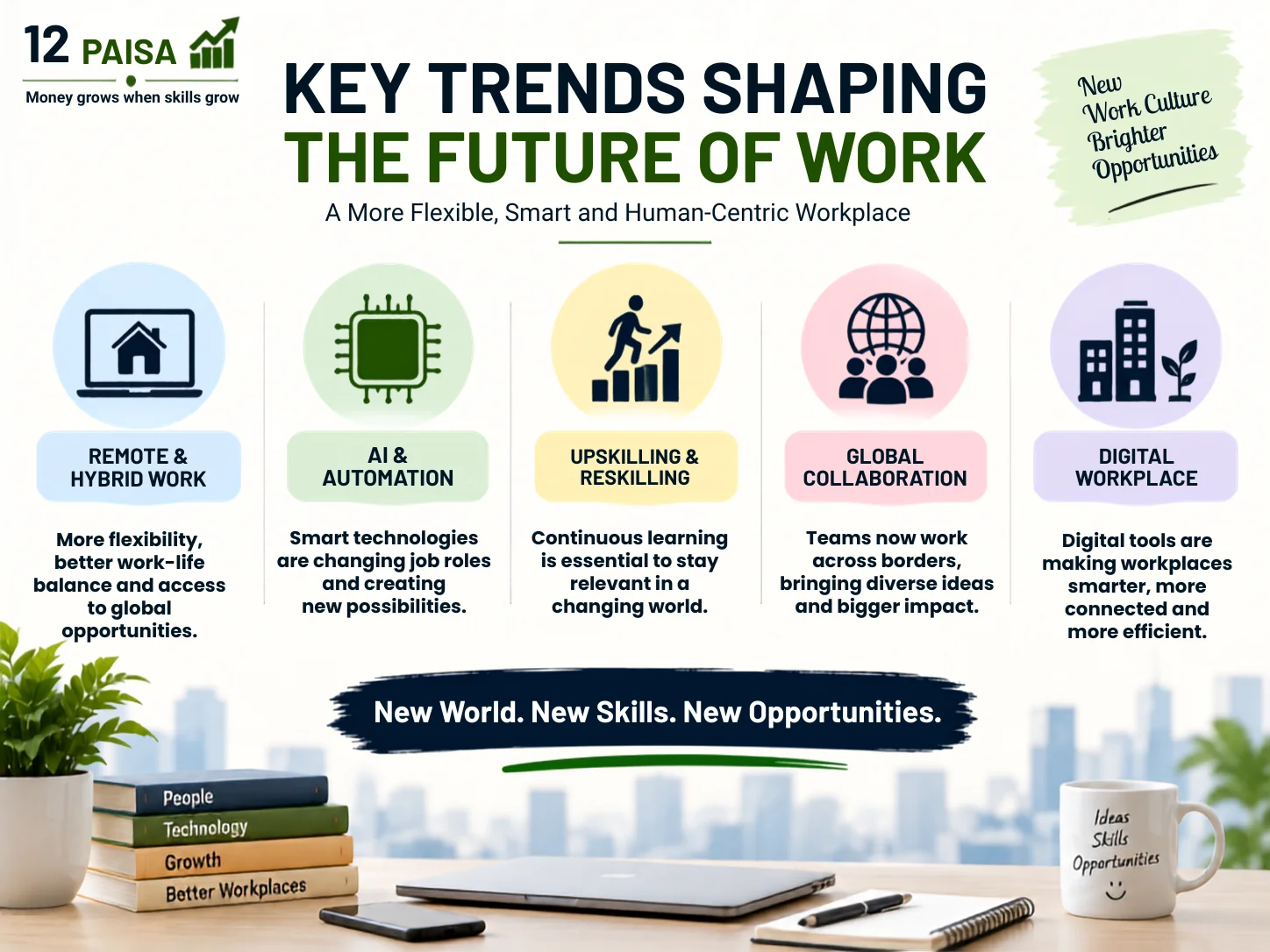
अब तक आपने workplace के basic transformation को समझा—office से flexible work models, digital tools, AI और changing employee expectations तक। आपने देखा कि इन changes का daily workflow, communication, management, productivity और workplace culture पर क्या असर पड़ रहा है।
अब focus रहेगा future workplace को long-term perspective से समझने और उसके लिए practically तैयार होने पर।
Quick Summary
- Future workplace में technology और human capabilities साथ-साथ काम करेंगी।
- AI adoption के साथ AI literacy और responsible use important होंगे।
- Organizations को employees के continuous learning में investment करना होगा।
- Managers का role supervision से आगे बढ़कर coaching और change leadership तक जा सकता है।
- Workplace culture में trust, transparency और psychological safety की importance रहेगी।
- Career growth increasingly skills, experience, adaptability और results के combination से जुड़ सकती है।
- Employees को सिर्फ current job के लिए नहीं, बल्कि changing roles के लिए तैयार होना चाहिए।
- Future-ready organization का goal technology को अपनाना ही नहीं, बल्कि उसे सही तरीके से use करना होगा।
What Will the Future Workplace Look Like?
Future workplace की एक single fixed picture बनाना मुश्किल है।
हर industry अलग होगी।
एक hospital का workplace:
Healthcare + Physical Presence पर depend कर सकता है।
एक software company:
Digital + Hybrid हो सकती है।
एक manufacturing company:
Automation + Physical Operations का combination use कर सकती है।
एक consulting company:
Remote + Client-Based + Hybrid model अपना सकती है।
इसलिए future workplace का मतलब:
हर जगह एक जैसा workplace नहीं।
बल्कि:
Different Work Models for Different Types of Work
हो सकता है।
Change #33: Workplace Design Will Become More Purpose-Driven
Future office का सवाल केवल “कितनी desks चाहिए?” नहीं होगा।
Organizations को पूछना पड़ सकता है:
“Office में लोगों को आने की जरूरत क्यों है?”
अगर purpose है:
Collaboration
तो office collaborative spaces provide कर सकता है।
अगर purpose है:
Client Meetings
तो meeting spaces useful हो सकते हैं।
अगर purpose है:
Focused Work
तो quiet areas बनाए जा सकते हैं।
इस तरह office:
Default Workplace से Purpose-Based Workplace
की तरफ move कर सकता है।
The Office May Become a Collaboration Hub
Hybrid workplace में office का role बदल सकता है।
पहले:
Individual Work + Meetings + Everything Else
office में होता था।
अब:
- Team Collaboration
- Relationship Building
- Brainstorming
- Training और
- Important Meetings
office का ज्यादा important purpose हो सकते हैं।
इसका मतलब office खत्म नहीं हो रहा।
बल्कि उसका Purpose बदल सकता है।
Change #34: AI Governance Will Become More Important
जैसे-जैसे organizations AI को workplace में use करेंगी, एक important question होगा:
“AI को कौन–सी boundaries के अंदर use करना चाहिए?”
Organizations को policies की जरूरत हो सकती है जैसे:
- कौन-सा data AI tools में डाल सकते हैं?
- Sensitive information कैसे protect होगी?
- AI-generated content को कौन review करेगा?
- Important decisions में human oversight कहाँ होगा?
- AI errors की responsibility किसकी होगी?
इसलिए AI adoption के साथ:
AI Governance
की importance बढ़ सकती है।
Responsible AI at Work
AI का useful workplace model हो सकता है:
AI Assistance
↓
Human Review
↓
Human Decision
खासकर उन situations में जहाँ:
- Accuracy
- Privacy
- Safety या
- Business Risk
important हो।
AI का use जितना high-impact होगा, human oversight की जरूरत उतनी ज्यादा हो सकती है।
Change #35: Data Privacy Will Matter More
Digital workplace में organizations बड़ी मात्रा में data handle कर सकती हैं।
इसमें:
- Customer Data
- Employee Information
- Financial Information
- Business Documents
- Internal Communication
शामिल हो सकते हैं।
इसलिए employees को basic data privacy समझना increasingly useful होगा।
Simple Workplace Data Rule
किसी भी sensitive information को किसी tool में डालने से पहले पूछें:
1. Is it necessary?
क्या यह information share करना जरूरी है?
2. Is it allowed?
क्या company policy इसकी अनुमति देती है?
3. Is it safe?
क्या appropriate security मौजूद है?
4. Who can access it?
किसे यह information दिखाई देगी?
यह simple habit unnecessary data exposure को reduce करने में मदद कर सकती है।
Change #36: Cybersecurity Will Become Everyone’s Responsibility
Cybersecurity केवल IT Department की responsibility नहीं हो सकती।
एक employee की mistake भी:
- Phishing
- Weak Password
- Unsafe File Sharing या
- Malicious Link
के जरिए security problem create कर सकती है।
इसलिए future workplace में basic cybersecurity awareness:
Professional Skill बन सकती है।
Change #37: Employee Learning Will Become More Personalized
हर employee को same training देने की बजाय organizations role और skill gap के अनुसार learning provide कर सकती हैं।
Example:
Marketing Employee
AI + Data
Finance Employee
Analytics + Automation
Manager
Leadership + AI Governance
Customer Support
AI Tools + Customer Communication
इससे Role-Based Learning ज्यादा practical हो सकती है।
Learning Will Move Into the Workflow
Traditional:
Course
↓
Certificate
↓
Back to Work
Future approach:
Work Problem
↓
Learn
↓
Apply
↓
Get Feedback
↓
Improve
यानी learning:
Work से अलग activity नहीं, Work का हिस्सा बन सकती है।
Change #38: Microlearning May Become More Useful
Employees के पास हमेशा लंबे courses करने का time नहीं होता।
इसलिए short learning formats useful हो सकते हैं:
- 10-minute lessons
- Short tutorials
- Quick demonstrations
- Internal knowledge guides
- Practice exercises
- AI-assisted learning
लेकिन short learning का goal सिर्फ information consume करना नहीं होना चाहिए।
Goal:
Learn → Apply
होना चाहिए।
Change #39: Internal Knowledge Sharing Will Become Valuable
Organizations में employees के पास valuable practical knowledge होता है।
अगर वह knowledge केवल एक employee के पास है, तो organization vulnerable हो सकती है।
इसलिए companies:
- Documentation
- Knowledge Bases
- Internal Guides
- Mentorship और
- Peer Learning
को encourage कर सकती हैं।
Example: Experienced Employee Leaves
मान लीजिए एक experienced employee company छोड़ देता है।
अगर उसका पूरा process knowledge उसके दिमाग में था:
Knowledge Loss हो सकता है।
लेकिन अगर important workflows documented थे:
Knowledge Transfer easier हो सकता है।
इसलिए:
Good Documentation Is Organizational Memory.
Change #40: Employee Mobility Can Become a Career Strategy
Future workplace में employee जरूरी नहीं कि पूरी career एक ही role में बिताए।
एक व्यक्ति:
Role A
↓
Upskilling
↓
Role B
↓
Leadership
जैसे path पर जा सकता है।
Internal mobility employee को New Experience और company को Existing Talent का benefit दे सकती है।
Career Growth Will Become More Dynamic
Career progression हमेशा:
Junior → Senior → Manager नहीं होगी।
Possible paths:
Specialist
या
Manager
या
Cross-Functional Role
या
Consulting
हो सकते हैं।
इसलिए career growth का मतलब केवल promotion नहीं।
More Responsibility + More Capability + More Value
भी हो सकता है।
Change #41: Proof of Work May Become More Important
Resume कहता है:
“मैं यह skill जानता हूँ।”
Portfolio या project दिखाता है:
“मैंने इस skill का use करके यह किया है।”
इसलिए practical proof:
- Projects
- Case Studies
- Work Samples
- Presentations
- Business Results
future opportunities में useful हो सकते हैं।
यह हर profession में exactly same form नहीं लेगा।
लेकिन Demonstrated Capability एक strong professional signal हो सकती है।
Change #42: Professional Identity Will Become More Visible
Digital platforms की वजह से professional identity office के बाहर भी दिखाई दे सकती है।
किसी professional की identity में शामिल हो सकते हैं:
- Work Experience
- Skills
- Projects
- Knowledge Sharing
- Professional Network और
- Industry Contributions
इसलिए professional reputation धीरे-धीरे:
Digital + Offline दोनों हो सकती है।
Change #43: Organizations Will Need to Balance Efficiency and Humanity
Technology organizations को Faster और More Efficient बना सकती है।
लेकिन अगर organization हर process को केवल efficiency के perspective से देखे, तो:
Employee Experience
Customer Experience
और
Human Judgment
ignore हो सकते हैं।
इसलिए future workplace में एक important balance होगा:
Efficiency + Humanity
Example: Customer Service
AI chatbot Simple Question का answer दे सकता है।
लेकिन customer का issue:
Complex या Emotionally Sensitive
हो तो human agent की जरूरत हो सकती है।
इसलिए:
Automation for Routine
Human Support for Complex
एक practical model हो सकता है।
Change #44: Workplace Decisions May Become More Data-Informed
Organizations increasingly dashboards और analytics use कर सकती हैं।
Managers देख सकते हैं:
- Project progress
- Customer trends
- Operational performance
- Resource utilization
- Business metrics
लेकिन data का होना और सही decision लेना अलग चीजें हैं।
इसलिए:
Data Supports Decisions; It Does Not Automatically Make Them.
Human context और judgment अभी भी important हो सकते हैं।
Change #45: Employees Will Need Better Information Judgment
Future workplace में information तेजी से आएगी।
AI Summary दे सकती है।
Dashboard Numbers दिखा सकता है।
News Trends बताती है।
लेकिन professional को decide करना होगा:
“इस information पर कितना भरोसा करना चाहिए?”
इसलिए Critical Thinking और Source Evaluation
important workplace capabilities बन सकती हैं।
The 5-Question Information Check
किसी important information पर:
- Source क्या है?
- Evidence क्या है?
- Context complete है?
- क्या alternative explanation हो सकती है?
- क्या decision लेने के लिए information sufficient है?
यह AI-generated और human-generated information दोनों के लिए useful framework है।
Change #46: Human Connection Will Remain Valuable
Technology communication को आसान कर सकती है।
लेकिन:
- Trust
- Empathy
- Mentoring
- Negotiation और
- Relationship Building
के लिए human connection important रह सकता है।
इसीलिए future workplace Highly Digital हो सकता है।
लेकिन:
Not Completely Human-Less.
Change #47: Leadership Will Focus More on Change
Future leader का काम सिर्फ team manage करना नहीं।
उसे team को:
Change समझाना
Uncertainty manage करना
Learning encourage करना
और
New technology responsibly adopt करना
भी पड़ सकता है।
एक effective leader का role हो सकता है:
“People को change के खिलाफ force करना” नहीं, बल्कि “people को change के through guide करना।”
Change #48: Workplace Trust Will Become a Competitive Advantage
जब teams distributed हों और AI workflows का हिस्सा हो, तो trust की importance बढ़ सकती है।
Trust बनती है:
Clear Expectations
Consistent Actions
Transparency
Accountability
से।
लेकिन trust का मतलब No Measurement नहीं।
Healthy workplace में:
Trust + Clear Standards दोनों हो सकते हैं।
Change #49: Employee Well-Being Will Remain Part of Workplace Strategy
Future workplace में productivity important रहेगी।
लेकिन sustainable productivity के लिए:
Rest
Reasonable Workload
Healthy Boundaries
और
Supportive Management
भी important हो सकते हैं।
Workplace well-being को ignore करने से:
Burnout
Absenteeism
और
Employee Turnover
जैसी problems का risk बढ़ सकता है।
इसलिए:
Sustainable Performance > Unsustainable Overwork
Change #50: The Best Workplaces May Become More Personalized
हर employee की:
- Role
- Experience
- Work Style
- Learning Need और
- Career Goal
अलग हो सकती है।
इसलिए future workplace में One-Size-Fits-All approach की जगह जहाँ practical हो:
Personalized Development और Flexible Work Practices का use बढ़ सकता है।
What Will Not Change?
Future workplace की बात करते समय केवल changes पर focus करना easy है।
लेकिन कुछ fundamental things शायद important रहें:
People Want Meaning
Employees अपने work का purpose समझना चाह सकते हैं।
People Need Trust
Good collaboration के लिए trust जरूरी है।
People Need Growth
Career development और learning important रह सकते हैं।
Customers Need Value
Business का purpose customer value create करना है।
Decisions Need Judgment
Technology के बावजूद important decisions में context matter करेगा।
इसलिए workplace बदल सकता है, लेकिन:
Human Needs Remain.
Future Workplace: Technology + Human Balance
| Technology Can Help With | Humans Add |
| Automation | Judgment |
| Data Processing | Context |
| Information Search | Critical Thinking |
| Drafting | Creativity |
| Scheduling | Relationship Management |
| Pattern Detection | Decision Responsibility |
| Routine Communication | Empathy |
यह “technology vs humans” का competition नहीं।
Better model:
Technology Augments Human Capability.
Practical Scenario: A Future-Ready Team
मान लीजिए एक 8-member team है।
Technology
- AI research assistance
- Cloud documentation
- Project management
- Automated reporting
Human Contribution
- Strategy
- Customer understanding
- Creative ideas
- Decision making
- Team collaboration
Management
- Clear goals
- Regular feedback
- Skill development
- Outcome tracking
यह team technology को use करती है लेकिन:
Technology को decision-maker नहीं बनाती।
Practical Scenario: A Future-Ready Employee
एक employee:
Core Skill
अपनी profession में strong है।
Digital Skill
Relevant software और AI tools समझता है।
Human Skill
Communication और collaboration अच्छी है।
Learning Habit
Regularly नई capabilities develop करता है।
Proof
अपने projects और results document करता है।
Adaptability
नई requirements आने पर approach update करता है।
यह profile future workplace में adaptable हो सकती है।
Future Workplace Readiness Checklist
Technology
- मैं अपने profession के relevant digital tools समझता हूँ।
- मुझे basic AI applications का idea है।
- मैं technology output को verify कर सकता हूँ।
Work
- मैं clear outcomes पर focus करता हूँ।
- मैं remote/hybrid collaboration संभाल सकता हूँ।
- मैं digital communication effectively use करता हूँ।
Human Skills
- मैं clearly communicate कर सकता हूँ।
- मैं team में collaborate कर सकता हूँ।
- मैं problems को critically analyse कर सकता हूँ।
Learning
- मैं regularly अपनी skills review करता हूँ।
- मैं relevant skill gaps identify करता हूँ।
- मैं नई skills को practically apply करता हूँ।
Career
- मुझे अपनी next career direction का idea है।
- मेरे पास practical work का proof है।
- मैं professional relationships build कर रहा हूँ।
30-Day Future Workplace Readiness Challenge
Days 1–5: Observe
अपने field में बदलती workplace practices identify करें।
Days 6–10: Choose
एक technology या workplace capability चुनें जो आपके लिए relevant है।
Days 11–15: Learn
उस capability की basics सीखें।
Days 16–20: Practice
एक small practical task पर apply करें।
Days 21–25: Document
अपने result और learning को record करें।
Days 26–30: Review
अपने आप से पूछें:
- मैंने क्या सीखा?
- इससे क्या improve हुआ?
- कहाँ difficulty आई?
- अगला step क्या होगा?
Challenge Outcome
Month के अंत में आपके पास होना चाहिए:
1 New Capability
1 Practical Application
1 Documented Learning
Common Mistakes
1. Future Workplace को केवल Technology समझना
People, culture, management और work models भी equally important हैं।
2. हर New Tool को Adopt करना
Relevant technology चुनना ज्यादा important है।
3. AI Output पर Blind Trust करना
Important information को verify करना चाहिए।
4. Learning को केवल Courses तक सीमित रखना
Practice और application जरूरी हैं।
5. Current Expertise को Ignore करना
Future skills के चक्कर में core professional capability कमजोर नहीं होनी चाहिए।
6. Remote Work को Automatically Better समझना
Work model role और team requirements पर depend करता है।
7. Productivity को Constant Availability मानना
Online रहने और productive होने में difference है।
8. Workplace Culture को Ignore करना
Technology adoption culture के बिना incomplete हो सकती है।
9. केवल Certificates Collect करना
Demonstrated capability ज्यादा meaningful हो सकती है।
10. Future Predictions को Guaranteed मानना
Future uncertain है; preparation ज्यादा practical strategy है।
Future of Work: A Simple Career Formula
पूरे article का practical formula:
Core Expertise
+
Digital Awareness
+
Human Skills
+
Continuous Learning
+
Adaptability
=
Future Workplace Readiness
इस formula में सबसे important बात है Balance.
सिर्फ technology नहीं।
सिर्फ human skills नहीं।
सिर्फ degree नहीं।
सिर्फ experience नहीं।
बल्कि:
इन capabilities का combination
Key Takeaways
- Future workplace हर industry में अलग रूप ले सकता है।
- Office का purpose कई organizations में collaboration और relationship building की तरफ shift हो सकता है।
- AI adoption के साथ responsible use और governance important हो सकते हैं।
- Data privacy और cybersecurity awareness increasingly important workplace capabilities हैं।
- Employee learning को daily workflow के साथ integrate करना useful हो सकता है।
- Internal mobility employees को बदलती roles के लिए adapt करने में मदद कर सकती है।
- Practical proof of work professional capability demonstrate करने का useful तरीका हो सकता है।
- Technology efficiency बढ़ा सकती है, लेकिन human judgment और relationships की जरूरत बनी रह सकती है।
- Managers को technology के साथ change management और people development पर भी focus करना होगा।
- Workplace trust, clear communication और accountability strong teams की foundation बने रह सकते हैं।
- Future workplace में data-informed decisions के साथ critical thinking जरूरी होगी।
- Career resilience केवल current job पर depend नहीं करती; capability और adaptability भी important हैं।
- Students और professionals को future को perfectly predict करने के बजाय relevant capabilities develop करनी चाहिए।
- Future-ready workplace का goal technology + people + process + culture का balance होना चाहिए।
- सबसे practical strategy है: Learn → Apply → Demonstrate → Adapt.
Final Conclusion
Workplace का future केवल AI या Remote Work की कहानी नहीं है।
असल transformation कई layers पर हो रही है।
Office का role बदल रहा है।
Workflows digital हो रहे हैं।
AI नए तरीके से tasks को support कर रही है।
Employees को continuously learn करना पड़ रहा है।
Managers का role evolve हो रहा है।
Communication नए channels में जा रही है।
और:
Workplace culture technology के साथ adapt कर रही है।
लेकिन इस पूरी transformation के बीच एक बात important है:
Technology Workplace को बदल सकती है, लेकिन People Workplace को चलाते हैं।
इसलिए future-ready organization वह नहीं होगी जिसके पास सबसे ज्यादा technology होगी।
बल्कि वह हो सकती है जो:
Technology को सही जगह use करे।
Employees को continuously develop करे।
Clear processes बनाए।
Trust और accountability रखे।
और:
Human judgment को technology के साथ effectively combine करे।
Employees के लिए भी यही principle लागू होता है।
Future को perfectly predict करना possible नहीं।
लेकिन आप अपने आपको:
- Skilled
- Adaptable
- Digitally Aware
- Collaborative और
- Continuous Learner
बना सकते हैं।
यही approach आपको किसी एक predicted job के लिए नहीं, बल्कि बदलती हुई work environment के लिए तैयार करती है।
और अंत में Future of Work को इस simple idea से याद रखें:
The Workplace Will Change. Your Ability to Adapt Will Matter More.
यही adaptability आने वाले वर्षों में employees, professionals और organizations—तीनों के लिए एक important advantage बन सकती है।
FAQs: How Workplaces Are Changing
1. How are workplaces changing?
Workplaces technology, AI, automation, remote and hybrid work, digital collaboration, changing employee expectations और continuous learning की वजह से transform हो रहे हैं।
2. Will offices disappear in the future?
जरूरी नहीं। कुछ roles remote हो सकते हैं, जबकि कई roles में physical presence जरूरी रहेगी। कई organizations hybrid models भी use कर सकती हैं।
3. How is AI changing the workplace?
AI routine tasks, research, analysis, drafting और information processing जैसे workflows को assist या automate कर सकती है। इसका exact impact role और industry पर depend करता है।
4. Will AI replace employees?
AI कुछ tasks को automate कर सकती है, लेकिन इससे यह automatically साबित नहीं होता कि पूरा job role समाप्त हो जाएगा। कई roles में human judgment, communication और responsibility important रह सकती है।
5. What skills will employees need in changing workplaces?
Relevant digital and technical capabilities के साथ communication, analytical thinking, creativity, collaboration, adaptability और continuous learning useful हो सकते हैं।
6. Why is continuous learning important at work?
Technology और business requirements बदलने के कारण employees को अपनी capabilities update करनी पड़ सकती हैं। Continuous learning professionals को changing responsibilities के लिए तैयार कर सकती है।
7. What is a future-ready workplace?
Future-ready workplace वह environment हो सकता है जो relevant technology अपनाने के साथ employees को develop करे, flexible work models को effectively manage करे और learning, trust, collaboration तथा adaptability को support करे।
8. How can employees prepare for changing workplaces?
अपनी core expertise मजबूत रखें, relevant digital tools सीखें, human skills develop करें, practical projects करें, results document करें और regular skill-gap reviews करें।
9. Will human skills still matter in future workplaces?
हाँ। Communication, empathy, creativity, collaboration, leadership, judgment और contextual understanding जैसी capabilities कई workplace situations में important रह सकती हैं।
10. What is the biggest workplace change to expect?
एक single change identify करना difficult है। लेकिन technology-enabled work, changing tasks, flexible work models, continuous learning और human-technology collaboration workplace transformation के major themes हो सकते हैं।