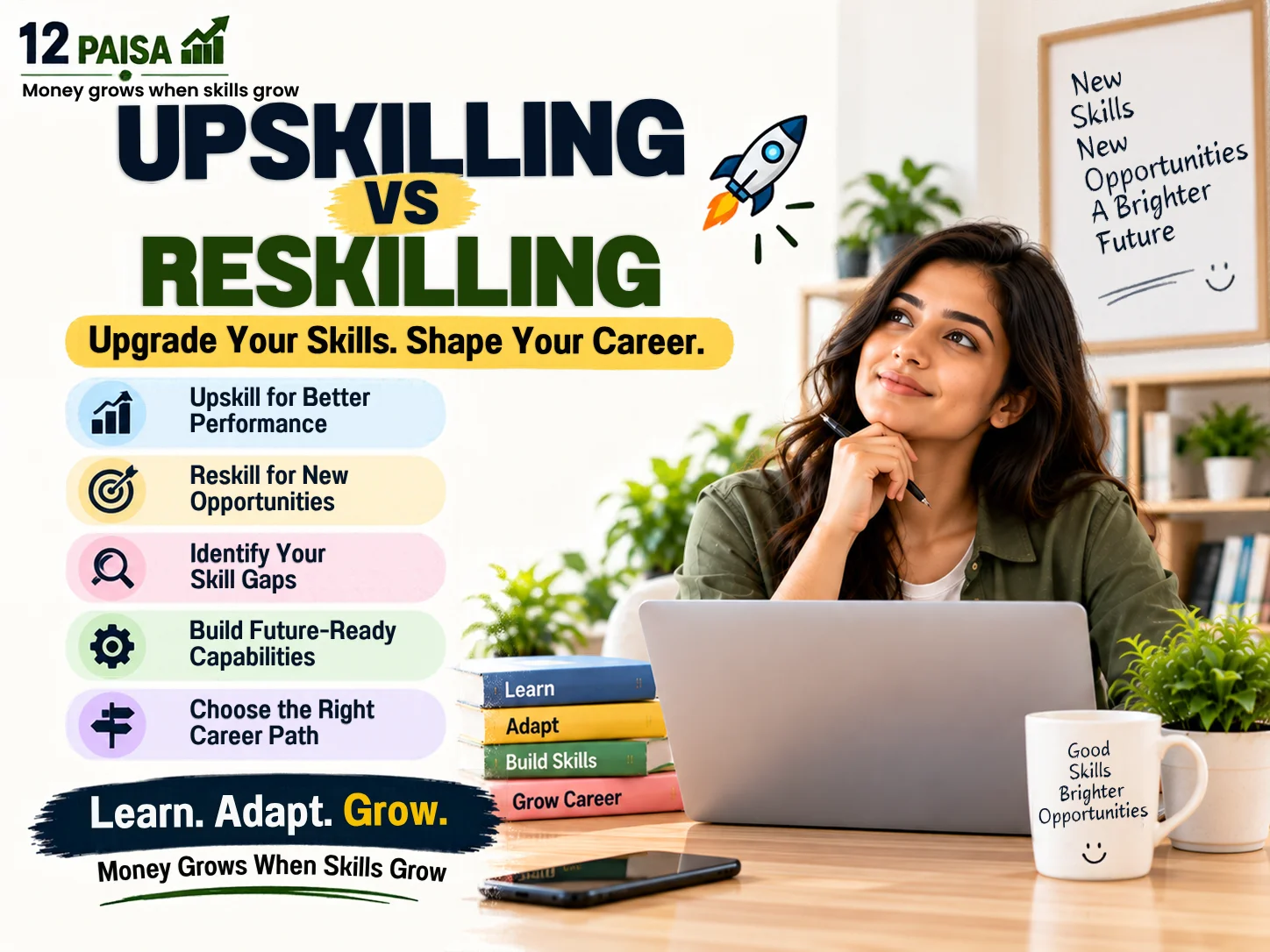
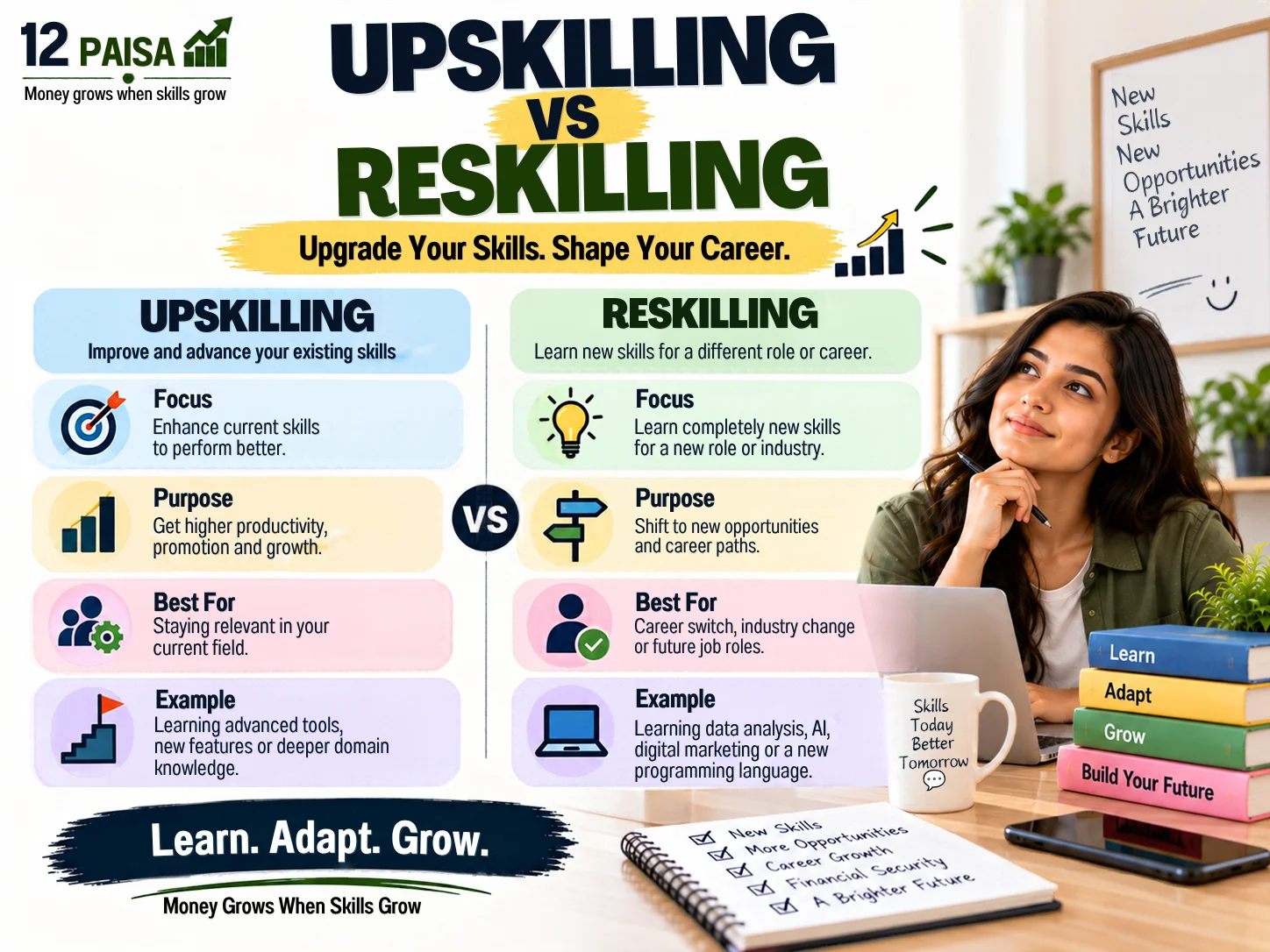
Upskilling का मतलब है अपने current role या career direction से जुड़ी existing skills को और बेहतर या advanced बनाना। Reskilling का मतलब है किसी नए role या career direction के लिए नई skills develop करना। सरल शब्दों में, upskilling में आप अपनी current capability को आगे बढ़ाते हैं, जबकि reskilling में आप नई capability के लिए तैयार होते हैं।
Upskilling vs Reskilling. इस लेख का उद्देश्य आपको Upskilling और Reskilling के बीच का स्पष्ट अंतर, कब कौन-सा विकल्प चुनना चाहिए और Career में दोनों की Practical भूमिका को आसान तरीके से समझाना है।
आज workplace तेजी से बदल रहा है। नई technologies आ रही हैं, पुराने processes बदल रहे हैं और कई roles में responsibilities पहले से अलग हो रही हैं।
ऐसे environment में एक सवाल increasingly important हो जाता है:
क्या मुझे अपनी मौजूदा Skills को बेहतर बनाना चाहिए या कोई नई Skill सीखकर अपने Career की दिशा बदलनी चाहिए?
यहीं पर दो important concepts सामने आते हैं:
Upskilling और Reskilling
दोनों learning और career development से जुड़े हैं, लेकिन दोनों का purpose एक जैसा नहीं है।
Quick Summary
- Upskilling existing skill को improve या deepen करने पर focus करता है।
- Reskilling नई role या career direction के लिए नई skills develop करने पर focus करता है।
- Upskilling का मतलब जरूरी नहीं कि job या career बदलना हो।
- Reskilling अक्सर career transition, role change या changing job requirements से जुड़ा हो सकता है।
- एक software developer नई technology सीखता है तो यह upskilling हो सकता है।
- एक non-technical professional data analyst role के लिए नई technical skills develop करता है तो यह reskilling हो सकता है।
- दोनों processes में learning, practice और real-world application important हैं।
- कई situations में upskilling और reskilling दोनों साथ–साथ भी हो सकते हैं।
- सही choice आपकी current role, future goal और skill gap पर depend करती है।
- Career growth के लिए सबसे पहले यह समझना जरूरी है कि आपको current path पर आगे बढ़ना है या नया path बनाना है।
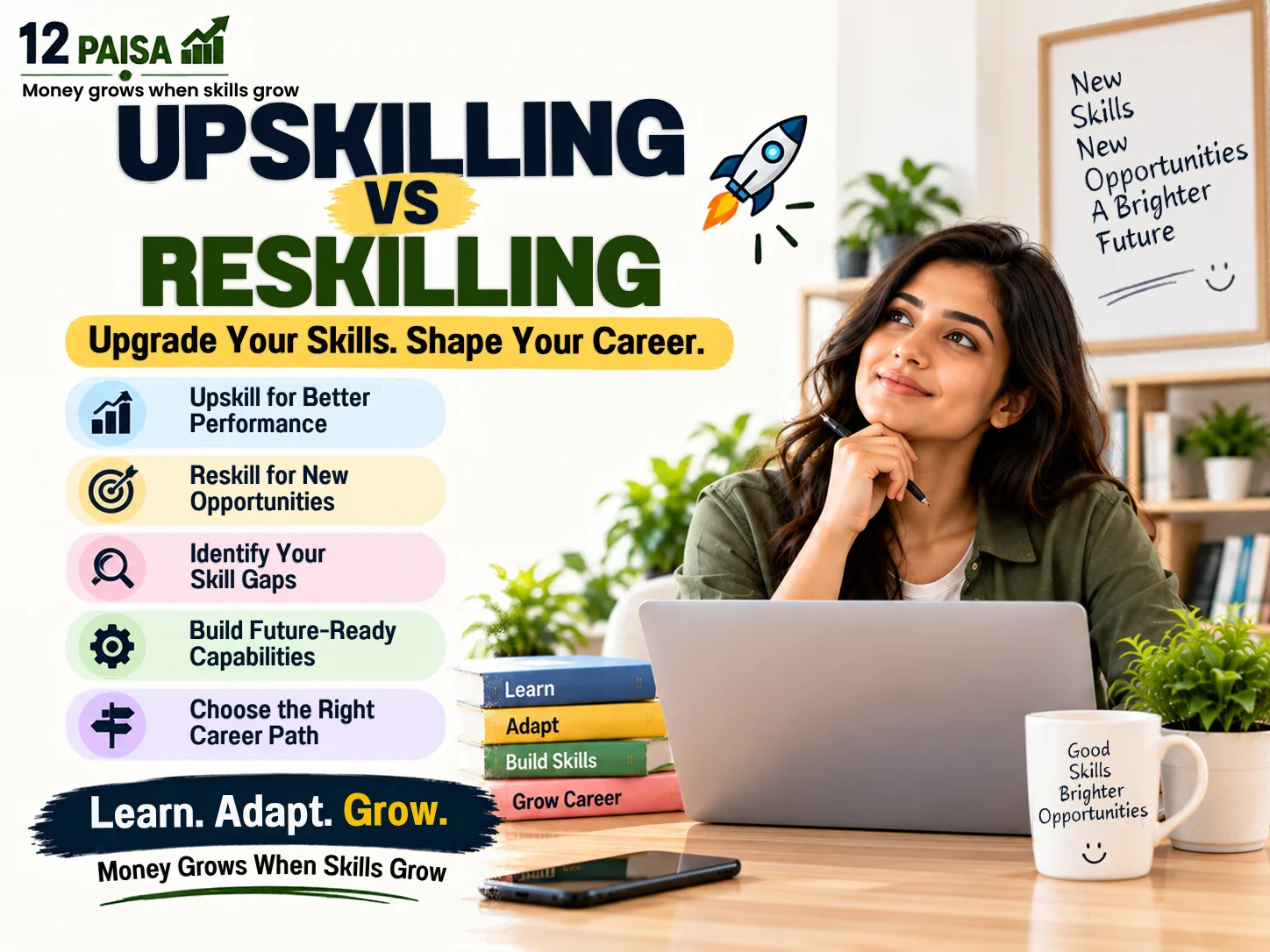
Upskilling Kya Hai?
Simple language में:
Upskilling का मतलब है अपनी current role, profession या career direction से जुड़ी existing skills को और मजबूत या advanced बनाना।
मान लीजिए एक digital marketer पहले basic SEO करता है।
वह आगे सीखता है:
- advanced keyword research
- analytics
- technical SEO basics
- conversion optimization
- AI-assisted content workflows
उसका career direction अभी भी digital marketing है।
उसने अपनी existing capability को deeper और broader बनाया है।
यह upskilling है।
Simple Formula
Current Skill → Better Skill → Advanced Capability
Reskilling Kya Hai?
Reskilling का मतलब है किसी नए role, profession या career direction में काम करने के लिए नई skills develop करना।
मान लीजिए एक administrative professional का current role largely manual documentation पर based है।
वह career direction बदलकर data analytics में जाना चाहता है।
अब उसे सीखना पड़ सकता है:
- spreadsheets
- data analysis
- SQL
- visualization
- basic statistics
- analytics tools
यह केवल उसकी current administrative skill को improve करना नहीं है।
वह एक नई career capability develop कर रहा है।
इसे reskilling कहा जा सकता है।
Simple Formula
Current Role → New Direction → New Skills → New Capability
Upskilling vs Reskilling: सबसे आसान Difference
एक line में:
Upskilling = Same direction mein better banna.
Reskilling = New direction ke liye prepare hona.
| Upskilling | Reskilling |
| Existing skills improve करता है | New skills develop करता है |
| Current career direction generally same रहती है | Career/role direction बदल सकती है |
| Skill depth बढ़ती है | Skill profile बदलता है |
| Advanced responsibilities के लिए useful | New role के लिए useful |
| Current capability पर build करता है | New capability develop करता है |
| Promotion या role expansion में मदद कर सकता है | Career transition में मदद कर सकता है |
लेकिन एक important बात:
हर reskilling का मतलब complete career change नहीं होता।
कभी-कभी company के अंदर role बदलने के लिए भी reskilling की जरूरत हो सकती है।
Upskilling ka Real-Life Example
मान लीजिए Priya एक HR executive है।
वह already recruitment process handle करती है।
अब वह सीखती है:
- HR analytics
- advanced spreadsheet reporting
- recruitment metrics
- data visualization
- AI-assisted HR workflows
उसका core domain अभी भी HR है।
इसलिए यह primarily Upskilling है।
उसने HR छोड़कर कोई बिल्कुल अलग career नहीं चुना।
उसने अपने current domain में अपनी capability बढ़ाई।
Reskilling ka Real-Life Example
अब मान लीजिए Amit customer support में काम करता है।
वह technology field में जाना चाहता है।
वह सीखना शुरू करता है:
- programming fundamentals
- Python
- databases
- Git
- software development basics
- practical coding projects
धीरे-धीरे उसका target role customer support से software development की तरफ shift हो रहा है।
यह Reskilling का example हो सकता है।
यहाँ learning का purpose existing role में better होना नहीं है।
Purpose है New career capability build करना।
Upskilling aur Reskilling दोनों की ज़रूरत क्यों पड़ती है?
Modern workplace static नहीं है।
Technology, customer expectations, tools और business processes change होते रहते हैं।
इसका मतलब यह नहीं कि हर employee को हर कुछ साल में career बदलना पड़ेगा।
लेकिन इसका मतलब यह जरूर है कि:
Current skills ko relevant बनाए रखना और future skills develop करना important है।
कभी solution upskilling होता है। कभी reskilling और कई cases में दोनों।
Skill Gap को समझना
Upskilling और reskilling decide करने से पहले एक important concept समझना जरूरी है Skill Gap
Skill gap का मतलब है Current capability और required capability के बीच का difference.
Example:
आपकी current role के लिए basic spreadsheet skills sufficient थीं।
लेकिन अब role में:
- dashboards
- data analysis
- automation
- reporting
की requirement आ गई।
तो आपके current skill level और required skill level के बीच gap है।
अगर current role same है और आपको advanced capability चाहिए Upskilling
लेकिन अगर target role ही बदल रहा है और नई skills चाहिए Reskilling
Skill Gap के 3 Types
Skill gap को broadly तीन situations में समझा जा सकता है।
Type 1: Depth Gap
आपके पास skill है, लेकिन required level तक नहीं है।
Example:
Basic Excel → Advanced Excel
यह generally upskilling direction है।
Type 2: Breadth Gap
आपको current role में additional skills चाहिए।
Example:
एक content writer को basic AI tools और analytics सीखने की जरूरत पड़ती है।
Core writing role same है, लेकिन capability expand हो रही है।
यह भी upskilling हो सकता है।
Type 3: Direction Gap
आप जिस role की ओर जाना चाहते हैं, उसके लिए आपकी current skill set पर्याप्त नहीं है।
Example:
Customer Support → Data Analyst
नई role के लिए substantially different skills develop करनी पड़ सकती हैं।
यह reskilling की direction हो सकती है।
Upskilling ka Main Objective
Upskilling का purpose केवल “more skills” collect करना नहीं है।
इसके objectives हो सकते हैं:
- Current role में better performance
- More responsibility handle करना
- Productivity improve करना
- New tools use करना
- Advanced tasks लेना
- Promotion readiness बढ़ाना
- Role relevance maintain करना
- Professional value बढ़ाना
इसलिए upskilling का question होता है:
“Main apne current career path mein aur valuable kaise ban sakta hoon?”
Reskilling ka Main Objective
Reskilling का focus अलग होता है।
इसके objectives हो सकते हैं:
- New role के लिए prepare होना
- Career transition करना
- Changing role requirements को meet करना
- New professional direction explore करना
- Internal role change के लिए prepare होना
- Declining skill area से emerging skill area की तरफ move करना
इसका central question है:
“Agar mujhe ek different role mein kaam karna ho, toh mujhe kya naya seekhna padega?”
Upskilling ≠ सिर्फ Advanced Course
एक common misconception है:
Upskilling = advanced course करना
लेकिन ऐसा जरूरी नहीं है।
मान लीजिए एक teacher already digital teaching tools use करता है।
वह आगे सीखता है:
- better data-based assessment
- digital content design
- AI-assisted lesson planning
- interactive learning tools
यह formal course के बिना भी upskilling हो सकता है।
Upskilling का real test है:
क्या आपकी practical capability improve हुई?
ना कि:
आपने कितने courses complete किए?
Reskilling ≠ अचानक पूरी Career Change
Similarly Reskilling = तुरंत job छोड़ देना, यह भी जरूरी नहीं है।
Reskilling कई stages में हो सकती है।
For example:
एक finance professional data analytics सीखना शुरू करता है।
पहले Finance + Data Skills
फिर Financial Data Analysis
और आगे चलकर Data Analyst / Business Analyst
जैसी roles explore की जा सकती हैं।
इसलिए reskilling एक gradual transition भी हो सकती है।
Upskilling vs Reskilling: Learning Direction
दोनों को एक simple diagram की तरह समझें।
Upskilling
Current Role
↓
Existing Skill
↓
Advanced Skill
↓
Greater Responsibility
Reskilling
Current Role
↓
New Career Goal
↓
New Skill Set
↓
New Role Capability
यह difference decision लेने में बहुत useful है।
Upskilling for Promotion
अगर आपका goal current organization या profession में grow करना है, तो upskilling अक्सर relevant हो सकती है।
Example:
Junior Accountant
↓ Upskilling
Advanced Spreadsheet + Reporting + Financial Analysis
↓
More Complex Responsibilities
↓
Senior Role Readiness
यहाँ career direction fundamentally नहीं बदली।
Capability का level बढ़ा।
Reskilling for Career Change
अब दूसरी situation:
Graphic Designer
↓
Career goal: UX Design
नई learning:
- UX research
- user flows
- wireframing
- usability
- product thinking
- UX tools
अब student/professional existing design experience को completely discard नहीं कर रहा।
लेकिन उसे एक new role-specific capability set develop करना पड़ रहा है।
यह reskilling direction है।
Reskilling in Internal Role Change
Reskilling सिर्फ external job switch के लिए नहीं होती।
मान लीजिए company में कोई employee:
Customer Support → Customer Success
role में move करना चाहता है।
उसे शायद सीखना पड़े:
- customer lifecycle
- account management
- retention metrics
- relationship management
- reporting
- business communication
यह internal mobility के लिए reskilling हो सकती है।
इसलिए:
Reskilling = New role capability, not necessarily new company.
Upskilling + Reskilling Ek Saath
Real career situations हमेशा black-and-white नहीं होतीं।
कई बार professional को:
Current Skill ko improve bhi karna hota hai और New Skill bhi seekhni hoti hai.
Example:
एक marketing professional AI-driven marketing roles की तरफ move करना चाहता है।
Current skills:
- content
- SEO
- campaigns
Upskilling:
- advanced analytics
- performance marketing
- strategy
Reskilling:
- AI workflows
- automation
- new AI-based tools
यह combination हो सकता है Upskill + Reskill
इससे career transition relatively connected direction में हो सकती है।
Concept of Skill Adjacency
Reskilling का मतलब हमेशा completely unrelated field में जाना नहीं होता।
एक useful concept है Adjacent Skills
यानी ऐसी नई skills जो आपकी existing skills से कुछ connection रखती हैं।
Example:
Content Writing
→ SEO
→ Content Strategy
→ Digital Marketing
यहाँ हर step पर कुछ existing knowledge useful रह सकती है।
इसी तरह:
Graphic Design
→ UI Design
→ UX Design
→ Product Design
इस तरह का transition कभी-कभी zero से शुरू करने की बजाय existing experience को bridge की तरह use कर सकता है।
Don’t Consider Your Existing Experience a Waste.
Career change करते समय professionals की एक common चिंता होती है:
“Maine jo itne saal seekha hai, woh sab waste ho jayega.”
जरूरी नहीं।
Existing experience में transferable capabilities हो सकती हैं।
Example:
एक teacher के पास हो सकता है:
- communication
- presentation
- training
- planning
- audience understanding
- content development
अगर वह learning & development role की तरफ move करता है, तो उसका previous experience useful हो सकता है।
इसी तरह Sales experience + Data Skills
→ Sales Analytics
या
Finance + Technology
→ FinTech-related roles
या
Marketing + Analytics
→ Performance/Marketing Analytics
यहाँ reskilling existing experience को replace करने के बजाय reposition कर सकती है।
Role of Transferable Skills
Reskilling करते समय सिर्फ new technical skills पर focus करना mistake हो सकती है।
नई role में कुछ existing skills transfer हो सकती हैं।
Examples:
Communication
लगभग हर professional environment में useful हो सकती है।
Problem Solving
Different roles में apply हो सकती है।
Research
Marketing, analytics, consulting, content और many other fields में useful है।
Project Coordination
Different teams और roles में relevant हो सकती है।
Customer Understanding
Sales, support, marketing और product roles में useful हो सकती है।
इसलिए career transition को Old Skills + New Skills के combination से देखना बेहतर है।
5 Questions to Help You Choose Between Upskilling and Reskilling
अगर आप confused हैं कि आपको upskill करना चाहिए या reskill, तो ये questions पूछें:
Question 1
क्या मैं अपने current role में ही आगे बढ़ना चाहता हूँ?
Yes → Upskilling likely
Question 2
क्या मेरे target role की responsibilities fundamentally different हैं?
Yes → Reskilling likely
Question 3
क्या current role में नई technology आने के कारण नई capability चाहिए?
Yes → Upskilling may be enough
Question 4
क्या मैं career direction बदलना चाहता हूँ?
Yes → Reskilling may be relevant
Question 5
क्या मेरी existing skills नई role में useful हो सकती हैं?
Yes → Adjacent reskilling path explore करें
Simple Decision Tree
इसे बहुत simple तरीके से समझें:
क्या current career direction में रहना है?
YES
↓
Current skill को improve करना है?
→ UPSKILLING
NO
↓
New role/career direction चाहिए?
→ RESKILLING
लेकिन अगर:
Current direction + New capability
दोनों चाहिए:
→ UPSKILL + RESKILL
Student, Professional aur Career Switcher ke Liye Difference
| Person | Possible Need |
| College student | Future role के लिए foundational skills |
| Working professional | Current role में advanced capability |
| Promotion candidate | Upskilling |
| Technology transition से affected worker | Upskilling या reskilling |
| Career switcher | Reskilling |
| Internal role changer | Reskilling |
| New technology adopt करने वाला employee | Upskilling |
| Adjacent career में जाने वाला professional | Reskilling + existing skills |
यह fixed rule नहीं है। Actual choice individual career goal और skill gap पर depend करेगी।
एक Important Mistake: “New Skill = Better Career”
हर नई skill valuable नहीं होती।
अगर आपने कोई trending skill सीख ली लेकिन:
- market में उसकी relevance नहीं है
- target role से connection नहीं है
- practical application नहीं है
- आप उसे demonstrate नहीं कर सकते
तो केवल skill का नाम आपके career को automatically improve नहीं करेगा।
इसलिए learning से पहले पूछें Why this skill? फिर Where will I use it? और अंत में How will I demonstrate it?
Upskilling/Reskilling ka Value Chain
एक useful career-development chain:
LEARN
↓
PRACTICE
↓
APPLY
↓
PROVE
↓
CREATE VALUE
↓
GROW
Skill सीखना पहला step है।
Real career value तब create होती है जब skill:
- practical task में apply हो
- result या evidence create करे
- workplace में value add करे
Key Takeaways
- Upskilling existing career direction में capability improve करने पर focus करता है।
- Reskilling नई role या career direction के लिए नई capabilities develop करने पर focus करता है।
- Upskilling का मतलब केवल advanced course करना नहीं है।
- Reskilling का मतलब हमेशा company छोड़ना या complete career change करना नहीं है।
- Skill gap को समझना सही learning direction चुनने का पहला step है।
- Depth gap अक्सर upskilling की ओर indicate कर सकता है।
- Direction gap reskilling की आवश्यकता दिखा सकता है।
- Existing experience career transition में valuable हो सकता है।
- Transferable skills reskilling को easier और more connected बना सकती हैं।
- Adjacent skills career transition के लिए practical bridge बन सकती हैं।
- कई situations में Upskilling + Reskilling दोनों की जरूरत पड़ सकती है।
- सही सवाल यह नहीं है कि “कौन-सी skill trending है?”
- सही सवाल है: “मेरे career goal के लिए कौन–सी capability जरूरी है?”
अब हम practical side पर जाएंगे:
- Upskilling के real workplace examples
- Reskilling के real career-transition examples
- Current role vs future role skill mapping
- Technology change और skill requirements
- Promotion के लिए upskilling
- Career switch के लिए reskilling
- Internal mobility
- Transferable skills का practical use
- Skill gap analysis
- Learning path कैसे बनाएं
- Upskilling और reskilling में common mistakes
- Employer और employee दोनों के perspective से skill development
- एक practical Upskill vs Reskill decision framework
अब हम Upskilling और Reskilling को real career situations से जोड़ेंगे—promotion, technology change, internal role change, career switch, skill-gap mapping और practical decision-making पर focus रहेगा।
Upskilling vs Reskilling: Practical Career Applications
अब तक आपने समझा कि Upskilling और Reskilling में basic difference क्या है।
- Upskilling में existing career direction के अंदर capability बढ़ाई जाती है।
- Reskilling में नई role या career direction के लिए नई capabilities develop की जाती हैं।
लेकिन real career situations में यह difference हमेशा इतना simple नहीं होता।
कभी technology बदलती है।
कभी company में role बदल जाता है।
कभी promotion के लिए नई capabilities चाहिए होती हैं।
और कभी professional को लगता है कि current career direction अब उसके लिए suitable नहीं है।
ऐसी situations में सही learning strategy चुनना important हो जाता है।
Upskilling ka Practical Workplace Example
मान लीजिए Rohit एक digital marketing executive है।
उसका current work:
- SEO
- content coordination
- basic campaign reporting
- keyword research
अब company चाहती है कि marketing team data के आधार पर better decisions ले।
Rohit सीखता है:
- advanced analytics
- campaign performance analysis
- conversion metrics
- dashboard creation
- AI-assisted marketing workflows
उसका profession अभी भी digital marketing है।
लेकिन उसकी capability अब पहले से advanced हो गई है।
इसलिए Digital Marketing → Advanced Digital Marketing यह Upskilling है।
Reskilling ka Practical Career-Transition Example
अब एक अलग situation देखें।
Neha customer support executive है।
वह technology field में career बनाना चाहती है।
उसकी current skills:
- customer communication
- issue handling
- documentation
- problem resolution
लेकिन उसके target role के लिए चाहिए:
- programming
- databases
- software development
- testing
- version control
अब Neha को एक substantially different skill set develop करना पड़ेगा।
यह Customer Support → Technology Role का transition है।
इसलिए यह Reskilling की direction है।
ध्यान दें कि उसकी communication और problem-solving skills फिर भी useful रहेंगी।
Upskilling for Promotion
हर career growth का मतलब job change नहीं होता।
कई professionals current organization में ही आगे बढ़ना चाहते हैं।
Example:
Junior Accountant
Current skills:
- accounting basics
- data entry
- basic spreadsheets
Future responsibility:
- financial reporting
- advanced analysis
- budgeting
- management reporting
अब professional advanced spreadsheets, financial analysis और reporting सीखता है।
यह Current Role → Advanced Capability → Higher Responsibility का path है।
यह primarily Upskilling है।
The Connection Between Promotion and Upskilling
Promotion के लिए केवल “मैं ज्यादा मेहनत करता हूँ” कहना पर्याप्त नहीं हो सकता।
कई roles में higher responsibility के लिए additional capability चाहिए होती है।
Example:
Junior Role
Task execute करना
Mid-Level Role
Task + analysis
Senior Role
Analysis + decision support
Leadership Role
Decision + people + business impact
इस progression में skills भी evolve होती हैं।
इसलिए upskilling का एक important purpose है:
Current role की अगली level की responsibilities के लिए तैयार होना।
Upskilling After Technological Changes
Technology change का मतलब automatically job loss नहीं है।
कई बार technology existing role को बदलती है।
Example:
एक content professional पहले manually:
- research
- drafting
- formatting
- basic editing
करता था।
अब AI tools इनमें से कुछ tasks को faster बना सकते हैं।
Professional को क्या करना चाहिए?
सिर्फ AI tool सीखना पर्याप्त नहीं है।
उसे develop करना चाहिए:
- AI workflow understanding
- prompt/context skills
- fact verification
- editing
- content strategy
- audience understanding
- quality control
यहाँ existing profession बना रहता है लेकिन capability बदलती है।
इसलिए यह Upskilling हो सकती है।
Automation ke Baad Upskilling vs Reskilling
मान लीजिए किसी role का repetitive हिस्सा automation से reduce हो गया।
अब दो situations हो सकती हैं।
Situation A
Professional same role में higher-level responsibilities ले सकता है।
→ Upskilling
Situation B
Current role की demand significantly reduce हो गई और professional को दूसरे role में move करना पड़ता है।
→ Reskilling
इसलिए technology change के बाद response हमेशा same नहीं होता।
पहले यह समझना जरूरी है Role बदल रहा है या केवल role के tasks बदल रहे हैं?
Task Change vs Role Change
यह distinction बहुत important है।
Task Change
Role same है, लेकिन tasks बदल रहे हैं।
Example:
Accountant → Accountant + Data Analysis
यह upskilling की direction हो सकती है।
Role Change
Professional का target role substantially अलग हो रहा है।
Example:
Accountant → Software Developer
यह reskilling की direction हो सकती है।
Simple rule Task change often needs upskilling. Role change may need reskilling.
Internal Mobility and Reskilling
कभी employee company छोड़ना नहीं चाहता, लेकिन department या role बदलना चाहता है।
Example:
Customer Support → Sales
या:
Marketing → Product
या:
Operations → Business Analytics
Current experience useful हो सकती है, लेकिन नई role के लिए additional skills चाहिए।
इस situation में reskilling employee को internal mobility के लिए prepare कर सकती है।
Internal Mobility Formula
Existing Experience + New Skills + Role-Specific Practice = New Internal Opportunity
Reskilling for Career Switch
Career switch करते समय सबसे बड़ी mistake होती है:
“Mujhe bilkul zero se start karna padega.”
हर transition zero से शुरू नहीं होती।
Example:
Teacher → Corporate Trainer
Existing skills:
- presentation
- communication
- training
- audience handling
- content preparation
New skills:
- corporate learning systems
- training needs analysis
- workplace learning tools
- professional reporting
यह transition existing experience को use कर सकती है।
इसलिए reskilling का मतलब हमेशा previous career को discard करना नहीं है।
The Skill Bridge to a Career Switch
Career transition को एक bridge की तरह समझें।
Old Career
Existing skills
↓
Transferable Skills
Communication
Problem-solving
Research
Planning
Teamwork
↓
New Skills
Target-role-specific capabilities
↓
Practical Project
↓
New Role
यह approach career switch को more structured बना सकती है।
Skill Adjacency ka Practical Use
Adjacent skills career transition में बहुत useful हो सकती हैं।
मान लीजिए:
Graphic Designer
वह directly software engineering में जाने के बजाय explore करता है:
Graphic Design → UI Design → UX Design → Product Design
यहाँ previous design knowledge कुछ stages पर useful रह सकती है।
Similarly:
Content Writer → SEO → Content Strategy → Digital Marketing
या:
Excel User → Data Analysis → Business Analytics
या:
Sales → CRM → Sales Operations → Revenue Analytics
इन transitions में existing knowledge नई learning के लिए foundation बन सकती है।
Skill Gap Mapping: Current vs Future
Upskilling और reskilling decide करने का एक practical method है:
Current vs Future Skill Map
| Skill Area | Current Level | Future Requirement | Action |
| Communication | Good | Good | Maintain |
| Spreadsheet | Basic | Advanced | Upskill |
| Data Analysis | Basic | Advanced | Upskill |
| Programming | None | Required | Reskill |
| Domain Knowledge | Good | Relevant | Maintain |
| AI Tools | Basic | Intermediate | Upskill |
इस table से एक important बात सामने आती है:
एक ही person को अलग-अलग skills के लिए different strategies की जरूरत हो सकती है।
कुछ skills में upskilling कुछ में reskilling
4-Question Skill Gap Test
अपने current और future role के बीच gap समझने के लिए चार questions पूछें:
1. क्या skill पहले से मौजूद है?
अगर हाँ, उसे improve करना पड़ सकता है।
2. क्या skill मौजूद है लेकिन basic level पर है?
→ Upskill
3. क्या skill बिल्कुल नई है और target role के लिए important है?
→ Reskill
4. क्या existing skill नई role में transfer हो सकती है?
→ Skill Bridge
यह approach learning को much more targeted बना सकती है।
Learning Path for Upskilling
Upskilling में अक्सर foundation पहले से मौजूद होती है।
इसलिए learning path हो सकता है:
Current Skill
↓
Skill Gap
↓
Advanced Concept
↓
Practical Application
↓
Real Project
↓
Higher Responsibility
Example:
Basic Excel
→ Advanced formulas
→ Data cleaning
→ Pivot tables
→ Dashboards
→ Business reporting
यह एक natural upskilling path है।
Learning Path for Reskilling
Reskilling में learning path थोड़ा अलग हो सकता है।
क्योंकि target capability नई है।
Possible sequence:
Career Goal
↓
Target Role
↓
Required Skills
↓
Foundation
↓
Core Technical Skill
↓
Practical Projects
↓
Role Simulation
↓
Portfolio/Evidence
↓
Entry Opportunity
Example:
Customer Support → Data Analyst
Learning path:
- Data basics
- Spreadsheet
- SQL
- Data visualization
- Analytics projects
- Business problem analysis
- Portfolio
- Entry-level applications
यह केवल एक example path है; actual requirements target role के अनुसार बदल सकती हैं।
Learning Everything is Not the Solution
Upskilling या reskilling शुरू करते समय एक common mistake है:
“Mujhe is field ki saari skills seekhni hain.”
यह approach learning overload पैदा कर सकती है।
Better:
Target Role
↓
Must-Have Skills
↓
Nice-to-Have Skills
↓
Supporting Skills
इससे priority clear होती है।
Must-Have vs Nice-to-Have Skills
Example: Target role = Junior Data Analyst
Must-Have
- Spreadsheet fundamentals
- Data analysis
- SQL basics
- Data interpretation
Supporting
- Communication
- Presentation
- Research
- Problem-solving
Nice-to-Have
- Advanced automation
- Specialized tools
- Advanced statistics
Beginner को पहले must-have skills पर focus करना चाहिए।
Depth Matters in Upskilling
एक professional को 10 tools के basic features जानने की बजाय कुछ important capabilities deeply समझना ज्यादा useful हो सकता है।
Example:
Weak approach:
“Mujhe Excel, Power BI, Tableau, Python, SQL, R sab thoda-thoda aata hai.”
Better:
“I can use spreadsheets and SQL for basic data analysis and communicate the findings through clear reports.”
पहला statement tools list करता है।
दूसरा capability explain करता है।
Career development में capability ज्यादा important है।
Reskilling Requires Both Breadth and Depth
Reskilling में नई role unfamiliar हो सकती है।
इसलिए शुरुआत में breadth useful है।
Student/professional को समझना चाहिए:
- role क्या करता है?
- common tasks क्या हैं?
- required tools कौन-से हैं?
- common terminology क्या है?
- typical workflow क्या है?
इसके बाद core skill में depth develop करनी चाहिए।
Pattern:
Explore Broadly → Choose Carefully → Learn Deeply
Employer Perspective: Companies Upskilling Kyon Support Karti Hain?
Organizations के लिए existing employees को develop करना useful हो सकता है क्योंकि employee पहले से:
- company processes जानता है
- team structure समझता है
- business context जानता है
- organizational culture से familiar है
अगर employee नई capability develop कर सकता है, तो company को existing talent से more value मिल सकती है।
इसलिए कई organizations internal learning, training या development programs use करती हैं।
लेकिन actual availability company और role के अनुसार अलग होती है।
Employer Perspective: Reskilling Kyon Important Ho Sakti Hai?
Business needs बदलने पर roles भी बदल सकते हैं।
अगर organization में:
- new technology आती है
- processes automate होते हैं
- new services launch होती हैं
- customer requirements बदलती हैं
तो existing employees को नए roles के लिए prepare करना useful हो सकता है।
इस context में reskilling organization को existing talent के साथ changing requirements address करने में मदद कर सकती है।
Employee Perspective: Upskilling ka Benefit
Employee के लिए upskilling potentially help कर सकती है:
- current role में better performance
- advanced responsibilities
- internal growth
- productivity
- professional confidence
- changing tools के साथ adaptation
- future opportunities
लेकिन कोई skill अपने आप promotion या salary increase guarantee नहीं करती।
Actual outcome organization, role, performance और market conditions पर depend करता है।
Employee Perspective: Reskilling ka Benefit
Reskilling potentially help कर सकती है:
- new role explore करने में
- career transition prepare करने में
- changing industry requirements adapt करने में
- internal mobility में
- new professional opportunities create करने में
लेकिन reskilling में realistic expectations रखना जरूरी है।
नई skill सीखना और नई role के लिए competitive candidate बनना दो अलग stages हैं।
इसलिए:
Learn → Practice → Prove → Apply का पूरा cycle जरूरी है।
Common Mistake: Course Complete = Skill Complete
यह सबसे common mistakes में से एक है।
मान लीजिए professional ने “Advanced Data Analytics Course” complete कर लिया।
इसका मतलब automatically यह नहीं कि वह real business dataset independently analyse कर सकता है।
Skill को test करने के लिए पूछें:
- क्या मैं इसे बिना tutorial के use कर सकता हूँ?
- क्या मैं real problem पर apply कर सकता हूँ?
- क्या मैं result explain कर सकता हूँ?
- क्या मैं mistakes identify कर सकता हूँ?
- क्या मैं अपना work demonstrate कर सकता हूँ?
अगर answer mostly “yes” है, तो learning practical capability में convert हो रही है।
Common Mistake: Trend ke Peeche Bhaagna
हर emerging skill सीखना जरूरी नहीं है।
आज कोई skill trending हो सकती है।
लेकिन अगर:
- आपके career goal से connection नहीं है
- target roles में demand नहीं है
- आप उसे practically use नहीं करेंगे
तो उसका immediate career value limited हो सकता है।
इसलिए Trend नहीं, relevance choose करें।
Common Mistake: Old Skills ko Completely Ignore Karna
Reskilling करते समय कुछ professionals सोचते हैं:
“अब मुझे अपनी पुरानी सारी skills छोड़नी हैं।”
यह जरूरी नहीं है।
आपकी old skills:
- communication
- domain knowledge
- customer understanding
- industry experience
- leadership
- problem-solving
नई role में differentiator बन सकती हैं।
Career transition में goal अक्सर होता है Old Strengths + New Capability
Common Mistake: Too Many Skills at Once
अगर professional एक साथ:
- AI
- coding
- data
- marketing
- design
- cloud
- cybersecurity
सब सीखने लगे, तो progress shallow हो सकती है।
Better:
One Target
↓
One Core Skill
↓
One Supporting Skill
↓
One Practical Project
फिर next layer।
यह approach learning को manageable बनाती है।
Common Mistake: No Practical Evidence
Upskilling और reskilling दोनों में evidence useful है।
Upskilling Evidence
- Advanced project
- Improved workflow
- Better report
- Automation
- New responsibility
Reskilling Evidence
- New-role project
- Portfolio
- Case study
- Simulation
- Certification + practical work
Evidence से यह दिखता है “Maine seekha” → “Maine apply kiya.”
Common Mistake: Learning Without a Career Target
अगर learning का purpose clear नहीं है, तो direction खो सकती है।
Instead of “Mujhe AI seekhna hai.”
Ask:
“Main AI ko kis role mein use karna chahta hoon?”
Instead of “Mujhe data seekhna hai.”
Ask:
“Kya main Data Analyst, Business Analyst ya apne current role mein data capability develop karna chahta hoon?”
Target clear होगा तो learning path भी clear होगा।
Upskilling vs Reskilling Decision Matrix
अब दोनों concepts को practical decision matrix में देखें:
| Question | Upskilling | Reskilling |
| Current career direction same? | Usually Yes | Often No/New role |
| Existing skill improve करनी है? | Yes | Sometimes |
| New skill set required? | Limited/Additional | Usually Significant |
| Promotion goal? | Often relevant | Sometimes |
| Career switch? | Less likely | Highly relevant |
| Internal role change? | Sometimes | Often relevant |
| Technology update? | Often | Sometimes |
| Existing experience useful? | Very much | Often |
| Learning path | Deeper/expanded | New capability |
| Main question | “How can I become better?” | “How can I become ready for a different role?” |
Upskill, Reskill ya Both? — Practical Framework
जब decision clear न हो, इस framework का use करें।
Step 1: CURRENT
आप अभी क्या करते हैं?
Step 2: FUTURE
आप आगे क्या करना चाहते हैं?
Step 3: COMPARE
दोनों roles की skills compare करें।
Step 4: CLASSIFY
हर skill को तीन categories में रखें Improve → Learn → Maintain
Improve
Existing skill है लेकिन higher level चाहिए।
→ Upskill
Learn
Skill नहीं है और future role के लिए जरूरी है।
→ Reskill
Maintain
Skill already relevant है और current level sufficient है।
→ Maintain
Practical Skill Mapping Example
मान लीजिए:
Current Role: Marketing Executive
Future Goal: Marketing Analytics
| Skill | Current | Future | Action |
| Marketing Knowledge | Strong | Strong | Maintain |
| Communication | Good | Good | Maintain |
| Spreadsheet | Basic | Advanced | Upskill |
| Data Analysis | Basic | Strong | Upskill |
| Analytics Tools | Limited | Required | Upskill |
| SQL | None | Required | Reskill |
| Statistics | Basic | Moderate | Upskill |
| Reporting | Good | Strong | Upskill |
यह example दिखाता है कि एक career transition में भी हर skill को reskill करना जरूरी नहीं है।
कुछ existing skills Upskill, कुछ Maintain, और कुछ completely new skills Reskill
Career Development ka More Realistic Model
Career development को हमेशा Upskill OR Reskill की binary choice के रूप में नहीं देखना चाहिए।
एक practical model है Maintain जो skills अभी relevant हैं उन्हें maintain करें।
Upskill
Existing skills को deeper और stronger बनाएं।
Reskill
Future role के लिए genuinely new skills develop करें।
Combine
Different skills को combine करके unique professional value create करें।
इससे career development ज्यादा flexible बनती है।
Role of Skill Stack
एक strong career profile केवल single skill पर depend नहीं करती।
Example:
Marketing
Marketing + Data + AI
Finance
Finance + Analytics + Technology
HR
HR + Data + Communication
Teaching
Teaching + Technology + Content
Design
Design + UX + AI
यह combinations professional को केवल one-dimensional skill profile से अलग कर सकते हैं।
लेकिन skill stacking भी purpose-driven होना चाहिए।
More skills ≠ Automatically more value
Relevant combination ज्यादा important है।
Upskilling aur Reskilling ka Practical Golden Rule
अगर आपको सिर्फ एक rule याद रखना हो:
Current role mein better banna hai → Upskill.
Different role ke liye ready banna hai → Reskill.
Career direction connected hai but new capabilities bhi chahiye → Upskill + Reskill.
और हर situation में:
Goal → Skill Gap → Learning → Practice → Evidence
का sequence follow करें।
Key Takeaways
- Promotion और advanced responsibilities के लिए upskilling useful हो सकती है।
- Technology change होने पर पहले देखें कि task बदल रहा है या पूरा role।
- Task change में upskilling sufficient हो सकती है।
- Role change में reskilling की जरूरत पड़ सकती है।
- Internal mobility के लिए भी reskilling useful हो सकती है।
- Career switch में existing transferable skills को discard नहीं करना चाहिए।
- Adjacent skills career transition को more practical बना सकती हैं।
- Skill-gap mapping current और future capabilities का difference clear करती है।
- हर future skill को reskill करना जरूरी नहीं; कुछ skills maintain, कुछ upskill और कुछ नई सीखनी पड़ सकती हैं।
- Course complete होना skill mastery का proof नहीं है।
- Practical application और evidence दोनों upskilling और reskilling में important हैं।
- Trend के बजाय career relevance को priority दें।
- One target + one core skill + one supporting skill learning को manageable बना सकता है।
- Real career development अक्सर Maintain + Upskill + Reskill + Combine का mixture होती है।
- Final decision के लिए सबसे useful question है:
“Mujhe current role mein better banna hai ya different role ke liye ready hona hai?”

Upskilling vs Reskilling: How to Choose the Right Career Path
अब तक आपने Upskilling और Reskilling का basic difference समझा और देखा कि ये concepts promotion, technology change, internal mobility और career switching में कैसे apply हो सकते हैं।
अब सबसे practical सवाल है:
“Mujhe kaise pata chalega ki mujhe Upskill karna hai, Reskill karna hai, ya dono?”
मुझे कैसे पता चलेगा कि मुझे Upskill करना है, Reskill करना है या दोनों?
इसका answer केवल current job title से नहीं मिलेगा। आपको अपने current skills, future goal, role requirements और skill gap को एक साथ देखना होगा।
Upskilling vs Reskilling: Final Decision Test
सबसे पहले इन questions का answer दें।
Question 1
क्या आप अपने current career/role में ही आगे बढ़ना चाहते हैं?
Yes → Upskilling की संभावना ज्यादा है।
Question 2
क्या आप किसी substantially different role में जाना चाहते हैं?
Yes → Reskilling की जरूरत हो सकती है।
Question 3
क्या आपकी current skill मौजूद है लेकिन higher level चाहिए?
Yes → Upskill.
Question 4
क्या target role के लिए कोई important skill आपको बिल्कुल नहीं आती?
Yes → Reskill that capability.
Question 5
क्या current और future role में कुछ common skills हैं?
Yes → उन skills को leverage करें।
Question 6
क्या आपको current skills भी improve करनी हैं और नई skills भी सीखनी हैं?
Yes → Upskilling + Reskilling.
Upskilling vs Reskilling Self-Assessment
नीचे दिए statements को Yes / No में answer करें।
| Statement | Yes/No |
| मैं अपने current career path में ही आगे बढ़ना चाहता हूँ। | |
| मेरी current skills useful हैं लेकिन advanced level चाहिए। | |
| मेरे role में नई technology आ रही है। | |
| मुझे current role में ज्यादा responsibility लेनी है। | |
| मैं किसी दूसरे role में move करना चाहता हूँ। | |
| मेरे target role में कई skills नई हैं। | |
| मेरी कुछ existing skills target role में transfer हो सकती हैं। | |
| मुझे नई technical/domain capability develop करनी होगी। | |
| मैं current और future दोनों skill sets improve करना चाहता हूँ। | |
| मेरे career goal के लिए practical skill gap मौजूद है। |
Interpretation
अगर पहले चार statements में Yes ज्यादा हैं:
Upskilling पर focus करें।
अगर बीच के career-transition statements में Yes ज्यादा हैं:
Reskilling explore करें।
अगर दोनों sides पर strong “Yes” हैं Combined Upskilling + Reskilling strategy consider करें।
यह self-assessment career decision का guarantee नहीं है। इसका purpose आपकी learning direction को clearer बनाना है।
Skill Gap Worksheet
अपनी current और future position को एक table में लिखें:
| Area | Current Skill | Future Requirement | Action |
| Technical | क्या आता है? | क्या चाहिए? | Upskill/Reskill |
| Communication | Current level | Required level | Improve |
| Digital Tools | Current tools | Future tools | Learn |
| Domain | Current knowledge | Future knowledge | Maintain/Build |
| Analytics | Current level | Required level | Upskill/Reskill |
| AI | Current awareness | Role requirement | Learn/Improve |
| Professional Skills | Current level | Future expectation | Improve |
इस exercise का purpose simple है Guesswork से career learning को निकालकर skill-gap based planning में बदलना।
Upskilling Roadmap for Working Professionals
अगर आपका goal current career में आगे बढ़ना है, तो यह roadmap useful हो सकता है:
Step 1 — Current Role Assess करें
आप अभी कौन-कौन से tasks independently कर सकते हैं?
Step 2 — Next-Level Role देखें
आपके next career level पर कौन-सी responsibilities expected हैं?
Step 3 — Skill Gap Identify करें
कौन-सी capabilities missing हैं?
Step 4 — Priority Set करें
सब skills एक साथ सीखने की जरूरत नहीं है।
Step 5 — Practice करें
Skill को actual work या realistic project में apply करें।
Step 6 — Evidence बनाएं
Improved report, automation, project, process improvement या new responsibility का evidence रखें।
Step 7 — Feedback लें
Manager, mentor या experienced professional से feedback लें।
Step 8 — Next Responsibility लें
नई skill को higher-value work में apply करें।
Formula:
CURRENT ROLE → SKILL GAP → UPSKILL → APPLY → PROVE → MORE RESPONSIBILITY
Reskilling Roadmap for Career Switchers
Career switch में process थोड़ा अलग होगा।
Step 1 — Target Role
सबसे पहले exact या approximate target role identify करें।
Step 2 — Job Research
Multiple job descriptions देखें।
Step 3 — Common Skills
Repeated technical और transferable skills identify करें।
Step 4 — Existing Skills
देखें कि आपकी current skills में से क्या transfer हो सकता है।
Step 5 — New Skills
Missing core capabilities की priority list बनाएं।
Step 6 — Foundation
New domain के basic concepts समझें।
Step 7 — Practical Work
Projects और realistic tasks करें।
Step 8 — Evidence
Portfolio, case study, project या work sample बनाएं।
Step 9 — Entry Opportunity
Internship, junior role, freelance project, internal transfer या other relevant opportunity explore करें।
Formula:
CURRENT EXPERIENCE → TARGET ROLE → SKILL GAP → RESKILL → PROJECT → PROOF → TRANSITION
Students ke Liye Upskilling vs Reskilling
College students के लिए यह difference थोड़ा अलग तरीके से समझना चाहिए।
कई students के पास अभी formal professional role नहीं होता।
इसलिए उनके लिए:
Upskilling
Already-known area में deeper capability develop करना।
Example:
Basic Python → Advanced Python + Projects
Reskilling
एक career direction से दूसरे direction की ओर move करने के लिए new skill set develop करना।
Example:
Basic Marketing Knowledge → Data Analytics
लेकिन student के case में career direction early stage पर होती है।
इसलिए students को unnecessary “reskilling” label लगाने की बजाय पहले Explore → Test → Choose → Build approach follow करनी चाहिए।
Career Switch ke Pehle 5 Checks
Reskilling शुरू करने से पहले यह पांच checks करें:
1. Role Check
क्या आपने actual target role समझा है?
2. Demand Check
क्या उस role के लिए current job opportunities और requirements relevant हैं?
3. Skill Check
क्या आपको required skills का realistic idea है?
4. Transferability Check
आपकी existing skills में से क्या useful रह सकती हैं?
5. Evidence Check
आप नई capability कैसे demonstrate करेंगे?
इन questions का answer clear होने के बाद reskilling शुरू करना ज्यादा focused हो सकता है।
Upskilling ke Pehle 5 Checks
अगर आप current role में ही grow करना चाहते हैं:
1. Next-Level Check
आप आगे कौन-सी responsibility लेना चाहते हैं?
2. Skill Check
उस responsibility के लिए क्या capability चाहिए?
3. Gap Check
आपके current और required level में क्या difference है?
4. Application Check
नई skill कहाँ apply करेंगे?
5. Evidence Check
Improvement को कैसे demonstrate करेंगे?
यह process random course selection को avoid करने में मदद करता है।
30-Day Upskilling & Reskilling Challenge
इस challenge का objective certificates collect करना नहीं है।
Objective है:
एक relevant skill gap identify करके उसे practical action में convert करना।
Days 1–5: Career Direction
Day 1
अपना current role/career direction लिखें।
Day 2
अपना desired future role लिखें।
Day 3
दोनों roles के बीच differences identify करें।
Day 4
Required skills की list बनाएं।
Day 5
अपनी top 3 skill gaps identify करें।
Days 6–10: Decide
Day 6
हर skill को classify करें Maintain / Upskill / Reskill
Day 7
एक highest-priority skill select करें।
Day 8
उस skill का practical use identify करें।
Day 9
Learning resources compare करें।
Day 10
एक realistic learning plan बनाएं।
Days 11–15: Learn
Day 11
Foundation concepts सीखें।
Day 12
Guided practice करें।
Day 13
एक task बिना tutorial के complete करें।
Day 14
अपनी mistakes identify करें।
Day 15
Weak area दोबारा practice करें।
Days 16–20: Apply
Day 16
एक mini-project या realistic task select करें।
Day 17
Project/task का objective define करें।
Day 18
Implementation शुरू करें।
Day 19
Problem या limitation identify करें।
Day 20
First version complete करें।
Days 21–25: Prove
Day 21
Project/task document करें।
Day 22
अपने contribution को clearly लिखें।
Day 23
Result या learning identify करें।
Day 24
Work sample organize करें।
Day 25
किसी दूसरे व्यक्ति को अपना work explain करें।
Days 26–30: Review & Upgrade
Day 26
Feedback लें।
Day 27
Feedback के आधार पर improvement करें।
Day 28
अपने skill level को दोबारा assess करें।
Day 29
Next learning gap identify करें।
Day 30
Decide करें Continue Upskilling / Continue Reskilling / Combine Both
इस challenge का final output certificate नहीं है।
Final output होना चाहिए:
Skill + Application + Evidence + Next Step
Learning Plan Kaise Choose Karein?
Upskilling और reskilling के लिए learning resources चुनते समय केवल popularity मत देखें।
इन factors को compare करें:
| Factor | Question |
| Relevance | क्या यह target role से जुड़ा है? |
| Level | क्या यह मेरे current level के लिए suitable है? |
| Practice | क्या इसमें practical tasks हैं? |
| Projects | क्या मैं real work build कर पाऊंगा? |
| Feedback | क्या मुझे improvement feedback मिलेगा? |
| Application | क्या मैं इसे current/future work में use कर सकता हूँ? |
सबसे expensive course हमेशा सबसे useful नहीं होता।
और free resource हमेशा low-quality भी नहीं होता।
Fit matters more than price alone.
Upskilling/Reskilling Mein AI ka Role
AI learning process को faster और more personalized बनाने में मदद कर सकता है।
AI का उपयोग किया जा सकता है:
- concepts explain करने के लिए
- practice questions बनाने के लिए
- learning roadmap बनाने के लिए
- project ideas generate करने के लिए
- code explain करने के लिए
- writing improve करने के लिए
- mock interview लेने के लिए
- skill-gap questions generate करने के लिए
लेकिन AI को Learning Replacement नहीं बल्कि Learning Assistant की तरह use करना बेहतर है।
एक useful model:
ASK → LEARN → PRACTICE → VERIFY → APPLY
AI-generated information को context के अनुसार verify करना भी जरूरी है।
Skill Learning ko Evidence Mein Convert Kaise Karein?
हर नई skill के बाद खुद से पूछें:
What did I learn?
- मैंने क्या सीखा?
What did I build?
- मैंने क्या बनाया?
What problem did I solve?
- मैंने कौन-सी problem solve की?
What changed?
- मेरी capability में क्या improvement हुआ?
What can I show?
- मैं इसका evidence कैसे demonstrate कर सकता हूँ?
इस process से learning Knowledge → Capability → Evidence में बदलती है।
Upskilling/Reskilling ke Liye Portfolio Evidence
हर profession में traditional portfolio जरूरी नहीं होता, लेकिन practical evidence useful हो सकता है।
Technical Role
- Code project
- Application
- Git repository
- Technical documentation
Marketing
- Campaign plan
- SEO analysis
- Content strategy
- Performance report
Data
- Dataset analysis
- Dashboard
- Business report
Finance
- Financial analysis
- Spreadsheet model
- Reporting project
HR
- Recruitment workflow
- Research report
- HR case study
Teaching/Training
- Learning module
- Training material
- Assessment framework
Evidence role-specific होना चाहिए।
Career Growth Mein “Skill Stacking” ka Role
एक professional को हमेशा single skill में expert बनने की जरूरत नहीं होती।
Relevant skills combine करके unique capability बनाई जा सकती है।
Examples:
Marketing + Data + AI
Finance + Analytics + Technology
Teaching + AI + Content
Design + UX + AI
HR + Data + Communication
यहाँ objective ज्यादा से ज्यादा skills collect करना नहीं है।
Objective है ऐसा relevant combination बनाना जो real problems solve कर सके।
Kab Upskilling Enough Nahi Hoti?
कभी professional current role में कई advanced skills सीखता रहता है, लेकिन फिर भी career goal achieve नहीं होता।
Possible reason Target role ही बदल गया है।
Example:
अगर कोई professional completely different career में जाना चाहता है, तो केवल current domain की advanced skills सीखते रहना उसके new goal को solve नहीं करेगा।
ऐसी situation में Reskilling की जरूरत हो सकती है।
इसलिए periodically career direction review करना important है।
Kab Reskilling ki Zarurat Shayad Nahi Ho?
हर career problem का solution reskilling नहीं है।
अगर:
- current role अभी relevant है
- required skills existing domain में ही हैं
- केवल advanced capability missing है
- technology update करनी है
- promotion के लिए higher-level skills चाहिए
तो complete career switch learning unnecessary हो सकती है।
ऐसी situation में Focused Upskilling ज्यादा practical हो सकती है।
Maintain + Upskill + Reskill Model
Long-term career development के लिए केवल एक category चुनना जरूरी नहीं।
आप अपनी skills को तीन buckets में रख सकते हैं:
MAINTAIN
- जो skills अभी useful हैं।
UPSKILL
- जो skills stronger बनानी हैं।
RESKILL
- जो नई role के लिए develop करनी हैं।
हर 6–12 महीने में इस list को review किया जा सकता है।
इससे career development reactive होने की बजाय more intentional हो सकती है।
Career Skill Audit
एक simple periodic audit करें:
Current Role
- मैं अभी क्या करता हूँ?
Strong Skills
- मेरी सबसे valuable capabilities क्या हैं?
Weak Skills
- कहाँ gap है?
Market Changes
- मेरे field में क्या बदल रहा है?
Future Role
- मैं आगे कहाँ जाना चाहता हूँ?
Required Skills
- उस destination के लिए क्या चाहिए?
Action
- क्या maintain, upskill या reskill करना है?
यह audit career direction को regularly review करने में मदद कर सकता है।
Final Decision Framework
पूरे article को एक practical framework में रखें:
STEP 1 — DEFINE
- Current और future career direction define करें।
STEP 2 — MAP
- Required skills map करें।
STEP 3 — AUDIT
- Current capabilities audit करें।
STEP 4 — CLASSIFY
- Skills को Maintain / Upskill / Reskill में classify करें।
STEP 5 — PRIORITIZE
- सबसे important gap select करें।
STEP 6 — LEARN
- Relevant knowledge develop करें।
STEP 7 — APPLY
- Real task/project में use करें।
STEP 8 — PROVE
- Evidence create करें।
STEP 9 — REVIEW
- Feedback और results देखें।
STEP 10 — ADAPT
- Career और market changes के according next step update करें।
Final Framework:
DEFINE → MAP → AUDIT → CLASSIFY → PRIORITIZE → LEARN → APPLY → PROVE → REVIEW → ADAPT

Final Key Takeaways
- Upskilling current career direction में capability improve करने के लिए है।
- Reskilling नई role या career direction के लिए नई capability develop करने के लिए है।
- हर career challenge का solution reskilling नहीं होता।
- हर technology change का solution भी complete career change नहीं होता।
- पहले यह identify करें कि task बदल रहा है या role।
- Existing transferable skills career transition में valuable हो सकती हैं।
- Adjacent skills career switching को practical bridge दे सकती हैं।
- Skill-gap mapping learning decisions को more focused बनाती है।
- Course completion को skill mastery का final proof नहीं मानना चाहिए।
- Practical application और evidence दोनों important हैं।
- AI को learning assistant की तरह use किया जा सकता है, लेकिन human verification जरूरी है।
- Skill stacking relevant capabilities को combine करने में मदद कर सकती है।
- Long-term career development में Maintain + Upskill + Reskill तीनों की जगह हो सकती है।
- सही learning strategy career goal से शुरू होती है, trend से नहीं।
- सबसे important question है:
“Mujhe current direction mein better banna hai ya ek different direction ke liye ready hona hai?”
Frequently Asked Questions — FAQs
1. What is the difference between upskilling and reskilling?
Upskilling में existing skills को improve या advance किया जाता है, जबकि reskilling में नई role या career direction के लिए नई skills develop की जाती हैं।
2. Is upskilling better than reskilling?
कोई एक option universally better नहीं है। अगर current career direction सही है तो upskilling useful हो सकती है। अगर career direction बदलनी है तो reskilling ज्यादा relevant हो सकती है।
3. Can I upskill and reskill at the same time?
हाँ। किसी professional को current role की skills improve करने के साथ future role की नई skills भी develop करनी पड़ सकती हैं।
4. Is reskilling the same as changing careers?
जरूरी नहीं। Reskilling internal role change, new responsibilities या adjacent career transition के लिए भी हो सकती है।
5. Is learning a new software considered upskilling?
अगर software current role या existing career direction में capability improve करता है, तो यह upskilling हो सकता है। Context और purpose determine करते हैं कि learning किस category में आती है।
6. How do I know if I need reskilling?
अगर आपका target role current role से substantially अलग है और उसके लिए कई important new capabilities चाहिए, तो reskilling relevant हो सकती है।
7. Can my old experience help after reskilling?
हाँ। Communication, problem-solving, domain knowledge, customer understanding, leadership और other transferable skills नई role में useful हो सकती हैं।
8. Does completing a course mean I am upskilled?
जरूरी नहीं। Real upskilling तब stronger दिखाई देती है जब learned capability को practical work में successfully apply किया जा सके।
9. How long does reskilling take?
कोई fixed duration नहीं है। यह target role, existing experience, skill gap, learning time और required proficiency पर depend करता है।
10. Should I learn trending skills for career growth?
केवल trend के आधार पर skill select करना सही approach नहीं है। Skill का relevance आपके target role, market requirements और practical application से जुड़ा होना चाहिए।
11. Is AI making upskilling more important?
AI कई roles के tasks और workflows को बदल रहा है, इसलिए कुछ professionals के लिए AI-related capability develop करना useful हो सकता है। Exact requirement role और industry पर depend करती है।
12. What is the best way to start upskilling or reskilling?
पहले career goal define करें, फिर required skills identify करें, current skill gap assess करें और एक high-priority skill पर focused learning और practical application शुरू करें।