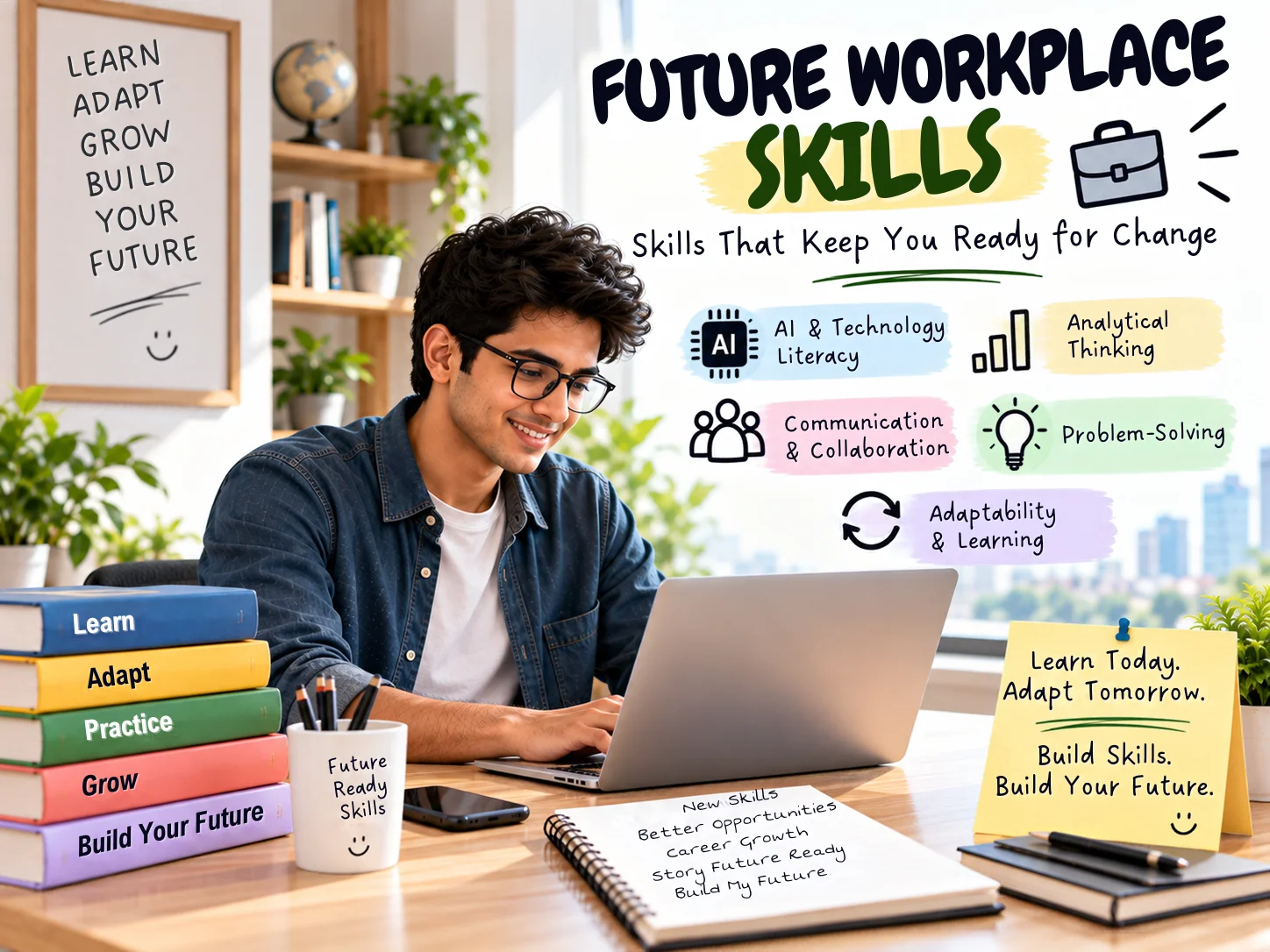
Future workplace skills वे capabilities हैं जो employees को changing technology, new work processes और evolving business requirements के साथ effectively काम करने में मदद करती हैं। इनमें technology literacy, AI awareness, analytical thinking, communication, adaptability, collaboration, creativity और problem-solving जैसी skills शामिल हो सकती हैं। इन skills का सही combination role, industry और individual career goals पर depend करता है।
इस लेख में हम देखेंगे कि Future Workplace में वास्तव में कौन-सी Skills Valuable होंगी, उन्हें कैसे Develop करें और अलग-अलग Roles में उनका प्रभावी तरीके से कैसे इस्तेमाल करें, इस पर रहेगा।
Workplace तेजी से बदल रहा है। AI, automation, digital collaboration, data और changing business models के कारण employees से केवल अपने traditional job tasks perform करने की expectation नहीं रह सकती।
Future workplace में एक strong professional से यह भी expect किया जा सकता है कि वह:
नई technology समझे, problems solve करे, communicate करे, collaborate करे और लगातार सीखता रहे।
इसीलिए future career preparation का focus केवल “कौन–सी job मिलेगी?” पर नहीं, बल्कि “कौन–सी skills मुझे बदलते workplace में valuable बनाए रखेंगी?” पर भी होना चाहिए।
Quick Summary
- Future workplace में technical और human skills दोनों important हो सकती हैं।
- AI literacy का मतलब केवल AI tools use करना नहीं, बल्कि उनके outputs को समझना और verify करना भी है।
- Analytical thinking complex workplace problems को solve करने में मदद कर सकती है।
- Communication technology-driven workplace में भी essential रहेगी।
- Adaptability professionals को changing roles और tools के साथ adjust करने में मदद करती है।
- Digital collaboration remote और hybrid teams के लिए important है।
- Creativity और critical thinking technology के साथ complementary skills हो सकती हैं।
- Continuous learning future career development का important हिस्सा बन सकती है।
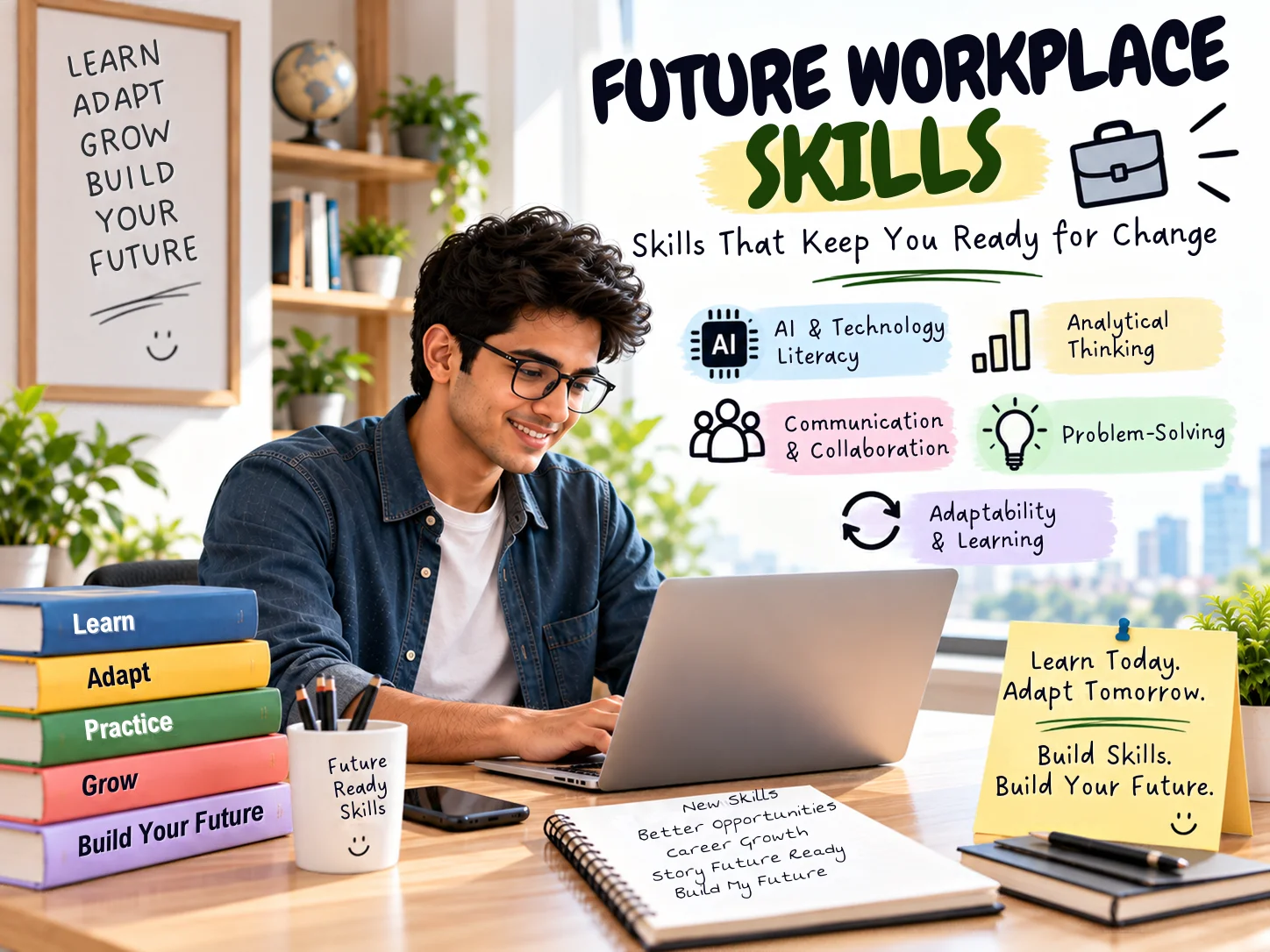
What Are Future Workplace Skills?
Future workplace skills का simple मतलब है:
ऐसी capabilities जो employees को changing work environment में effectively perform, adapt और grow करने में मदद करें।
इन skills को broadly चार groups में समझा जा सकता है:
Technology Skills
AI, data, digital tools और automation
Thinking Skills
Analytical thinking, critical thinking और problem-solving
Human Skills
Communication, collaboration और leadership
Adaptability Skills
Learning agility, flexibility और resilience
एक future-ready professional को हर skill में expert होना जरूरी नहीं।
Important है अपने role के लिए सही combination बनाना।
Why Are Workplace Skills Changing?
Workplace में बदलाव कई factors से आता है।
Technology
AI और automation workflows बदल सकते हैं।
Business Models
Companies नए digital products और services adopt कर सकती हैं।
Customer Expectations
Customers faster और personalized experiences expect कर सकते हैं।
Remote & Hybrid Work
Teams अलग-अलग locations से collaborate कर सकती हैं।
Global Competition
Organizations को faster adaptation की जरूरत पड़ सकती है।
इसलिए employee skills भी evolve होती रहती हैं।
Technology Alone Is Not Enough
Future skills की बात करते समय अक्सर पूरा focus:
- AI
- Coding
- Data और
- Automation
पर चला जाता है।
लेकिन workplace में एक employee को technology के साथ:
- Think
- Communicate
- Collaborate और
- Decide
भी करना होता है।
इसलिए:
Future Skills = Technology + Human Capability
AI Literacy Will Become Increasingly Useful
AI literacy का मतलब सिर्फ prompt लिखना नहीं है।
एक AI-literate professional को समझना चाहिए:
- AI किस तरह के tasks में useful है
- कहाँ AI unreliable हो सकती है
- Output को कैसे verify करना है
- Sensitive information के साथ क्या सावधानी रखनी है
- Human judgment कहाँ जरूरी है
- AI को existing workflow में कैसे integrate करना है
इसलिए:
Using AI is one skill. Knowing how to use AI responsibly is a broader skill.
AI Skills Will Differ by Profession
हर employee को AI का same level नहीं चाहिए।
Marketing
AI-assisted research और content workflows
Finance
AI-assisted analysis और reporting
HR
Recruitment और employee analytics tools
Education
AI-assisted learning resources
Operations
Workflow automation
इसलिए AI learning को अपने domain से connect करना ज्यादा practical हो सकता है।
Data Literacy Will Become More Useful
Data literacy का मतलब:
Data को समझना, interpret करना और उससे meaningful information निकालना।
एक employee को advanced data scientist होना जरूरी नहीं।
लेकिन उसे समझना useful हो सकता है:
What does this number mean?
Is this trend significant?
What information is missing?
What decision should this data support?
Analytical Thinking
Analytical thinking future workplace की core capabilities में से एक हो सकती है।
इसमें शामिल है:
Problem को break करना
↓
Relevant information identify करना
↓
Patterns समझना
↓
Options compare करना
↓
Logical conclusion निकालना
यह skill technology-heavy और non-technical दोनों roles में useful हो सकती है।
Critical Thinking
Critical thinking का मतलब हर information पर doubt करना नहीं।
इसका मतलब है:
Information को evaluate करके reasoned judgment बनाना।
AI output मिलने के बाद professional को पूछना पड़ सकता है:
Is this accurate?
Is this relevant?
What evidence supports it?
What could be missing?
इसलिए AI-heavy workplace में critical thinking और important हो सकती है।
Problem-Solving
Workplace में problems हमेशा textbook जैसी नहीं होतीं।
कई बार:
Problem unclear होती है।
Information incomplete होती है।
Resources limited होते हैं।
Deadline short होती है।
ऐसे situation में problem-solving capability valuable हो सकती है।
Problem-Solving Has Multiple Steps
एक practical approach:
Identify
Actual problem क्या है?
Analyze
Problem क्यों हो रही है?
Explore
Possible solutions क्या हैं?
Decide
Best option कौन-सा है?
Implement
Solution कैसे apply होगा?
Review
Result कैसा रहा?
यह framework different workplace situations में adapt किया जा सकता है।
Communication Will Remain Important
Technology communication को replace नहीं करती।
बल्कि digital workplace में communication के तरीके बढ़ सकते हैं:
- Chat
- Video Meetings
- Presentations
- Documentation
इसलिए professional को सिर्फ बोलना नहीं, बल्कि Clearly Communicate करना आना चाहिए।
Written Communication Will Matter
Remote और hybrid teams में written communication particularly important हो सकती है।
एक good professional message:
- Clear
- Concise
- Contextual और
- Action-Oriented
हो सकता है।
Example:
Instead of “Please check this.”
Better:
“Please review the sales figures in the attached report and confirm the Q2 numbers by Friday.”
दूसरे message में:
- Task
- Context और
- Deadline
clear है।
Presentation Skills
Future workplace में information present करने की ability useful रह सकती है।
एक professional को Data को Insight में और फिर Insight को Recommendation में convert करना पड़ सकता है।
Example:
Sales decreased 10%
↓
Why?
↓
Which segment affected?
↓
What should we do?
यही presentation skill को practical बनाता है।
Collaboration
Modern workplace में employees अकेले काम नहीं करते।
उन्हें:
- Marketing
- Finance
- Technology
- Operations और
- Management
के साथ collaborate करना पड़ सकता है।
इसलिए collaboration सिर्फ “team में काम करना” नहीं है।
इसमें:
- Information Sharing
- Responsibility
- Listening और
- Coordination
भी शामिल हैं।
Digital Collaboration
Remote और hybrid workplaces में collaboration tools important हो सकते हैं।
लेकिन tool सीखना ही पर्याप्त नहीं।
Employee को:
- Documentation
- Task Tracking
- Async Communication और
- Meeting Discipline
भी समझनी पड़ सकती है।
Adaptability
Adaptability का मतलब है:
Changing circumstances के अनुसार अपने approach को adjust करना।
अगर New Software आता है, तो employee सीखता है।
अगर Process बदलता है, तो workflow adjust करता है।
अगर Role बदलता है, तो relevant skill develop करता है।
Learning Agility
Learning agility का मतलब:
नई information और skills को जल्दी समझकर उन्हें practical situation में apply करने की ability
Future workplace में यह useful हो सकती है क्योंकि tools और processes लगातार बदल सकते हैं।
Continuous Learning
एक समय पर:
“मैंने अपनी qualification पूरी कर ली।” को career learning का end माना जाता था।
लेकिन changing workplace में:
Learning May Need to Continue Throughout the Career.
इसका मतलब रोज course करना नहीं। बल्कि regularly:
- Industry
- Technology
- Skills और
- Role Requirements
review करना।
Resilience
Workplace में change के साथ setbacks भी आते हैं।
Resilience professional को:
- Failure
- Rejection
- Uncertainty या
- Unexpected Change
के बाद recover करके आगे बढ़ने में help कर सकती है।
Creativity
Creativity सिर्फ artists के लिए नहीं।
Business में creativity का मतलब हो सकता है:
- New solution
- Better process
- Different customer experience या
- New business idea
सोचना।
AI ideas generate करने में help कर सकती है, लेकिन problem की सही direction और context समझना human creativity का हिस्सा रह सकता है।
Leadership
Leadership का मतलब केवल manager होना नहीं।
एक individual contributor भी leadership demonstrate कर सकता है:
- Initiative लेना
- Responsibility लेना
- Others को support करना
- Problems solve करना
- Decision को move forward करना
से।
Emotional Intelligence
Workplace में people के साथ काम करते समय केवल technical competence sufficient नहीं होती।
Emotional intelligence में शामिल हो सकता है:
- Self-awareness
- Empathy
- Emotional control
- Active listening और
- Relationship management
यह particularly leadership और collaboration में useful हो सकती है।
Time Management
Technology tools productivity improve कर सकते हैं, लेकिन priorities set करना अभी भी important हो सकता है।
एक professional को decide करना पड़ सकता है:
What is urgent?
What is important?
What can wait?
What can be delegated?
What can be automated?
यही effective time management का practical side है।
Self-Management
Future workplace में employees को अधिक autonomy मिल सकती है।
इसलिए:
- Planning
- Focus
- Task Management और
- Deadline Management
important हो सकते हैं।
Remote work में self-management particularly useful हो सकती है।
Decision-Making
Future workplace में AI recommendations available हो सकती हैं।
लेकिन final decision कई contexts में human को लेना पड़ सकता है।
Decision-making में:
Information
Risk
Context
Experience
Judgment
का combination हो सकता है।
Business Understanding
एक technical employee के लिए भी business context समझना valuable हो सकता है।
Example:
Developer को सिर्फ “Feature कैसे बनाएं?” नहीं पूछना चाहिए।
उसे यह भी समझना useful है:
“यह feature customer और business के लिए क्यों important है?”
इससे technical work और business outcomes connect होते हैं।
Customer Understanding
Future workplace में customer-centric thinking valuable रह सकती है।
Employee को समझना चाहिए:
Customer की problem क्या है?
Customer क्या चाहता है?
Customer कहाँ frustrated है?
हम better experience कैसे दे सकते हैं?
यह skill marketing से लेकर product और support तक कई functions में useful हो सकती है।
Negotiation Skills
Negotiation सिर्फ sales professionals के लिए नहीं।
Employees negotiate कर सकते हैं:
- Deadlines
- Resources
- Priorities
- Responsibilities और
- Business Decisions
पर।
इसलिए negotiation एक transferable workplace skill हो सकती है।
Conflict Management
Teams में disagreements normal हैं।
Future workplace में professional को:
- Listen
- Understand
- Discuss और
- Resolve
करना आना चाहिए।
Conflict को ignore करने के बजाय constructive conversation करना team performance improve कर सकता है।
Initiative
Future-ready employee सिर्फ instructions का wait नहीं करता।
वह पूछ सकता है “क्या मैं इसे बेहतर तरीके से कर सकता हूँ?”
या:
“क्या इस process को automate किया जा सकता है?”
या:
“क्या customer की यह problem proactively solve की जा सकती है?”
यह initiative workplace value create कर सकता है।
Practical Example: Marketing Professional
मान लीजिए एक marketer को future-ready बनना है।
Existing Skill
Marketing Strategy
Technology Layer
AI + Analytics
Human Layer
Creativity + Communication
Business Layer
Customer Understanding
इसका final skill profile हो सकता है:
Marketing + AI + Analytics + Customer Understanding
यह सिर्फ AI सीखने से ज्यादा useful combination हो सकता है।
Practical Example: Finance Professional
Existing
Accounting
Technology
Data Analytics + AI Tools
Human
Analytical Thinking
Business
Financial Decision Support
इससे professional traditional accounting knowledge को technology-enabled finance skills के साथ combine कर सकता है।
Practical Example: Student
Student के पास Degree है।
लेकिन future workplace preparation के लिए वह add कर सकता है:
- Communication
- Excel / Data
- AI Literacy
- Problem-Solving
फिर एक Practical Project बना सकता है।
इससे:
Qualification + Skills + Evidence
की profile develop हो सकती है।
Common Mistakes
1. केवल AI सीखना
Future workplace skills का scope AI से बहुत बड़ा है।
2. Human Skills को Ignore करना
Communication, collaboration और adaptability important रह सकती हैं।
3. हर Tool सीखने की कोशिश करना
अपने role से relevant tools चुनें।
4. Certificates को Skills समझना
Certificate learning का evidence हो सकता है; practical application अलग चीज है।
5. Skill को Practice न करना
Skill तभी useful बनती है जब उसे apply किया जाए।
6. Communication को सिर्फ English समझना
Clear communication language से ज्यादा important है।
7. Problem-Solving में सीधे Solution पर जाना
पहले actual problem define करें।
8. AI Output को बिना Verify किए Use करना
Important information को review और verify करें।
9. सिर्फ Technical Knowledge Build करना
Business और human context भी समझें।
10. Learning को One-Time Activity मानना
Workplace लगातार बदल सकता है।
Future Workplace Skills Checklist
- मैं AI tools की basic capabilities समझता हूँ।
- मैं AI output को critically evaluate कर सकता हूँ।
- मुझे basic data interpretation आती है।
- मैं problems को logically break कर सकता हूँ।
- मैं clearly communicate कर सकता हूँ।
- मैं written communication effectively कर सकता हूँ।
- मैं digital teams के साथ collaborate कर सकता हूँ।
- मैं changing situations के साथ adapt कर सकता हूँ।
- मैं नई skills independently सीख सकता हूँ।
- मैं अपनी priorities manage कर सकता हूँ।
- मैं initiative ले सकता हूँ।
- मैं अपने domain के business context को समझता हूँ।
Action Plan- 1: Future Skill Triangle
इस article के लिए एक unique Future Skill Triangle Exercise करें।
अपने career के लिए तीन skills चुनें:
1. Core Skill
आपके profession की main capability
Example: Financial Analysis
2. Future Skill
Technology या changing industry से जुड़ी capability
Example: Data Analytics
3. Human Skill
आपकी professional effectiveness बढ़ाने वाली capability
Example: Communication
अब तीनों को connect करें:
Core Skill
↓
Future Skill
↓
Human Skill
Example:
Financial Analysis + Data Analytics + Communication
अब अगले 30 days में इन तीनों में से एक skill को practical project में combine करने का लक्ष्य रखें।
इस exercise का purpose अलग-अलग skills collect करना नहीं, बल्कि:
Skills That Work Together बनाना है।
Key Takeaways
- Future workplace में technical और human skills दोनों important हो सकती हैं।
- AI literacy केवल prompting तक limited नहीं है।
- Data literacy employees को information interpret करने में मदद कर सकती है।
- Analytical thinking complex problems को structure करने में useful है।
- Critical thinking AI-generated information evaluate करने में important हो सकती है।
- Problem-solving future workplace की transferable capability है।
- Communication digital workplaces में भी essential रहेगी।
- Written communication remote और hybrid teams में particularly useful हो सकती है।
- Presentation skills data को actionable recommendations में बदलने में help कर सकती हैं।
- Collaboration cross-functional workplaces में important हो सकती है।
- Digital collaboration केवल tools नहीं, बल्कि documentation और coordination भी है।
- Adaptability changing tools और responsibilities के साथ adjust करने में help करती है।
- Learning agility नई skills को जल्दी acquire और apply करने में useful हो सकती है।
- Continuous learning career relevance बनाए रखने में मदद कर सकती है।
- Resilience uncertainty और setbacks handle करने में useful है।
- Creativity business problems के नए solutions develop करने में मदद कर सकती है।
- Leadership job title के बिना भी demonstrate की जा सकती है।
- Emotional intelligence relationships और teamwork को support कर सकती है।
- Time management और self-management workplace autonomy में important हो सकती हैं।
- Decision-making में information के साथ context और judgment भी important हैं।
- Business understanding technical work को business outcomes से connect कर सकती है।
- Customer understanding कई functions में valuable है।
- Negotiation और conflict management transferable workplace skills हैं।
- Initiative employees को passive task execution से आगे ले जा सकती है।
- Future-ready skill profile का practical model है: Core Skill + Future Skill + Human Skill.
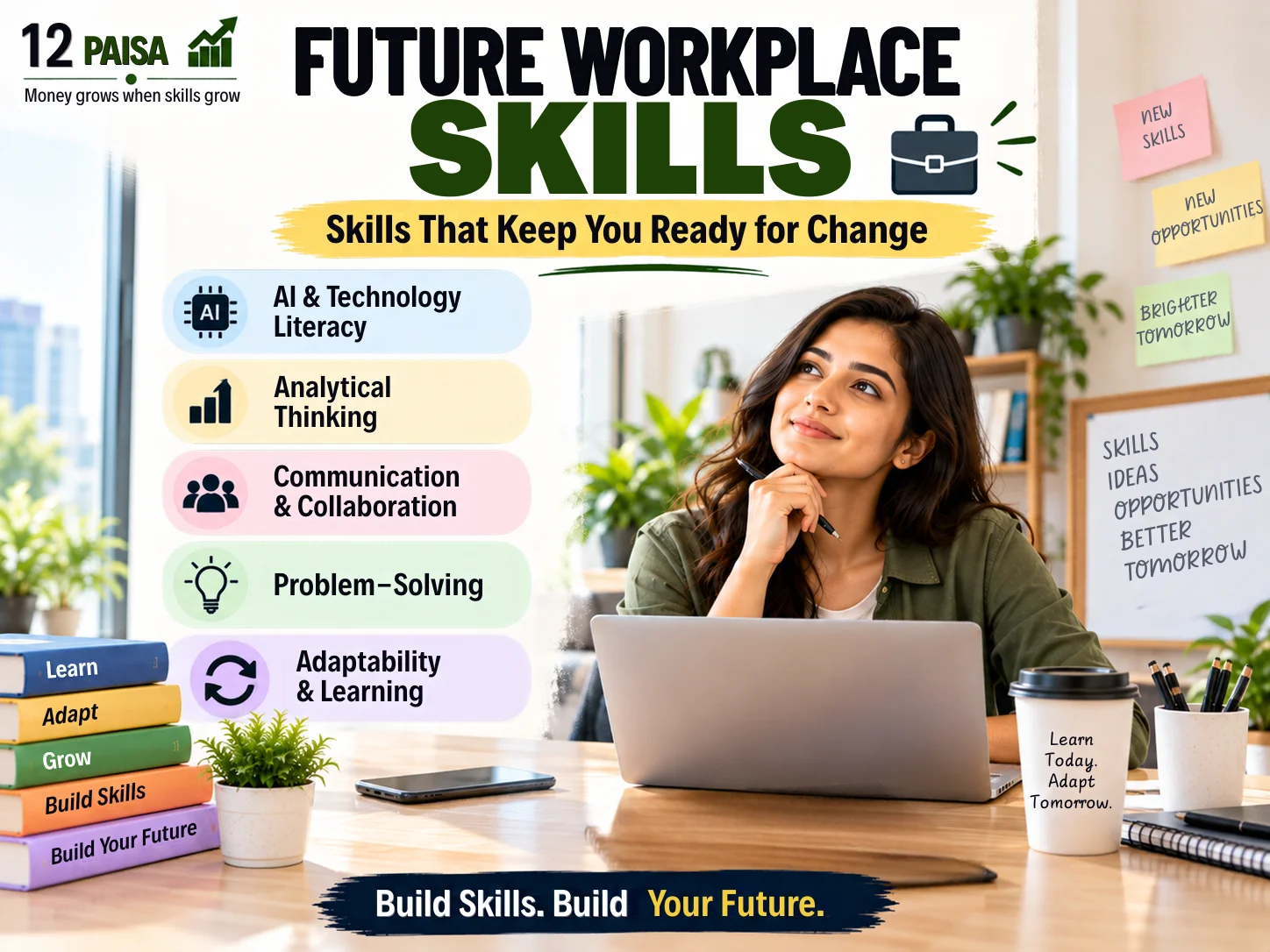
अब तक आपने future workplace की foundational skills जैसे AI literacy, data literacy, analytical thinking, communication, collaboration, adaptability और problem-solving को समझा।
अब हम थोड़ा deeper जाएंगे—इन skills को actual workplace situations में कैसे apply किया जा सकता है, कौन–सी skills एक–दूसरे के साथ combine होती हैं, और professionals अपनी skill profile को ज्यादा valuable कैसे बना सकते हैं।
AI-Assisted Productivity
AI का एक practical use productivity improve करना हो सकता है।
For example, AI की मदद से professional:
- Information summarize कर सकता है
- First drafts तैयार कर सकता है
- Ideas organize कर सकता है
- Routine documentation में सहायता ले सकता है
- Meeting notes structure कर सकता है
- Repetitive information-processing tasks को speed up कर सकता है
लेकिन final output को Review → Verify → Improve करना जरूरी है।
इसलिए future workplace में AI + Human Review एक practical combination हो सकता है।
Prompting Is Useful, But Not the Whole Skill
AI prompting useful capability है, लेकिन इसे future workplace की complete AI skill समझना सही नहीं होगा।
एक professional को यह भी समझना चाहिए:
Problem क्या है?
AI को क्या context चाहिए?
Output useful है या नहीं?
क्या information missing है?
क्या result verify करना जरूरी है?
इसलिए बेहतर framework है:
Prompt → Evaluate → Refine → Apply
Digital Problem-Solving
Future workplace में कई problems digital systems से जुड़ी हो सकती हैं।
Example:
Company का customer response time बढ़ रहा है।
एक digital problem-solving approach होगी:
Data Collect
↓
Problem Identify
↓
Root Cause Find
↓
Technology-Assisted Solution
↓
Measure Result
इसमें technology सिर्फ tool है।
Actual value Problem Understanding + Decision Making से आती है।
Root Cause Analysis
एक common workplace mistake है कि employee सिर्फ symptom solve करता है।
Example:
Sales कम हैं।
Immediate response:
“Marketing बढ़ाओ।”
लेकिन root cause हो सकता है:
- Product pricing
- Customer experience
- Competitor activity
- Product availability
- Wrong target audience
इसलिए future-ready professional को Symptom और Root Cause के बीच फर्क समझना चाहिए।
Information Management
Digital workplace में information की कमी से ज्यादा problem कई बार:
Too Much Information हो सकती है।
Professional को identify करना पड़ सकता है:
What matters?
What doesn’t?
What is reliable?
What needs action?
यह information management skill decision-making को improve कर सकती है।
Digital Judgment
हर technology solution useful नहीं होती।
एक professional को evaluate करना पड़ सकता है:
क्या इसे automate करना चाहिए?
क्या human involvement जरूरी है?
क्या data reliable है?
क्या technology cost-effective है?
इस capability को Digital Judgment के रूप में समझा जा सकता है।
Automation Awareness
हर employee को automation expert बनने की जरूरत नहीं।
लेकिन यह पहचानना useful हो सकता है कि:
कौन–सा repetitive task automate किया जा सकता है?
Example:
Manual report preparation
↓
Automated dashboard
या:
Repeated email responses
↓
Template + AI assistance
यह employee को Task Executor से Process Improver की तरफ move कर सकता है।
Workflow Thinking
एक task को isolated activity की तरह देखने के बजाय पूरा workflow देखें।
Example:
Customer Query
↓
Ticket Creation
↓
Assignment
↓
Response
↓
Resolution
↓
Feedback
अगर employee पूरे workflow को समझता है, तो वह improvement opportunities identify कर सकता है।
Process Improvement
Future workplace में companies ऐसे employees को value कर सकती हैं जो पूछते हैं:
“क्या इस process को बेहतर किया जा सकता है?”
Improvement हो सकती है:
- Faster
- Cheaper
- Simpler
- More Accurate या
- More Customer-Friendly
Strategic Thinking
Strategic thinking का मतलब केवल management-level planning नहीं।
एक employee भी सोच सकता है:
What is the goal?
What matters most?
What should we prioritize?
What could happen next?
इससे daily tasks और larger business objectives connect होते हैं।
Prioritization
Future workplace में tasks की संख्या बढ़ सकती है।
लेकिन time limited रहेगा।
इसलिए employee को distinguish करना होगा:
High Impact + Urgent
Immediately handle
High Impact + Not Urgent
Plan करें।
Low Impact + Urgent
Automate / Delegate जहाँ possible हो।
Low Impact + Not Urgent
Reduce या eliminate करें।
Focus Management
Digital workplace में distractions भी बढ़ सकती हैं:
- Notifications
- Emails
- Messages
- Meetings और
- Multiple Platforms
इसलिए focus management productivity का important part हो सकता है।
एक practical approach:
Important work के लिए uninterrupted time blocks बनाएं।
Self-Learning Ability
Future workplace में हर नई skill के लिए formal classroom available हो, यह जरूरी नहीं।
Professional को independently:
- Research
- Learn
- Practice और
- Apply
करना पड़ सकता है।
इसलिए self-learning एक career advantage बन सकती है।
Learning From Mistakes
Workplace learning सिर्फ courses से नहीं होती।
एक project fail होने के बाद पूछें:
What went wrong?
Why did it happen?
What should I change?
What will I do differently next time?
इससे experience Learning में convert हो सकता है।
Feedback Literacy
Feedback receive करना भी एक skill है।
Professional को:
Listen
↓
Understand
↓
Separate Emotion From Information
↓
Apply Relevant Feedback
करना सीखना चाहिए।
हर feedback सही नहीं होता, लेकिन useful feedback identify करना valuable capability हो सकती है।
Giving Constructive Feedback
Future workplace में collaboration बढ़ने के साथ feedback देना भी important रहेगा।
Good feedback:
- Specific
- Respectful
- Actionable और
- Work-focused
होना चाहिए।
Example:
Instead of “Your report is bad.”
Better:
“The analysis is useful, but the key findings need clearer data and a stronger conclusion.”
Negotiation and Influence
Professional life में हर decision authority से नहीं आता।
कई बार आपको:
- Idea
- Budget
- Timeline या
- Resource
के लिए दूसरों को convince करना पड़ता है।
इसलिए influence और negotiation skills useful हो सकती हैं।
Stakeholder Management
एक project में अलग stakeholders हो सकते हैं:
- Customer
- Manager
- Team
- Finance
- Technology
- Vendor
इन सबकी priorities अलग हो सकती हैं।
Stakeholder management का मतलब:
Different expectations को understand और coordinate करना।
Cross-Functional Thinking
एक department की decision दूसरे department को affect कर सकती है।
Example:
Marketing ने बड़ा discount launch किया।
इसका impact:
- Sales
- Finance
- Inventory और
- Customer Support
पर पड़ सकता है।
इसलिए future professional को सिर्फ अपने department के बाहर भी सोचने की जरूरत हो सकती है।
Business Acumen
Business acumen का मतलब company के business को समझना है।
Professional को basic questions के answers पता होने चाहिए:
Company पैसा कैसे कमाती है?
Customer कौन है?
Major costs क्या हैं?
Competitors कौन हैं?
Success कैसे measure होती है?
यह understanding technical skills की value को बढ़ा सकती है।
Financial Awareness
हर employee accountant नहीं होता।
लेकिन basic financial awareness useful हो सकती है।
जैसे:
- Revenue
- Cost
- Profit
- Cash Flow
- ROI
का basic meaning समझना।
अगर employee समझता है कि उसके काम का business numbers पर क्या effect है, तो decision-making बेहतर हो सकती है।
Customer-Centric Thinking
Workplace में final output का purpose अक्सर customer value create करना होता है।
इसलिए पूछें “Customer को इससे क्या फायदा होगा?”
यह question product, marketing, sales, technology, operations और support सभी functions में useful हो सकता है।
User Experience Awareness
Digital products और services में user experience important हो सकता है।
एक employee को notice करना चाहिए:
Is the process easy?
Where does the user get confused?
What causes friction?
What can be simplified?
यह mindset workplace improvements generate कर सकता है।
Collaboration With AI
Future workplace में collaboration सिर्फ Human + Human तक limited नहीं रह सकती।
एक emerging workflow हो सकता है:
Human
↓
AI Assistance
↓
Human Review
↓
Final Work
Professional को AI को Assistant की तरह use करना सीखना पड़ सकता है, replacement की तरह blindly depend नहीं करना चाहिए।
Delegation to Technology
Traditional delegation “यह task team member को दे दो।”
Future workflow में:
“क्या यह task technology handle कर सकती है?” भी पूछा जा सकता है।
अगर answer yes है, तो Automate या AI-Assisted Workflow consider किया जा सकता है।
Human Oversight
Automation बढ़ने के साथ human oversight की जरूरत भी रह सकती है।
Professional को monitor करना पड़ सकता है:
Is the system working correctly?
Are errors increasing?
Is the output fair and appropriate?
Is human intervention required?
इसलिए:
Automation Still Needs Accountability.
Ethical Technology Use
Technology powerful हो सकती है, लेकिन हर possible use appropriate नहीं होता।
Professionals को consider करना चाहिए:
- Privacy
- Accuracy
- Bias
- Security और
- Transparency
खासकर जब customer या employee data involved हो।
Data Privacy Awareness
Digital workplace में sensitive information handle हो सकती है।
Professional को सावधानी रखनी चाहिए:
What data can be shared?
Where can it be uploaded?
Who should have access?
How should it be stored?
AI tools use करते समय भी organizational policies और privacy requirements follow करना important है।
Security Mindset
Security सिर्फ IT department की responsibility नहीं हो सकती।
एक employee को recognize करना useful है:
Suspicious Links
Phishing Attempts
Unusual Login Requests
Sensitive Data Requests
और Security Warnings को।
Small employee mistakes भी organizational risk create कर सकती हैं।
Documentation Skills
Future workplace में documentation और important हो सकती है।
क्यों?
क्योंकि teams Remote Hybrid और Cross-Functional हो सकती हैं।
Good documentation से:
- Knowledge Share
- Handover
- Decision Tracking और
- Process Continuity
improve हो सकती है।
Knowledge Sharing
अगर एक employee किसी process को जानता है और बाकी team नहीं, तो organization उस व्यक्ति पर dependent हो सकती है।
Knowledge sharing के लिए:
- Guides
- Checklists
- Documentation
- Training और
- Process Notes
use किए जा सकते हैं।
Presentation + Data = Business Story
Data present करने का goal सिर्फ numbers दिखाना नहीं।
Example:
Raw Data
Sales: ₹10 lakh → ₹8 lakh
Insight
Sales 20% decline हुई।
Question
क्यों?
Recommendation
Specific customer segment पर retention strategy test करें।
इस process को Data → Insight → Action के रूप में समझा जा सकता है।
Storytelling Will Support Communication
Storytelling का मतलब fiction लिखना नहीं।
Business context में:
Problem
↓
Evidence
↓
Insight
↓
Solution
की logical flow बनाना storytelling का practical form हो सकता है।
Listening Is a Workplace Skill
Communication का बड़ा हिस्सा बोलना नहीं, सुनना है।
Active listening में:
- Attention
- Clarification
- Understanding और
- Response
शामिल हो सकते हैं।
यह customers, managers और team members के साथ useful है।
Asking Better Questions
Strong professionals हमेशा सबसे ज्यादा answers देने वाले नहीं होते।
वे सही questions भी पूछते हैं।
Example:
Instead of “What should I do?”
Ask:
“What outcome are we trying to achieve, what constraints do we have, and what options have already been considered?”
Better question:
Better Context
↓
Better Decision
Curiosity
Curiosity professional को:
- New Tools
- New Ideas
- New Markets और
- New Processes
explore करने के लिए motivate कर सकती है।
लेकिन curiosity को action से connect करना जरूरी है।
Learn → Test → Apply
Ownership
Ownership का मतलब:
अपने assigned outcome की responsibility लेना।
अगर problem आती है, तो सिर्फ:
“यह मेरी responsibility नहीं है।”
कहने के बजाय professional यह भी देख सकता है:
“मैं solution में क्या contribute कर सकता हूँ?”
Accountability
Ownership के साथ accountability भी जरूरी है।
इसमें:
- Commitment
- Deadline
- Quality और
- Results
की responsibility लेना शामिल हो सकता है।
Technology tools accountability को replace नहीं करते।
Decision Documentation
Important decisions के लिए:
What was decided?
Why?
Who decided?
What assumptions were used?
document करना useful हो सकता है।
इससे future teams को context समझने में मदद मिलती है।
Meeting Skills
Future workplace में meetings पूरी तरह disappear नहीं होंगी।
लेकिन effective meetings के लिए:
- Clear Agenda
- Right Participants
- Decision Focus और
- Action Items
important हो सकते हैं।
एक अच्छी meeting का output “Who will do what by when?” clear कर सकता है।
Practical Example: A Future-Ready Project Manager
मान लीजिए Project Manager के पास Project Planning की core skill है।
वह add करता है:
- AI-assisted Planning
- Data Analytics
- Digital Collaboration और
- Stakeholder Communication
अब उसका skill profile Project Management + Technology + Data + Human Skills बनता है।
Practical Example: A Future-Ready Sales Professional
Core
Sales
Technology
CRM + AI-assisted Research
Data
Customer Analytics
Human
Negotiation + Communication
Business
Customer Understanding
यह profile सिर्फ “sales” skill से broader capability दिखाती है।
Practical Example: A Future-Ready Operations Professional
Core
Operations
Technology
Automation
Data
Process Metrics
Human
Problem-Solving
Business
Cost + Efficiency Understanding
Result:
Operations + Automation + Analytics + Problem-Solving
एक practical future skill combination हो सकता है।
Common Mistakes
1. AI को हर problem का solution समझना
पहले problem समझें, फिर tool चुनें।
2. Too Many Tools सीखना
Tools से ज्यादा important underlying capability है।
3. Data देखकर तुरंत conclusion निकालना
Data को context के साथ interpret करें।
4. Communication को सिर्फ speaking समझना
Writing, listening और documentation भी important हैं।
5. Meetings को Productivity समझना
हर discussion को meeting की जरूरत नहीं होती।
6. Automation बिना Review के करना
Automated workflow को monitor करना जरूरी हो सकता है।
7. Business Context Ignore करना
अपने work का business impact समझें।
8. Feedback से बचना
Useful feedback professional growth में मदद कर सकता है।
9. हर Decision खुद करना
Delegation और technology assistance दोनों use किए जा सकते हैं।
10. Learning को Random रखना
Career goal से connected learning ज्यादा practical हो सकती है।
Future Workplace Skill Stack
| Skill Area | Core Capability | Workplace Example |
| AI | AI Literacy | AI-assisted research |
| Data | Data Interpretation | Dashboard analysis |
| Thinking | Analytical Thinking | Root-cause analysis |
| Problem Solving | Solution Design | Process improvement |
| Communication | Clear Writing | Business emails |
| Collaboration | Team Coordination | Cross-functional projects |
| Adaptability | Learning Agility | New software adoption |
| Business | Business Acumen | ROI understanding |
| Human | Emotional Intelligence | Conflict management |
| Execution | Time Management | Priority management |
Action Plan- 2: The One-Workflow Upgrade
इस article के लिए एक unique workplace exercise:
अपने daily work का एक repetitive workflow चुनें।
Example:
Weekly Report
अब उसके steps लिखें:
- Data collect करना
- Data clean करना
- Calculations करना
- Report बनाना
- Manager को भेजना
अब हर step को तीन categories में रखें:
Automate
क्या technology कर सकती है?
Assist
कहाँ AI या digital tool help कर सकता है?
Human
कहाँ judgment जरूरी है?
फिर workflow redesign करें:
Old Workflow
Manual → Manual → Manual → Manual
से:
New Workflow
Automation → AI Assistance → Human Review → Final Decision
इस exercise का goal सिर्फ time बचाना नहीं है।
Goal है:
Routine Work से Higher-Value Work की तरफ Shift करना।
Key Takeaways
- AI-assisted productivity future workplace में useful हो सकती है।
- Prompting AI skill का सिर्फ एक हिस्सा है।
- AI output को evaluate और refine करना भी important है।
- Digital problem-solving technology को business problems से connect करती है।
- Root-cause analysis superficial solutions से बचने में मदद करता है।
- Information management digital workplace में increasingly useful हो सकती है।
- Automation awareness employees को process improvement identify करने में help कर सकती है।
- Workflow thinking individual tasks से आगे जाकर complete process समझने में मदद करती है।
- Strategic thinking daily work को business goals से connect करती है।
- Prioritization limited time को high-impact work पर focus करने में मदद करती है।
- Focus management digital distractions को handle करने में useful है।
- Self-learning ability changing skill requirements के लिए valuable हो सकती है।
- Feedback literacy professional development को improve कर सकती है।
- Stakeholder management cross-functional projects में important है।
- Business acumen employees को organizational context समझने में मदद करता है।
- Financial awareness business decisions को better understand करने में useful हो सकती है।
- Customer-centric thinking अलग-अलग workplace functions में valuable है।
- Human + AI collaboration future workflows का practical model हो सकता है।
- Human oversight automation के साथ भी important रह सकती है।
- Ethical technology use में privacy, accuracy, security और bias considerations शामिल हैं।
- Documentation distributed teams में knowledge continuity improve कर सकती है।
- Data को insight और action में convert करना workplace communication को stronger बनाता है।
- Better questions better decisions में help कर सकते हैं।
- Ownership और accountability technology-driven workplace में भी important रहेंगे।
- Future workplace में सबसे useful approach हो सकती है: Understand the Work → Improve the Workflow → Use Technology → Keep Human Judgment.
अब तक आपने future workplace की core skills—AI literacy, data literacy, analytical thinking, communication, collaboration, adaptability और problem-solving—को समझा।
आपने देखा कि इन skills को real workplace situations में कैसे apply किया जा सकता है—जैसे automation awareness, workflow thinking, stakeholder management, business understanding, AI collaboration और digital judgment।
अब इन सभी concepts को एक practical framework में जोड़ेंगे और समझेंगे कि students, freshers और working professionals अपने लिए future-ready skill stack कैसे बना सकते हैं।
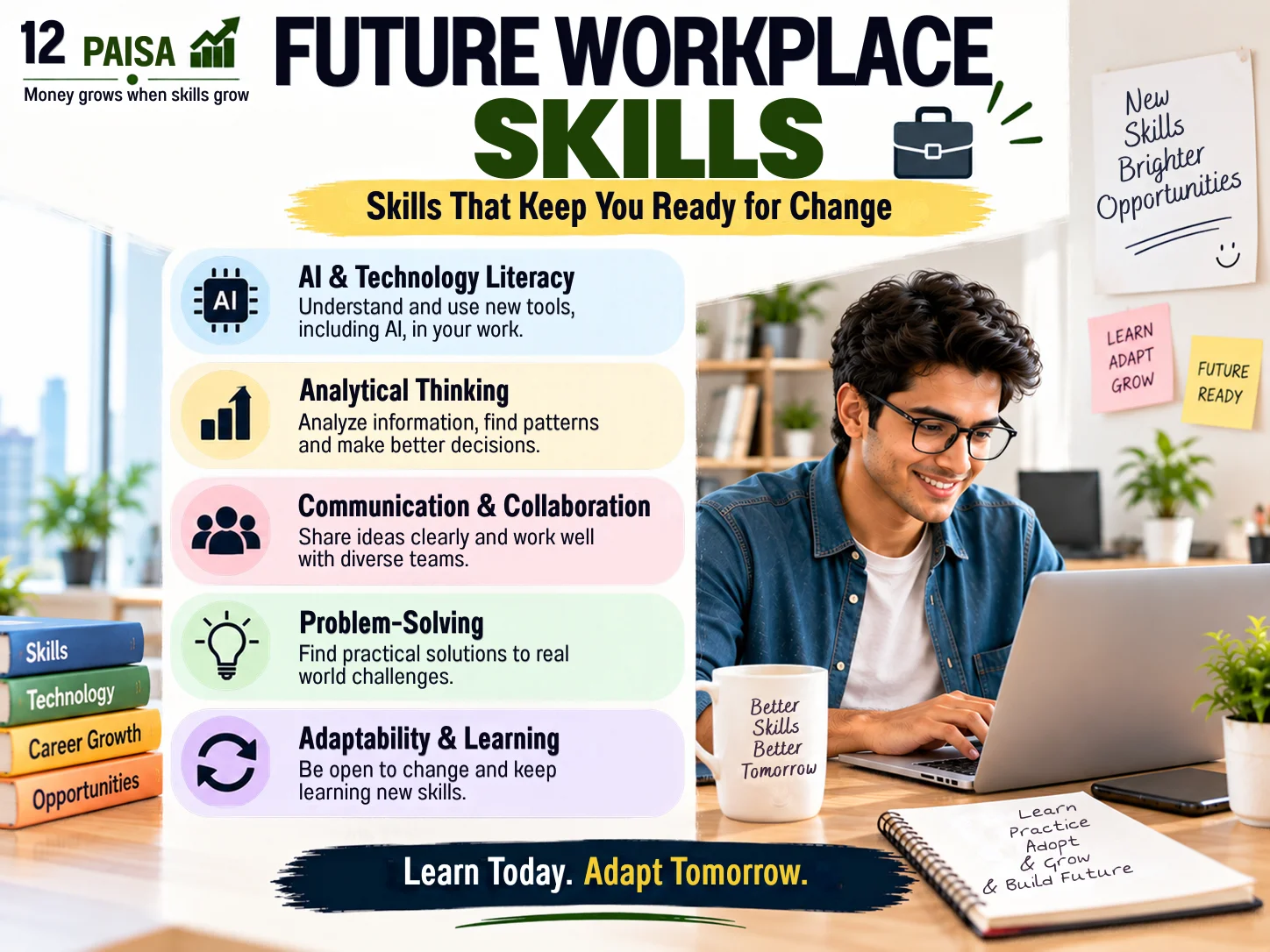
Future Skills Should Work Together
एक common mistake है skills को अलग-अलग सीखना।
Example:
- AI
- Communication
- Data
- Problem-Solving
इन चारों को individually सीखना useful है, लेकिन इनका real value तब बढ़ सकता है जब वे एक साथ किसी workplace problem पर apply हों।
उदाहरण:
Data को समझना + AI से analysis करना + problem identify करना + result communicate करना
यही workplace-ready capability है।
Build a Skill Stack, Not a Skill List
एक long list:
- AI
- Excel
- Coding
- Communication
- Leadership
- Data
- Marketing
- Design
बहुत impressive लग सकती है।
लेकिन career के लिए ज्यादा useful हो सकता है एक connected skill stack।
Example:
Marketing
Data Analytics
AI Tools
Communication
इसका clear professional purpose है।
Core Skill Comes First
Future skill build करते समय अपनी core expertise को ignore नहीं करना चाहिए।
Example:
अगर आपका career Finance में है, तो पहले Accounting, Financial Analysis, और Financial Concepts की foundation मजबूत रखें।
इसके ऊपर Data और AI add करें।
Add a Technology Layer
हर profession में कोई न कोई relevant technology layer हो सकती है।
| Career | Possible Technology Layer |
| Finance | Data + AI |
| Marketing | Analytics + AI |
| HR | HR Tech + Analytics |
| Education | Digital Learning |
| Operations | Automation |
| Sales | CRM + AI |
| Design | Digital + AI Tools |
Technology layer का purpose:
Existing expertise को अधिक productive और relevant बनाना।
Add a Human Layer
इसके बाद एक durable human skill चुनें।
Examples:
- Communication
- Critical Thinking
- Leadership
- Creativity
- Negotiation
- Empathy
- Problem-Solving
यह layer technology skills को complement कर सकती है।
The Future Skill Stack Formula
एक simple framework:
Core Skill + Technology Skill + Human Skill
Example:
Finance
Data Analytics
Critical Thinking
=
Future-Ready Finance Profile
यह हर व्यक्ति के लिए same नहीं होगा।
आपके career के हिसाब से combination बदल सकता है।
Add Business Understanding
एक strong professional को केवल अपने task की जानकारी नहीं होनी चाहिए।
उसे यह भी समझना useful है:
- Customer
- Revenue
- Cost
- Competition
- Business Goals और ROI
इससे employee अपने काम का larger impact समझ सकता है।
Connect Skills to Business Outcomes
Skill का real value तब दिखता है जब वह result improve करती है।
Example:
Data Analytics → Better Insights
AI → Faster Processing
Communication → Better Alignment
Problem-Solving → Better Solutions
इसलिए हमेशा पूछें:
“मेरी skill business के लिए क्या improve करती है?”
Learn to Work With Ambiguity
Workplace problems हमेशा clearly defined नहीं होतीं।
कभी:
- Goal unclear
- Data incomplete
- Requirements changing या
- Stakeholders disagree
कर सकते हैं।
ऐसे environment में ambiguity handle करना useful skill हो सकती है।
Make Decisions With Incomplete Information
Real workplace में 100% information rarely available होती है।
Professional को:
Available Data
Experience
Risk Assessment
Business Context
के आधार पर decision लेना पड़ सकता है।
इसलिए decision-making सिर्फ data collection नहीं है।
Develop Research Skills
Digital workplace में information आसानी से मिलती है।
लेकिन सही information identify करना अलग skill है।
Good research में:
Right Question
↓
Reliable Sources
↓
Relevant Information
↓
Comparison
↓
Conclusion
शामिल हो सकते हैं।
Source Evaluation
Internet पर information बहुत है।
लेकिन हर information equally trustworthy नहीं।
Professional को देखना चाहिए:
Source कौन है?
Information कब publish हुई?
Evidence क्या है?
क्या दूसरी reliable sources इसे support करती हैं?
यह skill AI-generated information evaluate करने में भी useful है।
Fact-Checking Will Matter
AI और digital content के बढ़ने के साथ misinformation भी challenge हो सकती है।
इसलिए important workplace information के लिए Verify, Cross-check, और Confirm करना useful habit है।
Writing Will Remain a Valuable Skill
AI writing assistance दे सकती है।
लेकिन professional को फिर भी समझना होगा:
What should be said?
Who should read it?
What action is required?
What tone is appropriate?
इसलिए writing का future शायद Manual Typing से ज्यादा Clear Thinking + Clear Expression पर depend करे।
Concise Communication
Workplace में हर message long होना जरूरी नहीं।
एक strong message में Context, Main Point, Action, और जरूरत हो तो Deadline clear हो सकती है।
यह especially digital communication में useful है।
Visual Communication
Information को visual format में communicate करना भी useful हो सकता है।
Examples:
- Charts
- Dashboards
- Process Diagrams
- Presentations
- Infographics
लेकिन visual का purpose decoration नहीं होना चाहिए।
Purpose:
Complex information को easier to understand बनाना।
Collaboration With Different Personalities
हर team member का working style अलग हो सकता है।
कुछ लोग Fast Decisions पसंद करते हैं।
कुछ Detailed Analysis
कुछ Written Communication पसंद करते हैं।
कुछ Discussion
Effective collaboration के लिए flexibility useful हो सकती है।
Cultural and Professional Awareness
Modern workplaces में teams different backgrounds और working styles से बनी हो सकती हैं।
इसलिए professional को:
- Respect
- Clear Communication
- Open-Mindedness और
- Professional Behaviour
maintain करना चाहिए।
Conflict Can Be Productive
हर disagreement negative नहीं होता।
अगर team members respectfully different views देते हैं, तो Better Ideas और Better Decisions emerge हो सकते हैं।
Goal disagreement eliminate करना नहीं Constructive disagreement manage करना है।
Leadership Starts Before Management
Leadership के लिए manager बनना जरूरी नहीं।
एक employee leadership दिखा सकता है:
Problem identify करके
Solution suggest करके
Responsibility लेकर
और
Team को support करके
Ownership Creates Trust
अगर professional कहता है “मैं इसे handle करूंगा।”
और फिर:
Update देता है
Problem बताता है
Deadline manage करता है
और
Result deliver करता है तो trust build होता है।
Reliability Is a Career Skill
Technical skill important है।
लेकिन workplace में लोग यह भी देखते हैं Can I depend on you?
Reliability में शामिल हो सकता है:
- Consistency
- Follow-through
- Communication और
- Accountability
Professional Judgment
हर situation में rulebook sufficient नहीं होती।
कई बार professional को decide करना पड़ सकता है:
What is appropriate?
What is risky?
What needs escalation?
What can be handled independently?
यही professional judgment है।
Knowing When to Escalate
Future-ready employee हर problem अकेले solve करने की कोशिश नहीं करता।
अगर issue:
- High Risk
- Sensitive
- Outside Authority या
- Business-Critical
है, तो सही person को escalate करना जरूरी हो सकता है।
यह weakness नहीं, good judgment हो सकता है।
Managing Priorities When Everything Seems Urgent
एक workplace में multiple requests आ सकती हैं।
एक practical filter:
Impact
इसका business impact कितना है?
Urgency
कितनी जल्दी करना जरूरी है?
Dependency
क्या दूसरे लोग इस task पर depend करते हैं?
Effort
कितना time लगेगा?
इन factors के आधार पर priority decide की जा सकती है।
Learn to Say No Professionally
Future workplace में workload management important हो सकता है।
“No” का मतलब हमेशा “मैं नहीं करूंगा।” नहीं होना चाहिए।
Better approach:
“मैं इसे कर सकता हूँ, लेकिन current priorities में से किस task को आगे shift करना चाहिए?”
इससे conversation solution-oriented रहती है।
Negotiation Is About Trade-Offs
Negotiation का मतलब हमेशा जीतना नहीं।
यह समझना भी है What does each side need?
फिर Possible trade-offs identify करना।
Example:
Earlier Deadline के बदले Smaller Scope
Career Skills Need Evidence
आप कह सकते हैं “I am good at problem-solving.”
लेकिन evidence stronger हो सकता है:
“I redesigned a reporting workflow and reduced manual steps.”
इसलिए skills के साथ Proof of Application build करें।
Build a Workplace Portfolio
Portfolio सिर्फ designers और developers के लिए नहीं।
एक professional portfolio में हो सकते हैं:
- Case Studies
- Projects
- Process Improvements
- Dashboards
- Reports
- Presentations या
- Work Samples
Quantify Your Impact
जहाँ possible हो, result measure करें।
Instead of “Improved reporting.”
Better:
“Reduced weekly reporting time from 5 hours to 2 hours.”
Numbers impact को clearer बना सकते हैं।
Students Need Skill Evidence Too
Student के पास professional experience नहीं है, तो भी evidence बनाया जा सकता है।
Examples:
- College Project
- Research Project
- Data Analysis
- Business Case Study
- Volunteer Work
- Personal Project
इससे skills को practical context मिल सकता है।
Freshers Should Build Work-Like Experience
Job मिलने का wait करने के बजाय Realistic Projects बनाएं।
Example:
अगर target Digital Marketing है, तो एक imaginary business के लिए:
- SEO Plan
- Content Calendar
- Analytics Report और
- AI-assisted campaign idea
बनाया जा सकता है।
Working Professionals Should Build Internal Projects
नई skill सीखने के लिए हमेशा external project जरूरी नहीं।
Current workplace में:
- Small Automation
- Dashboard
- Process Improvement या
- Documentation System
create किया जा सकता है।
इससे learning real work से connect हो जाती है।
Measure Skill Progress
Skill सीखते समय सिर्फ “Course complete हुआ?” मत पूछें।
इसके बजाय:
Can I use it independently?
Can I solve a real problem?
Can I explain it to someone else?
Can I produce measurable output?
ये better indicators हो सकते हैं।
Beginner → Practitioner → Advanced
एक skill को तीन levels में समझें:
Beginner
Concept समझता है।
Practitioner
Real problem पर apply कर सकता है।
Advanced
Complex problems solve और दूसरों को guide कर सकता है।
Career growth के लिए सिर्फ beginner level पर रुकना पर्याप्त नहीं हो सकता।
Practice Through Projects
एक effective learning cycle:
Learn
↓
Practice
↓
Build
↓
Get Feedback
↓
Improve
↓
Apply
इससे theoretical knowledge practical capability में convert हो सकती है।
Feedback Loops Improve Skills
Project पूरा होने के बाद:
What worked?
What failed?
What can be improved?
पूछें।
फिर next project में changes apply करें।
यह Learn → Apply → Review cycle बनाता है।
Keep Your Skills Current
हर industry में changes की speed अलग होती है।
इसलिए regular skill review करें:
- New Tools
- New Processes
- New Job Requirements
- New Customer Expectations और
- New Industry Trends
Don’t Chase Every Trend
हर नई technology career-changing नहीं होती।
किसी skill को सीखने से पहले पूछें:
- क्या यह मेरे career से relevant है?
- क्या employers इसे use कर रहे हैं?
- क्या यह मेरी existing skills को complement करती है?
- क्या मैं इसे practical work में apply कर सकता हूँ?
अगर answer mostly yes है, तो skill useful candidate हो सकती है।
Build Skills With a Career Goal
Skill selection का simple formula:
Career Goal → Skill Gap → Learning → Practice → Evidence
Example:
Goal: Data Analyst
↓
Gap: SQL
↓
Learn: SQL
↓
Practice: Sales Dataset
↓
Evidence: Analysis Project
Don’t Learn Without an Application
अगर आप कोई skill सीख रहे हैं, पहले से तय करें “मैं इसे कहाँ use करूंगा?”
Example:
AI → Research automation
Data → Dashboard
Communication → Presentation
Project Management → Real project
Application learning को meaningful बनाती है।
Future Skills Are Context-Dependent
एक skill एक industry में highly valuable हो सकती है और दूसरी में less relevant
Example:
Python
एक data role में critical हो सकता है।
लेकिन एक customer-facing role में Communication और Relationship Management ज्यादा important हो सकती है।
इसलिए There Is No Single Best Future Skill for Everyone.
Build Your Personal Skill Map
एक simple map बनाएं:
Current Strengths
आप पहले से क्या जानते हैं?
Skill Gaps
क्या missing है?
Future Requirements
आपके target role में क्या चाहिए?
Priority Skills
पहले क्या सीखना है?
यह आपको random learning से बचा सकता है।
Example Skill Map: Marketing
Current
Content Writing
Gap
Data Analytics
Future Requirement
AI-assisted Marketing
Priority
Analytics + AI Tools
Human Skill
Strategic Thinking
Final stack:
Content + Analytics + AI + Strategy
Example Skill Map: Finance
Current
Accounting
Gap
Data Interpretation
Future Requirement
AI-enabled Finance
Priority
Analytics + AI Tools
Human Skill
Decision-Making
Final stack:
Accounting + Analytics + AI + Decision-Making
Example Skill Map: HR
Current
Recruitment
Gap
Data Skills
Future Requirement
People Analytics
Priority
Analytics + HR Technology
Human Skill
Communication
Final stack:
Recruitment + Analytics + HR Tech + Communication
Example Skill Map: Operations
Current
Process Management
Gap
Automation
Future Requirement
Digital Operations
Priority
Automation + Data
Human Skill
Problem-Solving
Final stack:
Operations + Automation + Data + Problem-Solving
Future-Ready Does Not Mean Perfect
कोई भी professional हर technology और skill नहीं जान सकता।
Future-ready होने का मतलब Every Skill जानना नहीं।
इसका मतलब अपनी field में relevant changes पहचानना और समय पर adapt करना।
Your Learning Speed Can Become an Advantage
अगर दो professionals की current skills similar हैं, तो advantage उस व्यक्ति को मिल सकता है जो:
नई चीज जल्दी सीखता है और उसे जल्दी apply करता है।
इसलिए Learning Agility Can Compound Over Time.
The Best Future Skill Is Adaptability
अंत में एक skill ऐसी है जो बाकी सभी skills को support करती है Adaptability
क्योंकि:
Technology बदलेगी।
Tools बदलेंगे।
Processes बदलेंगे।
Job requirements बदलेंगी।
और शायद career direction भी बदले।
जो व्यक्ति सीखकर adapt कर सकता है, वह इन changes के साथ move कर सकता है।
Future Workplace Skill Matrix
| Skill | Why It Matters | How to Practice |
| AI Literacy | AI-enabled work | AI-assisted task |
| Data Literacy | Better decisions | Dataset analysis |
| Analytical Thinking | Complex problems | Case studies |
| Critical Thinking | Evaluate information | Fact-checking |
| Communication | Clear collaboration | Business writing |
| Collaboration | Team effectiveness | Group projects |
| Adaptability | Handle change | Learn new tools |
| Creativity | New solutions | Idea exercises |
| Problem-Solving | Resolve issues | Real scenarios |
| Leadership | Drive outcomes | Take ownership |
| Business Acumen | Understand impact | Study business metrics |
| Self-Management | Work independently | Priority planning |
Future Workplace Skills: Student vs Professional
| Area | Student | Working Professional |
| Core Skill | Build foundation | Deepen expertise |
| Technology | Learn relevant tools | Integrate into workflow |
| Projects | Academic / personal | Workplace projects |
| Communication | Present ideas | Stakeholder communication |
| AI | Learn responsible use | Improve productivity |
| Data | Basic interpretation | Role-specific analysis |
| Networking | Explore industries | Build professional relationships |
| Evidence | Portfolio | Measurable work results |
| Learning | Career preparation | Continuous upskilling |
| Adaptability | Explore options | Manage transitions |
Common Mistakes
1. Skill Stack को Skill List बना देना
Skills connected और purposeful होनी चाहिए।
2. Core Expertise Ignore करना
Technology आपकी domain knowledge को complement करे।
3. सिर्फ Courses करना
Application के बिना learning incomplete रह सकती है।
4. Portfolio सिर्फ Students के लिए समझना
Professionals भी work evidence build कर सकते हैं।
5. हर Trend के पीछे भागना
Career relevance के आधार पर skills चुनें।
6. AI पर Blind Dependence
Human review और judgment रखें।
7. Business Impact Measure न करना
जहाँ possible हो results quantify करें।
8. Feedback Avoid करना
Feedback skill development को accelerate कर सकता है।
9. Skill सीखकर छोड़ देना
Regular practice जरूरी है।
10. Future को Predict करने की कोशिश करना
Future predict करने से ज्यादा useful है Future के लिए adaptable बनना।
2030 Workplace Readiness Checklist
Technology
- मैं अपने field के relevant digital tools समझता हूँ।
- मुझे AI की basic capabilities और limitations पता हैं।
- मैं AI outputs verify कर सकता हूँ।
- मुझे basic data interpretation आती है।
Thinking
- मैं complex problems को break कर सकता हूँ।
- मैं root cause identify कर सकता हूँ।
- मैं information critically evaluate कर सकता हूँ।
- मैं incomplete information में reasonable decisions ले सकता हूँ।
Human Skills
- मैं clearly communicate कर सकता हूँ।
- मैं actively listen करता हूँ।
- मैं team के साथ effectively collaborate कर सकता हूँ।
- मैं constructive feedback दे और receive कर सकता हूँ।
Career
- मेरा core domain clear है।
- मुझे अपना major skill gap पता है।
- मेरे पास relevant practical project है।
- मैं अपने work का impact demonstrate कर सकता हूँ।
- मेरा learning plan updated है।
Action Plan- 3: 90-Day Future Workplace Skill Sprint
इस article के लिए एक unique 90-Day Skill Sprint:
Days 1–15: Skill Audit
अपनी Current Skills, Career Goal, और Skill Gaps लिखें।
फिर सिर्फ एक priority skill चुनें।
Days 16–35: Learn
Chosen skill की fundamentals सीखें।
Focus रखें:
Concept → Examples → Practice
Days 36–55: Apply
Skill को किसी realistic problem पर apply करें।
Example:
Data Skill → Dataset analysis
AI Skill → Workflow improvement
Communication → Business presentation
Days 56–70: Build
एक complete Project या Case Study बनाएं।
Days 71–80: Get Feedback
किसी colleague, mentor, teacher या experienced person से feedback लें।
पूछें:
“इस work में सबसे बड़ा improvement क्या किया जा सकता है?”
Days 81–90: Document & Demonstrate
अपनी learning को:
- Portfolio
- Resume
- LinkedIn या
- Internal Work Evidence
में document करें।
फिर खुद से पूछें:
“मैंने सिर्फ skill सीखी है या अब मैं उससे real problem solve कर सकता हूँ?”
अगर answer दूसरा है, तो आपने learning को capability में convert कर दिया है।
Key Takeaways
- Future workplace skills को isolated list की बजाय connected skill stack के रूप में देखना useful है।
- Core domain expertise future technology skills की foundation हो सकती है।
- Relevant technology layer existing expertise को stronger बना सकती है।
- Human skills technology capabilities को complement करती हैं।
- Practical formula है: Core Skill + Technology Skill + Human Skill।
- Business understanding professional value को increase कर सकती है।
- Skills को business outcomes से connect करना important है।
- Ambiguity handle करना modern workplace में useful capability है।
- Research और source evaluation digital environment में increasingly important हैं।
- Writing और concise communication workplace में valuable रहेंगी।
- Visual communication complex information explain करने में मदद कर सकती है।
- Collaboration different working styles के साथ flexibility मांग सकती है।
- Leadership management title से पहले शुरू हो सकती है।
- Reliability, ownership और accountability professional trust build करते हैं।
- Knowing when to escalate भी professional judgment का हिस्सा है।
- Prioritization और focus management productivity improve कर सकते हैं।
- Negotiation trade-offs समझने की ability है।
- Skills का practical evidence career growth में useful हो सकता है।
- Students personal और academic projects से skill evidence build कर सकते हैं।
- Working professionals current workplace में small improvement projects से skills apply कर सकते हैं।
- Skill progress को course completion से ज्यादा real-world application से measure करना चाहिए।
- Beginner से practitioner बनने के लिए repeated practice जरूरी है।
- Career learning cycle हो सकता है: Learn → Practice → Build → Feedback → Improve → Apply।
- हर trending skill सीखना जरूरी नहीं।
- Skill selection career goal और industry relevance पर based होनी चाहिए।
- एक personal skill map learning priorities clear कर सकता है।
- Future-ready होने का मतलब हर technology जानना नहीं है।
- Learning agility long-term career advantage बन सकती है।
- Adaptability changing workplace में career resilience support कर सकती है।
- सबसे practical future-ready approach है: Know Your Domain → Add Relevant Technology → Strengthen Human Skills → Keep Learning.
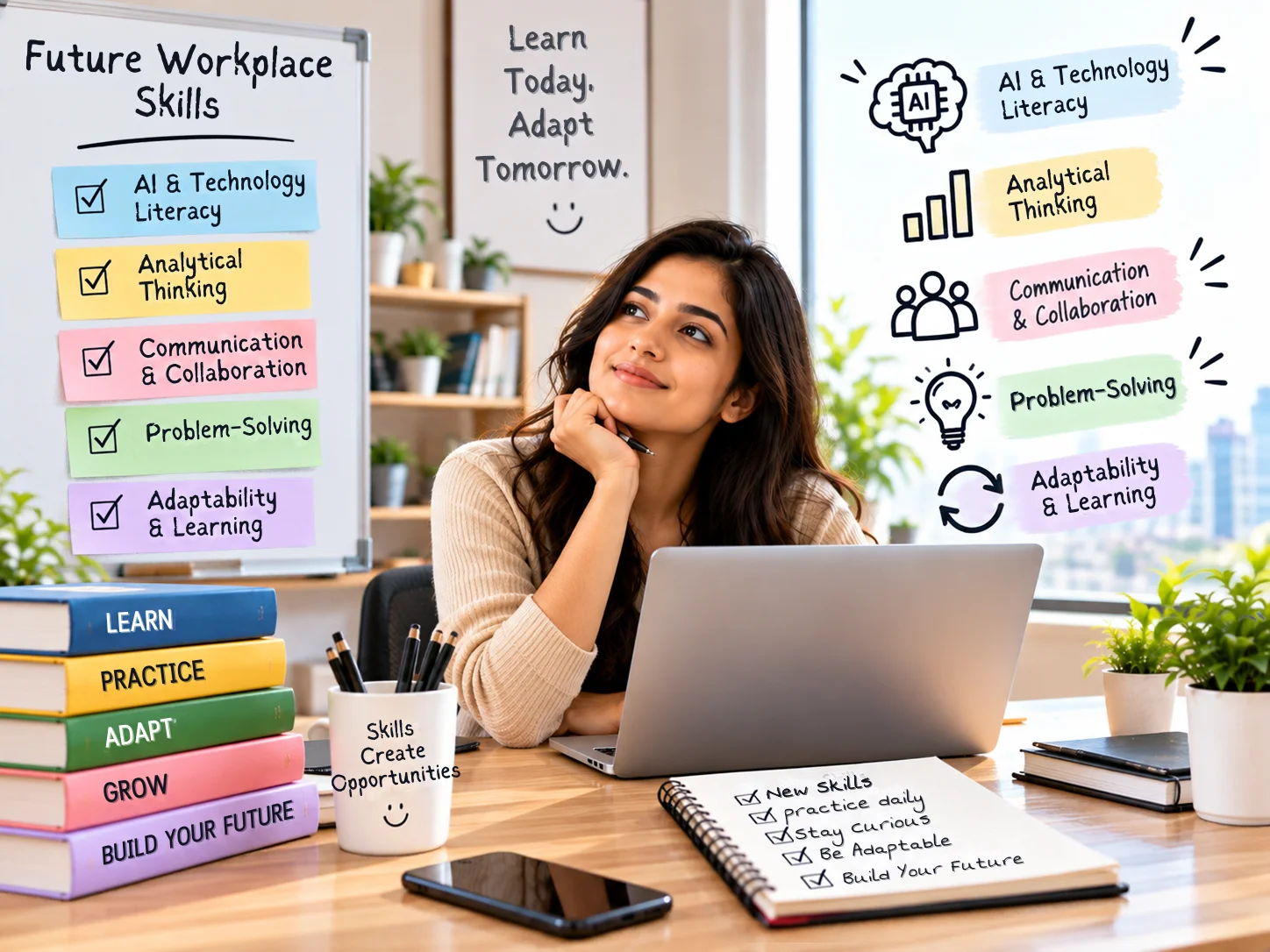
Conclusion
Future workplace की सबसे interesting बात यह है कि आने वाले समय में केवल technical knowledge काफी नहीं हो सकती।
एक employee के पास AI tool हो सकता है।
लेकिन उसे यह भी पता होना चाहिए कौन-सा problem solve करना है?
एक employee के पास data हो सकता है।
लेकिन उसे यह समझना होगा इस data का मतलब क्या है?
एक employee के पास communication tool हो सकता है।
लेकिन उसे सही बात, सही व्यक्ति तक, सही तरीके से
पहुँचानी होगी।
और एक employee के पास बहुत knowledge हो सकती है।
लेकिन अगर वह changing environment में सीख और adapt नहीं कर सकता, तो उसकी skills समय के साथ less relevant हो सकती हैं।
इसलिए future workplace में valuable बनने का मतलब सब कुछ सीखना नहीं है।
बल्कि सही skills को सही combination में develop करना है।
आपकी foundation हो सकती है Domain Expertise
इसके ऊपर Technology
फिर Human Skills
और इन सबके ऊपर Adaptability + Continuous Learning
एक student के लिए इसका मतलब है:
Degree
Relevant Skills
Projects
Communication
एक working professional के लिए:
Existing Expertise
Future Technology
Human Capability
Continuous Upskilling
और career switcher के लिए:
Transferable Skills
Adjacent Skills
Practical Evidence
New Opportunity
याद रखिए:
Technology बदल सकती है।
एक tool popular होकर कुछ years बाद replace हो सकता है।
एक software outdated हो सकता है।
एक process automate हो सकता है।
एक job title भी बदल सकता है।
लेकिन अगर आपने:
- Learning
- Problem-Solving
- Communication
- Adaptability
- Critical Thinking
जैसी durable capabilities develop की हैं, तो नई technology सीखना comparatively easier हो सकता है।
इसीलिए future workplace की तैयारी को इस तरह देखिए:
Don’t Prepare for One Future Job.
Prepare to Become the Kind of Professional Who Can Adapt to Many Future Roles.
और यही future workplace skills की सबसे practical definition हो सकती है।
Your Future Skill Formula
Know Your Domain
↓
Understand What Is Changing
↓
Identify Your Skill Gap
↓
Learn One Relevant Technology
↓
Strengthen One Human Skill
↓
Apply Both to a Real Problem
↓
Build Evidence
↓
Get Feedback
↓
Keep Improving
अगर इस पूरे article को एक line में summarize करें:
Future-ready professionals won’t just know more—they will learn faster, think better, work smarter, and adapt continuously.
यही mindset students को future careers के लिए और professionals को changing workplaces के लिए बेहतर तरीके से prepare कर सकता है।
FAQs: Future Workplace Skills
1. What are future workplace skills?
Future workplace skills वे capabilities हैं जो employees को changing technology, business processes और work environments के साथ effectively perform और adapt करने में मदद करती हैं। इनमें technology, thinking, communication, collaboration और adaptability skills शामिल हो सकती हैं।
2. Which skills will be important in the future workplace?
AI literacy, data literacy, analytical thinking, critical thinking, communication, collaboration, problem-solving, adaptability, creativity और continuous learning जैसी skills कई workplace contexts में useful हो सकती हैं।
3. Is AI the most important future workplace skill?
AI important है, लेकिन अकेली skill नहीं। AI को domain expertise, analytical thinking, communication और human judgment के साथ combine करना अधिक useful हो सकता है।
4. Should everyone learn coding for future jobs?
नहीं। Coding की relevance career और role पर depend करती है। हर professional के लिए अपने domain से relevant technology skill चुनना ज्यादा practical approach है।
5. How can students prepare for future workplaces?
Students को target career identify करके relevant domain, technology और human skills develop करनी चाहिए। Practical projects और portfolio के जरिए इन skills का evidence भी build करना useful है।
6. How can working professionals develop future workplace skills?
Working professionals अपने current role के tasks और skill gaps identify करके relevant technology या human skill चुन सकते हैं और उसे real workplace project में apply कर सकते हैं।
7. Why are human skills important if AI is becoming more powerful?
AI कई tasks में assistance दे सकती है, लेकिन communication, judgment, collaboration, leadership, empathy और complex problem-solving जैसे human capabilities workplace में important रह सकती हैं।
8. What is a future-ready skill stack?
एक practical future-ready skill stack में core domain skill + relevant technology skill + durable human skill का combination हो सकता है।
9. How do I know which future skill to learn?
अपना career goal, current skill gap, industry requirements और practical application opportunities देखें। जो skill आपकी existing expertise को strengthen करती है, वह strong candidate हो सकती है।
10. How often should I update my workplace skills?
कोई universal schedule नहीं है। लेकिन industry changes, new tools और job requirements को regularly review करना और जरूरत के अनुसार skills update करना useful approach है।