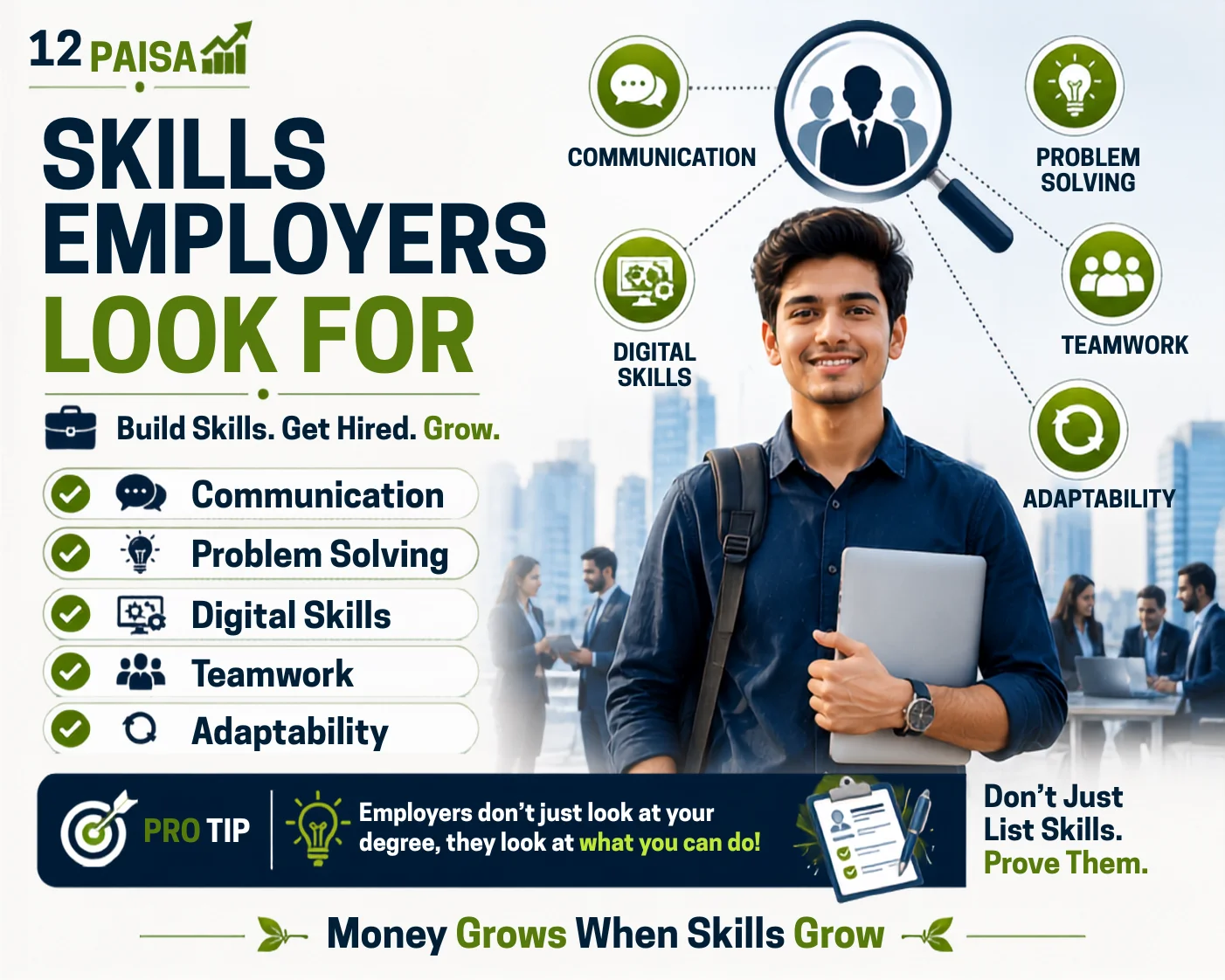
From an employer’s perspective, which skills are valuable, and how can a candidate practically demonstrate them? “Skills Employers Look For” means that employers do not simply look at what skills a candidate has; rather, they look at which skills are valuable to the company.
The focus of this article is to explain: “What does an employer look for in a candidate, and which skills make a candidate valuable in the workplace?”
आज की Job Market में Employers केवल Degree या Marks पर depend नहीं करते। वे ऐसे Candidates की तलाश कर सकते हैं जो Problems Solve कर सकें, clearly Communicate कर सकें, Technology का उपयोग कर सकें और Team के साथ effectively काम कर सकें।
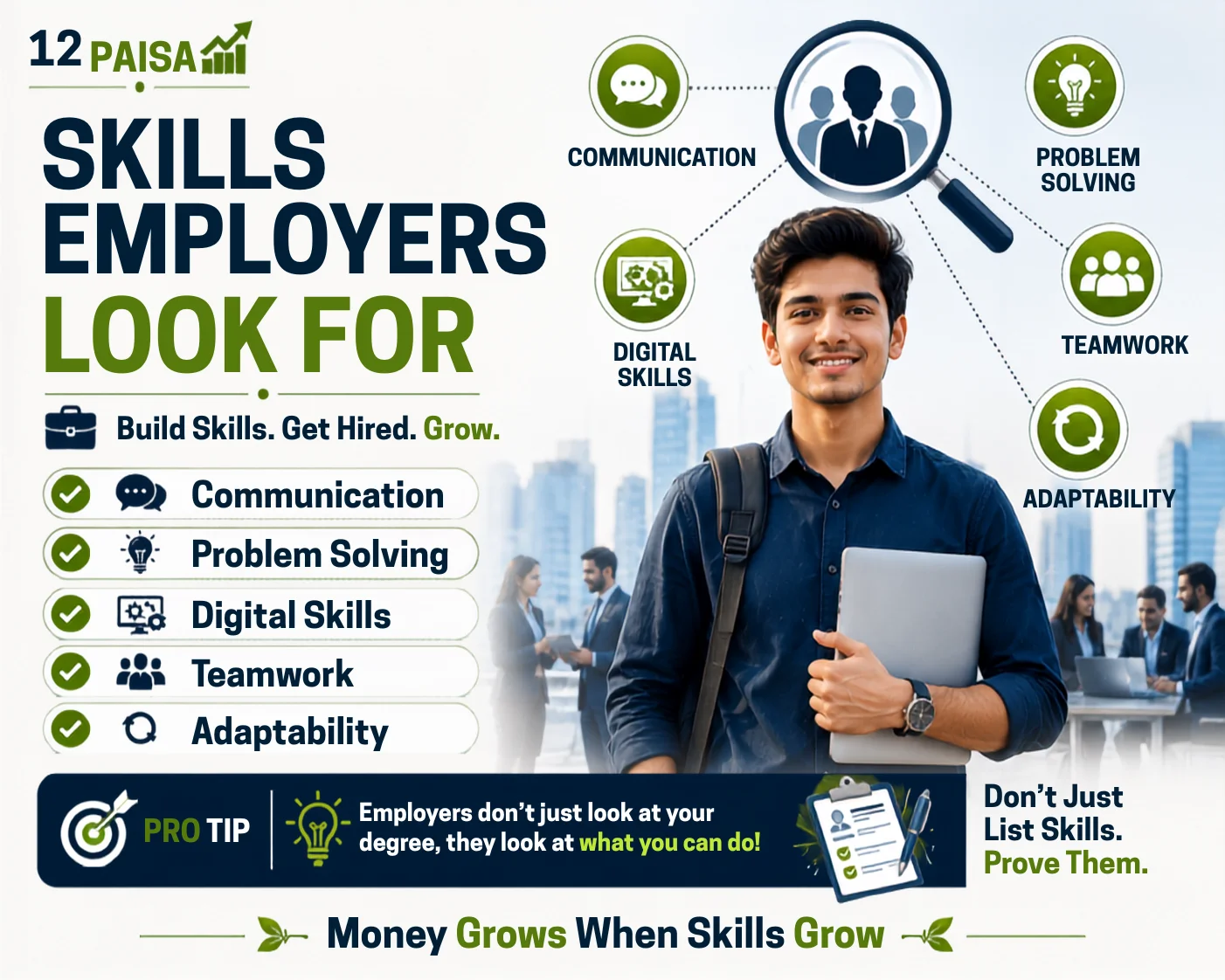
Communication, Problem Solving, Adaptability, Digital Skills, Leadership, Teamwork और Continuous Learning जैसी Skills Career Growth के लिए important हो सकती हैं।
इसलिए Career Growth के लिए केवल यह सवाल नहीं होना चाहिए:
“मेरी Qualification क्या है?”
बल्कि:
“मैं practically क्या कर सकता हूँ?”
मान लीजिए दो Candidates एक ही Job के लिए Interview देने जाते हैं।
Candidate A
उसके पास अच्छी Degree है।
Candidate B
उसके पास अच्छी Degree के साथ:
- Communication Skills
- Problem Solving
- Digital Skills
- Teamwork
- Practical Experience
भी हैं।
Employer किस Candidate को prefer करेगा?
हर hiring decision अलग होता है, लेकिन दूसरा Candidate कई situations में advantage में हो सकता है क्योंकि Companies केवल यह नहीं देखतीं कि आपने क्या पढ़ा है, बल्कि यह भी देखती हैं कि आप क्या कर सकते हैं।
यही कारण है कि:
Skills Career Growth का महत्वपूर्ण हिस्सा बन चुकी हैं।
Why Skills Matter More Than Ever
आज Businesses लगातार बदल रहे हैं।
Technology बदल रही है।
Customer Expectations बदल रही हैं।
Work Processes बदल रहे हैं।
ऐसे environment में Companies ऐसे लोगों को value कर सकती हैं जो:
- जल्दी सीख सकें
- Problems Solve कर सकें
- Value Create कर सकें
ये तीन capabilities changing workplace में important है।
इसका मतलब है कि Employer केवल:
“आपको क्या आता है?”
नहीं पूछ सकता।
वह indirectly यह भी देख सकता है:
“आप नई situation में कितना जल्दी सीख सकते हैं?”
Degree vs Skills: Is Degree Still Important?
यहाँ एक important clarification जरूरी है।
इस article का मतलब यह नहीं है कि:
Degree की कोई value नहीं है।
कई professions में Degree या formal qualification जरूरी हो सकती है।
लेकिन Degree और Skills को:
Either/Or
की तरह देखने के बजाय:
Degree + Skills
के combination के रूप में देखना ज्यादा practical है।
Degree important हो सकती है, लेकिन Skills के साथ उसका combination stronger हो सकता है।
Knowledge vs Skill
एक simple difference समझिए।
Knowledge
आप जानते हैं कि चीज कैसे काम करती है।
Skill
आप उस knowledge को practically use कर सकते हैं।
उदाहरण:
आपने पढ़ा:
“Effective Presentation कैसे बनती है।”
यह Knowledge है।
लेकिन:
आपने खुद एक professional presentation बनाई और deliver की।
यह Skill है।
इसलिए:
Knowledge tells. Skill demonstrates.
The Career Success Formula
इस article का core framework:
Knowledge
↓
Skills
↓
Value Creation
↓
Career Growth
↓
Income Growth
↓
Financial Freedom
यह कोई guaranteed formula नहीं है।
लेकिन यह समझाने का useful framework है कि Skill Development को Career और Financial Growth से क्यों जोड़कर देखा जा सकता है।
12Paisa Tip 💡
Degree आपको Interview तक पहुंचा सकती है। Skills आपको Opportunity के लिए तैयार कर सकती हैं।
इसलिए अपनी Qualification के साथ practical capabilities develop करना शुरू कीजिए।
Skill #1: Communication Skills
Communication लगभग हर Industry में useful हो सकती है।
Workplace में आपको:
- Ideas Share करने
- Questions पूछने
- Information समझाने
- Team के साथ coordinate करने
- Clients से बात करने
की जरूरत पड़ सकती है।
Communication को Teamwork, Leadership, Client Communication और Presentations से जोड़ा जाता है।
Why Employers Value Communication
मान लीजिए आपकी technical knowledge बहुत अच्छी है।
लेकिन आप:
अपना idea explain नहीं कर पाते।
तो Team में आपका contribution communicate करना मुश्किल हो सकता है।
दूसरी तरफ, अगर आप:
Clearly Explain
↓
Actively Listen
↓
Relevant Questions Ask
↓
Ideas Present
कर सकते हैं, तो workplace collaboration आसान हो सकती है।
इसलिए:
Good Communication Makes Good Skills More Visible.
Communication Is More Than Speaking
Communication का मतलब केवल fluent English बोलना नहीं है।
इसमें शामिल हो सकता है:
Listening
दूसरे व्यक्ति को समझना।
Writing
Information clearly लिखना।
Speaking
अपना message clearly explain करना।
Presentation
Ideas को structured तरीके से present करना।
Workplace Communication
Professional तरीके से interact करना।
इसलिए Communication Skill को केवल:
“English बोलना”
तक सीमित नहीं करना चाहिए।
Skill #2: Problem Solving Skills
Companies आखिर लोगों को hire क्यों करती हैं?
क्योंकि उन्हें Problems solve करवानी होती हैं।
Business में रोज:
- Customer Problems
- Operational Problems
- Technical Problems
- Communication Problems
- Process Problems
आ सकती हैं।
इसलिए Problem Solving एक high-value capability हो सकती है।
Source article इसका framework देता है:
Problem Solving
↓
Better Solutions
↓
Business Value
↓
Career Growth
What Does Problem Solving Mean?
Problem Solving का मतलब तुरंत answer देना नहीं है।
एक better process हो सकता है:
Step 1 – Identify
असल problem क्या है?
Step 2 – Understand
Problem क्यों हो रही है?
Step 3 – Analyse
Possible causes क्या हैं?
Step 4 – Generate
Possible solutions क्या हैं?
Step 5 – Evaluate
कौन-सा solution practical है?
Step 6 – Implement
Solution को apply करें।
Step 7 – Review
Result कैसा रहा?
यह approach आपको केवल:
Task Performer से Problem Solver बनाने में मदद कर सकती है।
Skill #3: Adaptability
आज Job Market स्थिर नहीं है।
नई:
Technologies
↓
Processes
↓
Expectations
आती रहती हैं।
इसलिए जो व्यक्ति नई परिस्थितियों के साथ adapt कर सकता है, उसके पास changing workplace में advantage हो सकता है।
What Is Adaptability?
Adaptability का मतलब यह नहीं कि:
“हर चीज तुरंत सीख लो।”
इसका मतलब है:
Change को समझकर अपनी approach adjust करने की ability.
उदाहरण:
अगर Company नया software introduce करती है, तो adaptable employee:
Old Method
से चिपके रहने के बजाय:
New System
सीखने की कोशिश कर सकता है।
Adaptability and Career Growth
एक professional की Career Journey में कई changes आ सकते हैं:
New Role
↓
New Responsibility
↓
New Technology
↓
New Team
↓
New Expectations
अगर आप हर change को केवल problem समझते हैं, तो growth difficult हो सकती है।
लेकिन अगर आप उसे:
Learning Opportunity
की तरह देखते हैं, तो वही change नई Skill develop करने का मौका बन सकता है।
12Paisa Tip 💡
Future में valuable employees वे हो सकते हैं जो केवल अच्छा काम नहीं करते, बल्कि बदलती situation में भी सीखते और adapt करते हैं।
Skill #4: Teamwork
कोई भी बड़ी Company केवल एक व्यक्ति के भरोसे नहीं चलती।
अधिकतर workplaces में आपको:
- Managers
- Colleagues
- Clients
- Teams और
- Other Departments
के साथ काम करना पड़ सकता है।
इसलिए Teamwork important workplace capability है।
Teamwork को:
- Collaboration
- Productivity
- Better Results
से जोड़ा जाता है।
What Good Teamwork Looks Like
Good Teamwork का मतलब केवल:
“सबके साथ friendly रहना।”
नहीं है।
इसमें शामिल हो सकता है:
- अपनी responsibility पूरी करना
- दूसरों की बात सुनना
- Information share करना
- समय पर support देना
- Conflict को professionally handle करना
- Team Goal को personal ego से ऊपर रखना
Individual Skill vs Team Value
मान लीजिए कोई employee बहुत talented है।
लेकिन:
- Team के साथ cooperate नहीं करता
- Information share नहीं करता
- दूसरों की बात नहीं सुनता
तो उसकी individual skill का full benefit Company को नहीं मिल सकता।
इसलिए Employer केवल यह नहीं देख सकता:
“आप कितने talented हैं?”
बल्कि:
“आप Team के साथ कितना value create कर सकते हैं?”
Skill #5: Digital Skills
आज लगभग हर Industry किसी न किसी level पर Digital Systems का उपयोग करती है।
इसलिए basic Digital Skills कई Careers में useful हो सकती हैं।
Source article examples देता है:
- MS Office
- Online Research
- Digital Communication
- Basic AI Tools
Digital Skills Are Not Only Coding
यह भी एक common misunderstanding है।
Digital Skills का मतलब केवल:
Programming
नहीं है।
आपके Career के अनुसार इसमें शामिल हो सकते हैं:
- Digital Communication
- Online Research
- Productivity Software
- Data Handling
- Basic AI Tools
और अन्य relevant digital capabilities
इसलिए:
हर Professional को Programmer बनने की जरूरत नहीं, लेकिन Digital Comfort useful हो सकता है।
Skill #6: AI Awareness
AI तेजी से Workplace का हिस्सा बन रही है।
Employers AI Tool Usage, AI Productivity Skills और basic AI Awareness को value कर सकते हैं।
What Does AI Awareness Mean?
Basic AI Awareness का मतलब हो सकता है:
- AI क्या कर सकती है?
- AI कहाँ useful है?
- AI की limitations क्या हैं?
- अपने work में AI कहाँ responsibly use की जा सकती है?
यह जरूरी नहीं कि हर employee:
AI Engineer
बने।
लेकिन अपने Industry में AI के impact को समझना Career Advantage दे सकता है।
Skill #7: Leadership Skills
Leadership केवल Managers के लिए नहीं है।
Leadership को:
- Responsibility
- Initiative
- Decision Making
से जोड़ा जाता है।
इसलिए Student भी Leadership develop कर सकता है।
Employee भी।
Team Member भी।
Leadership Without a Job Title
आपको Leader बनने के लिए:
Manager
बनना जरूरी नहीं।
अगर आप:
- Responsibility लेते हैं
- Initiative लेते हैं
- Problems identify करते हैं
- Solutions suggest करते हैं
- दूसरों की मदद करते हैं
तो आप Leadership Mindset develop कर रहे हैं।
इसलिए:
Leadership Position मिलने के बाद शुरू नहीं होती।
Leadership Mindset पहले develop होता है।
Skill #8: Time Management
Workplace में Time एक limited resource है।
अगर दो Employees समान skill रखते हैं, लेकिन:
Employee A
बार-बार deadlines miss करता है।
और:
Employee B
अपना काम priority के अनुसार manage करता है।
तो दूसरे employee की reliability ज्यादा valuable हो सकती है।
Time Management को:
- Better Productivity
- Less Stress
- Better Performance
से जोड़ा जाता है।
Time Management Is Not “Doing More”
Time Management का मतलब हर minute busy रहना नहीं।
इसका मतलब हो सकता है:
Prioritize
सबसे important task पहले।
Plan
क्या कब करना है?
Focus
एक समय में relevant work पर ध्यान।
Finish
काम को unnecessarily delay न करना।
Review
क्या improve किया जा सकता है?
Skill #9: Critical Thinking
आज Information की कमी नहीं है।
Internet पर:
- Millions of Articles
- Videos
- Posts
- Opinions और
- AI-generated Information
available हो सकती है।
लेकिन:
Information मिलना और सही Information पहचानना अलग Skills हैं।
Critical Thinking को:
- Better Decisions
- Better Analysis
- Better Judgement
से जोड़ा जाता है।
Critical Thinking Means Asking Better Questions
जब आपको कोई information मिले, पूछें:
Source क्या है?
Evidence क्या है?
क्या कोई alternative explanation है?
क्या यह मेरे context में लागू होती है?
क्या conclusion logical है?
यह approach workplace में बेहतर decisions लेने में मदद कर सकती है।
Skill #10: Continuous Learning
Technology और Industries लगातार बदल रही हैं।
इसलिए learning को केवल:
School या College तक सीमित करना practical नहीं है।
Continuous Learning को:
Learning
↓
New Skills
↓
New Opportunities
↓
Career Growth
से जोड़ा जाता है।
Continuous Learning Does Not Mean Learning Everything
यह बहुत important है।
Continuous Learning का मतलब:
हर नई चीज सीखना नहीं है।
बल्कि अपने Career और Goals के लिए relevant चीजें लगातार सीखना।
उदाहरण:
अगर आप Marketing में हैं, तो:
- Marketing Trends
- Analytics
- Digital Tools
- Relevant AI
जैसी चीजें सीखना useful हो सकता है।
Why Human Skills Still Matter
Technology और AI बढ़ रही हैं।
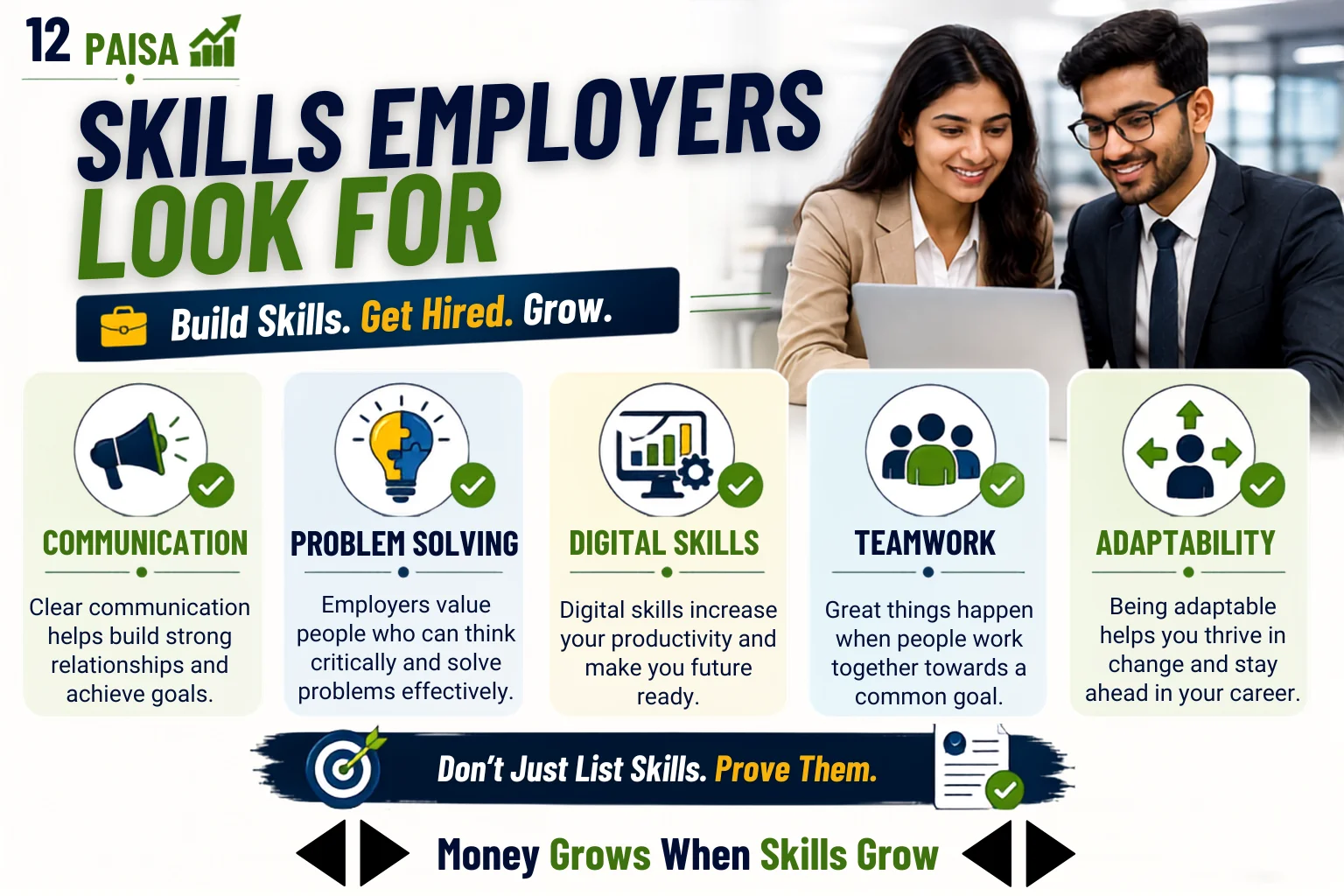
लेकिन कुछ Human-Centric Skills की importance बनी रह सकती है।
examples है:
- Communication
- Leadership
- Creativity
- Emotional Intelligence
इन skills का मतलब यह नहीं कि इन्हें technology कभी influence नहीं करेगी।
Point यह है कि workplaces में human interaction और judgement की जरूरत बनी रह सकती है।
Students Should Start Early
Students के पास एक major advantage है:
Time
अगर Student early stage पर Skills develop करना शुरू करता है, तो उसे:
- Better Employability
- Better Interviews
- Better Career Growth
जैसे benefits मिल सकते हैं।
इसलिए Skill Development को:
“Job मिलने के बाद सीखेंगे।”
तक postpone नहीं करना चाहिए।
Skills Employers May Want in 2030
Future में Employers केवल Technical Knowledge तक सीमित नहीं रह सकते।
संभावित future-ready skill set में शामिल है:
- Communication Skills
- AI Awareness
- Problem Solving
- Adaptability
- Leadership
- Teamwork
- Digital Skills
- Learning Ability
ध्यान दें:
यहाँ focus यह है कि:
Employer की नजर से Candidate में कौन–सी capabilities valuable हो सकती हैं।
12Paisa Tip 💡
Skill Development को Expense मत समझिए। इसे Career Investment की तरह देखिए।
Skills and Income Growth
Career में Income अक्सर Value Creation से जुड़ी होती है।
एक possible progression:
Better Skills
↓
More Value
↓
Better Opportunities
↓
Career Growth
↓
Income Growth
यह guaranteed income formula नहीं है।
लेकिन valuable Skills आपकी ability to create value और career opportunities को support कर सकती हैं।
Skills and Financial Freedom
12Paisa के broader framework में Career Growth और Financial Growth connected हैं।
Skills
↓
Career Growth
↓
Income Growth
↓
Saving
↓
Investing
↓
Financial Freedom
इसलिए Skills को केवल:
“Job पाने का तरीका”
न समझें।
वे long-term earning capability का भी हिस्सा हो सकती हैं।
Key Takeaways
- Employers केवल Degree या Marks पर depend नहीं कर सकते; Skills और practical ability भी important हो सकती हैं।
- Communication Skills workplace में Teamwork, Leadership, Client Communication और Presentations में मदद कर सकती हैं।
- Problem Solving Companies के लिए Business Value create कर सकती है।
- Adaptability changing Technology, Processes और Expectations के बीच important हो सकती है।
- Teamwork Collaboration, Productivity और Better Results को support कर सकता है।
- Digital Skills केवल Coding तक सीमित नहीं हैं।
- AI Awareness increasingly useful Career capability हो सकती है।
- Leadership केवल Management Position से शुरू नहीं होती; Responsibility, Initiative और Decision Making भी Leadership का हिस्सा हैं।
- Time Management Productivity और Performance को support कर सकती है।
- Critical Thinking information को analyse करने और बेहतर judgement लेने में मदद कर सकती है।
- Continuous Learning नई Skills और Opportunities से जुड़ी हो सकती है।
- Human Skills जैसे Communication, Leadership, Creativity और Emotional Intelligence की relevance बनी रह सकती है।
- Students के लिए early Skill Development एक Career Advantage बन सकता है।
- Skills → Value Creation → Career Growth → Income Growth का progression long-term Career framework हो सकता है।
- Degree + Skills का combination केवल Degree पर depend करने से stronger हो सकता है।
Conclusion
आज Job Market में एक important shift दिखाई देता है:
पहले सवाल हो सकता था:
“आपने क्या पढ़ा है?”
अब इसके साथ एक और सवाल important हो सकता है:
“आप क्या कर सकते हैं?”
एक Degree आपकी educational foundation दिखा सकती है।
लेकिन Skills यह दिखाने में मदद करती हैं कि आप उस knowledge को practically कैसे use कर सकते हैं।
एक strong professional profile में:
Knowledge
Communication
Problem Solving
Digital Skills
Teamwork
Adaptability
Leadership
Continuous Learning
जैसी capabilities का combination useful हो सकता है।
और सबसे important बात:
Employers केवल Task Doers नहीं, Problem Solvers और Value Creators चाहते हैं।
इसलिए अगर आप Student हैं, तो Skills develop करना शुरू करने के लिए Job का इंतजार मत कीजिए।
अगर आप Job Seeker हैं, तो Resume में केवल Qualifications लिखने के बजाय skills और practical proof पर भी ध्यान दीजिए।
अगर आप Working Professional हैं, तो अपनी existing expertise के साथ नई Skills जोड़ते रहिए।
क्योंकि Career Growth केवल यह नहीं है कि:
“आपको Job मिल गई।”
Career Growth यह भी है कि:
“आप समय के साथ अधिक valuable बनते जा रहे हैं।”
और यही 12Paisa के broader philosophy से जुड़ता है:
अब तक आपने उन core skills को समझा जो employers candidate में देख सकते हैं—Communication, Problem Solving, Adaptability, Teamwork, Digital Skills, AI Awareness, Leadership, Time Management, Critical Thinking और Continuous Learning.
अब focus होगा इन skills को practically demonstrate करने पर।
Skills vs Certificates
आज बहुत से students और job seekers certificates collect करते हैं।
लेकिन एक important question है:
क्या Certificate अपने आप आपकी Skill prove करता है?
जरूरी नहीं।
Certificate यह दिखा सकता है कि आपने कोई course पूरा किया है।
लेकिन Skill demonstrate करने के लिए आपको यह दिखाना पड़ सकता है कि:
आपने क्या सीखा?
आपने उसे कहाँ apply किया?
आपने क्या बनाया?
आपने कौन-सी problem solve की?
इसलिए:
Certificate = Learning Evidence
लेकिन:
Project + Application = Skill Evidence
What Employers May Want to See
मान लीजिए आप कहते हैं:
“I have good communication skills.”
यह एक statement है।
लेकिन अगर आप:
- Clearly structured answer देते हैं
- Interview में confidently explain करते हैं
- Presentation deliver कर सकते हैं
- Professional email लिख सकते हैं
तो आपकी Communication Skill practically दिखाई देती है।
इसी तरह:
Skill को केवल बताने के बजाय demonstrate करना ज्यादा powerful हो सकता है।
How to Demonstrate Problem Solving
Resume में केवल:
Problem Solving Skills
लिखना काफी generic हो सकता है।
इसके बजाय अपने experience को इस तरह explain करें:
Problem
क्या challenge था?
Action
आपने क्या किया?
Result
क्या improvement हुआ?
एक simple framework:
Problem → Action → Result
Example
मान लीजिए किसी student ने School Event में registration manage किया।
Problem
Manual registration में बहुत time लग रहा था।
Action
उसने digital form और spreadsheet का इस्तेमाल किया।
Result
Registration process ज्यादा organised हो गया।
अब उसने सिर्फ यह नहीं कहा:
“I have problem-solving skills.”
उसने problem-solving का example दिया।
Skill Demonstration in Interviews
Interview में employer केवल direct questions नहीं पूछ सकता।
वह पूछ सकता है:
“Tell me about a time when you solved a difficult problem.”
यहाँ केवल:
“I am a good problem solver.”
कहना weak answer हो सकता है।
बेहतर approach:
Situation
↓
Problem
↓
Action
↓
Result
इसे अक्सर:
STAR Approach
की तरह structure किया जा सकता है।
Communication Skill in an Interview
Interview खुद Communication Skill demonstrate करने का अवसर है।
ध्यान दें:
Answer Clearly
सीधे question का answer दें।
Avoid Unnecessary Details
बहुत लंबा और unrelated answer न दें।
Give Examples
जहाँ possible हो, practical example दें।
Listen Carefully
Question पूरा समझकर answer करें।
Teamwork Skill कैसे दिखाएँ?
सिर्फ यह लिखना:
“I am a team player.”
काफी generic है।
इसके बजाय बताइए:
Team में आपकी role क्या थी?
आपने क्या contribution दिया?
किसी disagreement को कैसे handle किया?
Final result क्या रहा?
इससे Teamwork ज्यादा credible तरीके से demonstrate हो सकता है।
Leadership Skill कैसे दिखाएँ?
Leadership के लिए Manager होना जरूरी नहीं।
आप examples दे सकते हैं:
- किसी Project को Lead किया
- Team Task coordinate किया
- Responsibility ली
- Problem देखकर initiative लिया
- दूसरों को support किया
Leadership को Responsibility, Initiative और Decision Making से जोड़ा जाता है।
इसलिए:
Leadership = Title नहीं, Behaviour भी हो सकता है।
Adaptability कैसे Demonstrate करें?
Employer पूछ सकता है:
“Tell me about a time when you had to adapt to change.”
एक strong answer में हो सकता है:
Old Situation
↓
What Changed
↓
How You Adapted
↓
What You Learned
उदाहरण:
अगर Company ने नया software introduce किया और आपने उसे जल्दी सीखकर अपना workflow adjust किया, तो यह Adaptability का practical example हो सकता है।
Digital Skills को कैसे Show करें?
Digital Skills की list बहुत बड़ी हो सकती है।
इसलिए केवल tools की list देने के बजाय:
आपने technology का उपयोग किस purpose के लिए किया?
यह ज्यादा useful question है।
उदाहरण:
Excel
→ Data organisation
Presentation Software
→ Client Presentation
Online Research
→ Market Research
AI Tool
→ Research/Productivity assistance
इससे Digital Skill का practical context दिखाई देता है।
AI Awareness को कैसे Demonstrate करें?
यहाँ एक important distinction है।
AI Tool use करना
और
AI को responsibly use करना
एक ही बात नहीं है।
एक AI-aware professional समझ सकता है:
- AI कहाँ useful है
- AI की limitations क्या हैं
- Output verify क्यों करना चाहिए
- Sensitive information के साथ caution क्यों जरूरी है
- Human judgement कहाँ जरूरी है
इसलिए AI Awareness का मतलब केवल:
“मुझे ChatGPT चलाना आता है।”
नहीं है।
Critical Thinking in the Workplace
मान लीजिए आपको AI से कोई answer मिला।
आपके पास दो options हैं:
Option A
Answer को तुरंत accept कर लें।
Option B
Answer को evaluate करें।
पूछें:
क्या यह logical है?
क्या source reliable है?
क्या context सही है?
क्या कोई missing information है?
Option B Critical Thinking को demonstrate करता है।
Critical Thinking को Better Decisions, Analysis और Judgement से जोड़ा जाता है।
Time Management: Don’t Just Look Busy
Workplace में busy होना और productive होना अलग चीजें हैं।
एक employee पूरा दिन:
- Emails
- Meetings और
- Small Tasks
में लगा रह सकता है।
लेकिन important work pending रह सकता है।
Better Time Management में:
Prioritisation
↓
Focus
↓
Execution
↓
Review
हो सकता है।
Time Management को Productivity, Less Stress और Better Performance से जोड़ा जाता है।
Continuous Learning in Real Life
Continuous Learning का मतलब रोज 5 घंटे course करना नहीं है।
आप 30 minutes या 1 hour
daily/weekly learning के लिए dedicate कर सकते हैं।
Focus होना चाहिए:
Relevant learning + Consistent practice
Learning → New Skills → New Opportunities → Career Growth
Build a Skill Stack
एक single Skill useful हो सकती है।
लेकिन कई complementary Skills मिलकर:
Skill Stack बना सकती हैं।
उदाहरण:
Digital Marketing
Marketing Knowledge
Communication
Analytics
Digital Skills
AI Awareness
एक broader professional capability बना सकते हैं।
Why Skill Stacking Matters
मान लीजिए दो candidates हैं।
Candidate A
केवल Graphic Design जानता है।
Candidate B
जानता है:
Graphic Design + Communication + Basic Marketing + AI Awareness
Candidate B के पास अलग-अलग capabilities का combination है।
इसका मतलब यह नहीं कि Candidate B हर situation में automatically better होगा।
लेकिन Skill Stack उसे different tasks और opportunities के लिए useful बना सकता है।
Don’t Try to Learn Everything
Skill Stack का मतलब:
20 Skills सीखना नहीं है।
आपको अपने Career Goal के अनुसार:
1 Core Skill
2–3 Supporting Skills
से शुरुआत करनी चाहिए।
उदाहरण:
Core
- Data Analysis
Supporting
- Communication
- Excel
- AI Awareness
यह एक practical Skill Stack हो सकता है।
Skills and Experience
एक और important point:
Skills Experience से मजबूत होती हैं।
आप:
Learn
↓
Practice
↓
Apply
↓
Get Feedback
↓
Improve
करते हैं।
इसीलिए केवल पढ़ना काफी नहीं।
Practice Creates Confidence
अगर आपने Communication केवल पढ़ी है, तो knowledge हो सकती है।
लेकिन अगर आपने:
Presentation दी
Interview practice की
Public Speaking की
तो confidence develop हो सकता है।
इसी तरह:
Problem Solving
के लिए real problems solve करें।
Leadership
के लिए responsibility लें।
Teamwork
के लिए projects में collaborate करें।
The Employability Formula
इस article को एक simple framework में देखें:
Knowledge + Skills + Experience + Attitude
↓
Employability
और फिर:
Employability
↓
Better Opportunities
↓
Career Growth
यह कोई guaranteed hiring formula नहीं है, लेकिन Career Preparation को समझने का useful model है।
What Job Seekers Should Avoid
Mistake #1 – सिर्फ Resume में Skills की List
Resume में:
- Communication
- Leadership
- Problem Solving
- Teamwork
लिख देना easy है।
लेकिन examples और achievements इन्हें ज्यादा credible बना सकते हैं।
Mistake #2 – Too Many Certificates
10 certificates होना जरूरी नहीं कि:
10 strong skills के बराबर हो।
Relevant learning + practical application ज्यादा useful हो सकती है।
Mistake #3 – No Portfolio
जहाँ applicable हो, अपने:
- Projects
- Case Studies
- Work Samples और
- Achievements
को organise करें।
Mistake #4 – Communication को Ignore करना
Strong technical skill होने के बावजूद अगर आप अपना work explain नहीं कर पाते, तो आपकी value communicate करना difficult हो सकता है।
Mistake #5 – Technology से दूर रहना
हर technology सीखना जरूरी नहीं।
लेकिन अपने field में relevant digital changes को ignore करना career growth को limit कर सकता है।
Mistake #6 – Learning को Postpone करना
“Job मिलने के बाद सीखूंगा।”
यह approach risky हो सकती है।
Better:
Learn before you need the skill.
Students: Build Skills Before the First Job
Students को पहला Job मिलने का इंतजार नहीं करना चाहिए।
College या School में ही:
Communication
Presentation और speaking practice करें।
Problem Solving
Projects और real-life challenges solve करें।
Teamwork
Group projects में participate करें।
Digital Skills
Relevant software और tools सीखें।
AI Awareness
Responsible AI usage समझें।
Leadership
Activities और projects में responsibility लें।
Students के लिए early Skill Development को Better Employability, Interviews और Career Growth से जोड़ा जाता है।
Freshers: How to Compete Without Experience?
Freshers के पास अक्सर Experience कम होता है।
लेकिन वे:
- Projects
- Internships
- College Activities
- Volunteer Work
- Personal Projects
के through Skills demonstrate कर सकते हैं।
इसलिए:
No Job Experience ≠ No Evidence of Skill
आपने अभी तक paid Job नहीं की हो सकती।
लेकिन आपने practical work किया हो सकता है।
Working Professionals: Don’t Stop at Your Current Skills
अगर आप already Job में हैं, तो एक common trap है:
“मुझे मेरी current Job आती है, इसलिए मुझे और कुछ सीखने की जरूरत नहीं।”
लेकिन Industry बदल सकती है।
Technology बदल सकती है।
Role बदल सकता है।
इसलिए अपनी existing Skill के साथ:
One New Relevant Skill
हर कुछ समय में add करना useful हो सकता है।
Skill Gap Analysis
अपना Skill Gap identify करने के लिए तीन columns बनाइए:
| Current Skill | Required Skill | Gap |
| Communication | Advanced Presentation | Practice |
| Excel | Data Analysis | Learning |
| Basic AI | AI Workflow | Practice |
| Teamwork | Project Leadership | Experience |
अब आपको clearly दिखेगा कि:
Next क्या सीखना है।
The 30-Day Employability Challenge
Week 1 – Communication
Daily:
- 5-minute speaking practice
- एक short presentation
- Professional writing practice
Week 2 – Digital Skill
एक relevant Digital Skill चुनें।
उदाहरण:
- Excel
- Presentation
- Data Handling
- Online Research
Week 3 – AI Tool
अपने Career या Studies के लिए एक relevant AI Tool explore करें।
Goal:
Tool + Practical Use
Week 4 – Resume & Skill Review
अपना Resume देखें।
पूछें:
क्या मेरी Skills clearly दिखाई दे रही हैं?
क्या मेरे Projects हैं?
क्या मेरे achievements measurable हैं?
क्या मेरी Skills मेरे Career Goal से relevant हैं?
The Compounding Effect of Skills
Skill Development का benefit धीरे-धीरे build हो सकता है।
एक simple model:
Year 1
Learning
↓
Year 2
Better Skills
↓
Year 3
Better Opportunities
↓
Year 4
Career Growth
↓
Year 5
Income Growth
यह fixed timeline या guaranteed outcome नहीं है।
यह केवल समझाता है कि:
Consistent Skill Development का value समय के साथ बढ़ सकता है।
Skills and Career Investment
अगर आप किसी Skill पर:
- Time
- Practice और
- Learning Effort
लगाते हैं, तो इसे केवल Expense न समझें।
यह:
Career Investment हो सकता है।
क्योंकि बेहतर Skills future में:
Better Value और Better Opportunities
create करने में मदद कर सकती हैं।
Key Takeaways
- Certificate और Skill एक ही चीज नहीं हैं।
- Certificate learning का evidence हो सकता है; practical projects skill का stronger evidence दे सकते हैं।
- Skills को Problem → Action → Result framework से demonstrate किया जा सकता है।
- Interviews में practical examples generic claims से ज्यादा useful हो सकते हैं।
- Teamwork, Leadership और Adaptability को real situations के examples से demonstrate किया जा सकता है।
- AI Awareness का मतलब केवल AI Tool चलाना नहीं; responsible use और limitations समझना भी है।
- Critical Thinking information evaluate करने और better judgement लेने में मदद कर सकती है।
- Skill Stack में एक Core Skill के साथ कुछ relevant Supporting Skills रखी जा सकती हैं।
- हर Skill सीखना जरूरी नहीं; Career Goal के अनुसार focused Skill Stack बनाना बेहतर है।
- Students Experience न होने के बावजूद Projects, Internships और Activities से Skills demonstrate कर सकते हैं।
- Working Professionals को अपनी existing Skills के साथ नई relevant Skills जोड़ते रहना चाहिए।
- Skill Gap Analysis आपको Current Skill और Required Skill के बीच difference identify करने में मदद कर सकता है।
- 30-Day Employability Challenge: Communication → Digital Skill → AI Tool → Resume & Skill Review
- Consistent Skill Development को long-term Career Investment की तरह देखा जा सकता है।
- Knowledge + Skills + Experience + Attitude → Employability एक useful career framework है।
Conclusion
Employer को केवल यह जानना जरूरी नहीं कि:
“आपने कौन-सा course किया है?”
वह यह भी जानना चाहता है:
“आप उस knowledge का क्या कर सकते हैं?”
इसीलिए Career Preparation को केवल:
Degree या Certificates
तक सीमित नहीं करना चाहिए।
एक stronger approach हो सकती है:
Learn
↓
Practice
↓
Apply
↓
Build Evidence
↓
Improve
↓
Create Value
यही process धीरे-धीरे आपकी Employability को strengthen कर सकती है।
अगर आप Student हैं, तो आज से छोटी Skills build करना शुरू करें।
अगर आप Fresher हैं, तो Projects और Practical Work के जरिए अपनी capability demonstrate करें।
अगर आप Job Seeker हैं, तो Resume में केवल Skill Names लिखने के बजाय उनके पीछे evidence दिखाने की कोशिश करें।
और अगर आप Working Professional हैं, तो अपने Career को केवल current responsibilities तक सीमित न रखें।
अपनी existing expertise में:
- Digital Skills
- AI Awareness
- Communication
- Problem Solving और
- Continuous Learning
जैसी capabilities जोड़ते रहें।
क्योंकि आज का Career सिर्फ:
“मैं क्या जानता हूँ?”
पर नहीं,
बल्कि:
“मैं उस Knowledge से क्या Value Create कर सकता हूँ?”
पर भी depend कर सकता है।
और यही 12Paisa की philosophy से जुड़ता है:
Money Grows When Skills Grow.
अब तक आपने समझा कि Employers किन core capabilities को value कर सकते हैं। आपने देखा कि Skills को केवल Resume में लिखना पर्याप्त नहीं—उन्हें Projects, Examples, Results और Practical Experience के जरिए demonstrate करना ज्यादा useful हो सकता है।
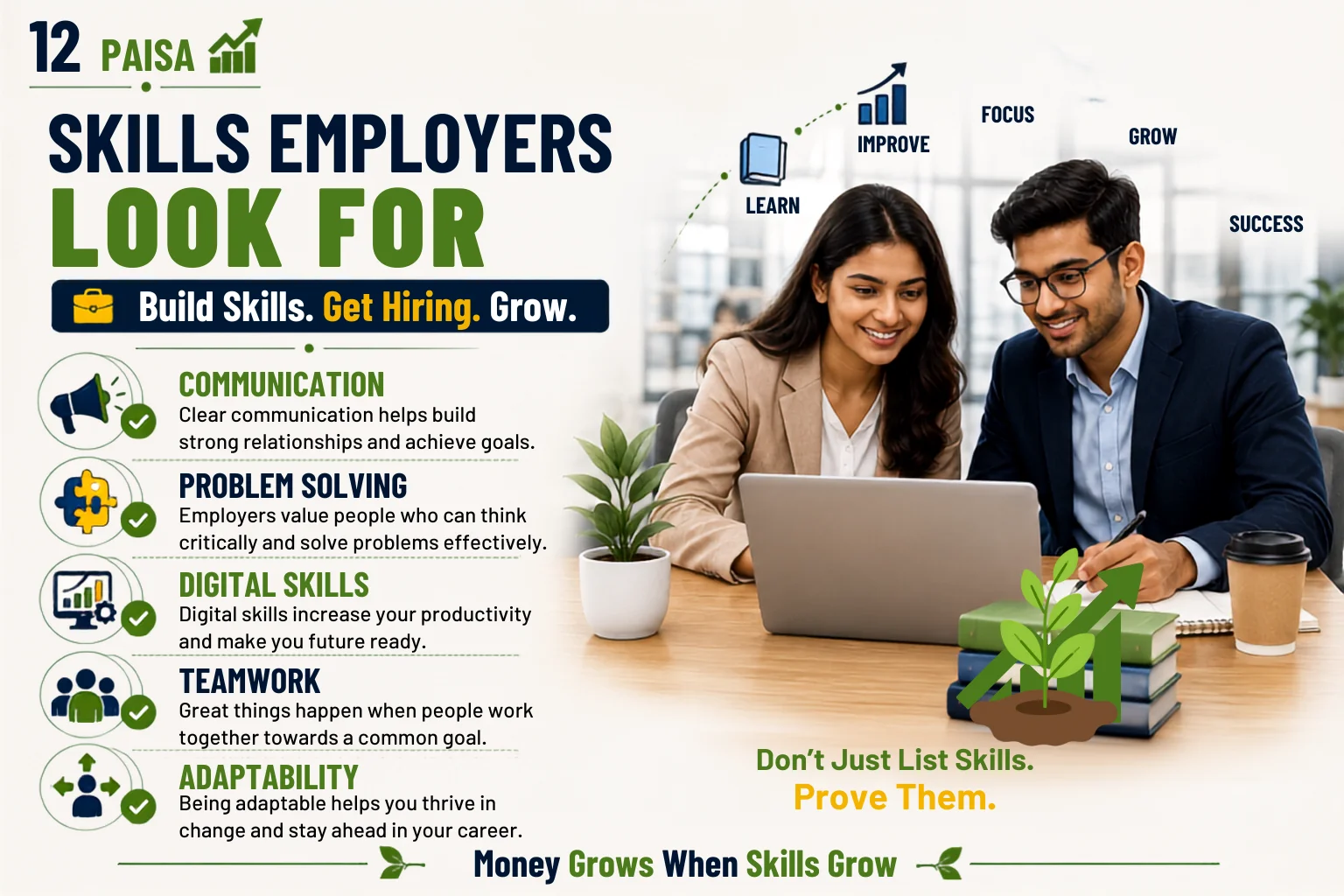
अब हम पूरी चीज को Job Search, Resume, Interview और Long-Term Career Growth से जोड़ेंगे।
Skills Employers Look For: The Bigger Picture
Employer के लिए एक candidate की value केवल उसकी qualification से decide नहीं होती।
एक practical framework:
Knowledge
↓
Skills
↓
Experience
↓
Value Creation
↓
Employability
↓
Career Growth
इसलिए Career बनाने के लिए सिर्फ यह पूछना पर्याप्त नहीं:
“मेरे पास कौन-सी Degree है?”
पूछिए:
“मेरे पास कौन-सी useful capabilities हैं और मैं उन्हें कैसे prove कर सकता हूँ?”
Employer Skills को कैसे पहचान सकता है?
Employer आपके Skill को सीधे आपके दिमाग के अंदर जाकर नहीं देख सकता।
उसे आपके:
- Resume
- Interview
- Projects
- Work Experience
- Communication और
- Behaviour
से संकेत मिल सकते हैं।
इसलिए:
Skill Visibility Matters.
आपके पास अच्छी Skill हो सकती है, लेकिन अगर आप उसे demonstrate नहीं कर पाते, तो Employer के लिए उसे पहचानना मुश्किल हो सकता है।
Resume: Don’t Just List Skills
एक common Resume section:
Skills
- Communication
- Leadership
- Teamwork
- Problem Solving
- Time Management
यह ठीक है, लेकिन generic है।
अगर possible हो तो इन्हें आपके:
- Projects
- Experience और
- Achievements
के साथ connect करें।
Weak vs Strong Skill Statement
Weak
Good Communication Skills
Stronger
Presented project findings to a team and explained key recommendations clearly.
Weak
Problem Solving
Stronger
Identified a workflow issue and introduced a simpler process to reduce repetitive work.
Point यह है:
Show the Skill Through Evidence.
The Evidence Pyramid
अपने Skill को इस order में सोचिए:
Level 1 – Claim
“I know Excel.”
Level 2 – Course
“I completed an Excel course.”
Level 3 – Project
“I used Excel to analyse a dataset.”
Level 4 – Result
“I analysed the dataset and created a dashboard to identify key trends.”
जितना practical evidence होगा, उतना easier हो सकता है कि Employer आपकी capability समझ सके।
Resume में Projects क्यों Important हैं?
Especially Students और Freshers के लिए Projects useful हो सकते हैं।
क्योंकि उनके पास:
Professional Experience कम हो सकता है।
लेकिन Project दिखा सकता है कि:
आपने कुछ बनाया या किसी Problem पर काम किया।
What Makes a Good Project?
एक useful project में ideally:
Problem
आपने कौन-सी problem चुनी?
Process
आपने क्या किया?
Skills
कौन-सी Skills use की?
Result
क्या outcome मिला?
Learning
आपने क्या सीखा?
इससे project केवल:
“मैंने कुछ बनाया।”
न रहकर:
“मैंने एक problem solve करने की कोशिश की।”
बन जाता है।
Fresher Resume Strategy
अगर आप Fresher हैं, तो Resume में यह structure useful हो सकता है:
Education
आपकी Qualification
Skills
Relevant Skills
Projects
Practical Work
Internships / Experience
अगर available हो।
Achievements
Relevant accomplishments
Certifications
केवल relevant certifications
Goal:
Resume को Skill Evidence बनाना।
Interview Is a Skill Demonstration
Interview को केवल:
“Questions का Test” न समझें।
यह आपकी Skills demonstrate करने का opportunity भी है।
Employer observe कर सकता है:
- Communication
- Critical Thinking
- Problem Solving
- Confidence
- Listening और
- Professional Behaviour
Interview Answer Framework
जब interviewer पूछे:
“Tell me about a challenge you faced.”
सिर्फ:
“I handled it successfully.”
मत कहिए।
Use:
Situation → Task → Action → Result
Situation
Context क्या था?
Task
आपकी responsibility क्या थी?
Action
आपने क्या किया?
Result
क्या outcome आया?
इससे answer structured और specific हो सकता है।
Don’t Memorise Every Answer
Interview preparation का मतलब:
100 answers याद करना नहीं होना चाहिए।
बेहतर है कि आपके पास कुछ genuine experiences हों जिन्हें आप अलग-अलग questions के लिए explain कर सकें।
उदाहरण:
एक Project से आप demonstrate कर सकते हैं:
- Problem Solving
- Teamwork
- Leadership
- Communication और
- Time Management
Skills Can Overlap
एक ही activity कई Skills demonstrate कर सकती है।
उदाहरण:
आपने एक Team Project Lead किया।
इससे demonstrate हो सकते हैं:
- Leadership
- Teamwork
- Communication
- Time Management
- Problem Solving
इसलिए Skill Development में:
Quality of Experience > Number of Certificates
का approach useful हो सकता है।
Employer Wants Value, Not Just Activity
यह difference important है।
Activity
“I attended a workshop.”
Skill
“I learned a new process.”
Application
“I applied it to a project.”
Value
“It helped improve the project outcome.”
Career में धीरे-धीरे:
Activity → Skill → Application → Value
का progression बनाना useful हो सकता है।
The Value Creation Mindset
Employer के perspective से एक important question हो सकता है:
“यह person organisation के लिए क्या value create कर सकता है?”
Value कई forms में हो सकती है:
- Save Time
- Reduce Errors
- Improve Quality
- Solve Problems
- Support Customers
- Increase Efficiency
- Generate Ideas
इसलिए अपने Skills को Value Creation से connect करना सीखें।
Communication + Technical Skill
मान लीजिए किसी candidate के पास strong technical skill है।
लेकिन वह अपने work को explain नहीं कर पाता।
दूसरे candidate के पास similar technical skill है और वह:
- Clearly Explain
- Present
- Collaborate
कर सकता है।
दूसरे candidate को कुछ situations में advantage मिल सकता है।
इसलिए:
Technical Skills + Communication = Stronger Professional Profile
Problem Solving + Domain Knowledge
Problem Solving अकेली skill नहीं है।
अगर आपके पास Domain Knowledge भी है, तो आप अपने industry की problems को ज्यादा context के साथ समझ सकते हैं।
उदाहरण:
Finance Knowledge + Problem Solving
Education Knowledge + Problem Solving
Marketing Knowledge + Problem Solving
इसलिए Career में:
Domain Knowledge + Transferable Skills
एक useful combination हो सकता है।
Digital Skills + Human Skills
Future workplace में सिर्फ technology जानना पर्याप्त नहीं हो सकता।
एक professional को:
Digital Skills के साथ:
- Communication
- Teamwork और
- Problem Solving
भी चाहिए हो सकते हैं।
Digital Skills और Human Skills दोनों future employability framework में आती है।
AI Awareness + Critical Thinking
AI workplace में useful हो सकती है।
लेकिन AI output को blindly accept करना risky हो सकता है।
इसलिए:
AI Awareness
Critical Thinking
एक useful combination हो सकता है।
AI:
Generate / Assist
Human:
Evaluate / Verify / Decide
यह workflow कई professional situations में practical हो सकता है।
Why Adaptability Is Different
Communication improve करने के लिए आप practice कर सकते हैं।
Excel सीख सकते हैं।
Presentation सीख सकते हैं।
लेकिन Adaptability का test अक्सर:
Change आने पर होता है।
अगर:
New Technology आती है,
New Manager आता है,
New Process आता है,
या
New Responsibility मिलती है,
तो आपकी response आपकी Adaptability दिखा सकती है।
Adaptability को changing technologies, processes और expectations के context में important माना जाता है।
Build Your Personal Skill Portfolio
एक simple document बनाइए:
Core Skill
आपकी primary professional capability।
Supporting Skills
2–4 complementary Skills।
Projects
आपने क्या बनाया?
Experience
आपने कहाँ apply किया?
Evidence
क्या result मिला?
Learning
अब क्या improve करना है?
यह आपका:
Personal Skill Portfolio
बन सकता है।
Example: Student
Career Interest
Digital Marketing
Core Skill
Marketing
Supporting Skills
- Communication
- Analytics
- Digital Skills
- AI Awareness
Project
Sample campaign
Evidence
Campaign analysis
Next Skill
Advanced Analytics
यह student को अपने Career Direction को clearer तरीके से develop करने में मदद कर सकता है।
Example: Working Professional
Current Role
Finance
Core Skill
Financial Analysis
Supporting Skills
- Communication
- Excel
- Digital Skills
- AI Awareness
Project
Automated reporting workflow
Evidence
Reduced manual effort
Next Skill
Advanced Data Analysis
यह existing career को replace करने के बजाय upgrade करने का example हो सकता है।
Skills Employers Look For: Priority Order
हर व्यक्ति को सभी Skills एक साथ master करने की जरूरत नहीं।
एक practical priority:
First
Communication
Second
Problem Solving
Third
Digital Skills
Fourth
Adaptability
Fifth
Teamwork
Sixth
Critical Thinking
Seventh
Leadership
Eighth
Continuous Learning
यह कोई universal ranking नहीं है; अलग-अलग roles में priorities अलग हो सकती हैं।
इन capabilities को employer-relevant skill framework में शामिल किया जाता है।
How to Choose Your Next Skill
अगर आप confused हैं कि अगली Skill कौन-सी सीखें, तो तीन questions पूछें:
Question 1
मेरे Career Goal के लिए कौन-सी Skill relevant है?
Question 2
मेरे पास अभी कौन-सी Skill नहीं है?
Question 3
मैं इसे practical project में कहाँ apply कर सकता हूँ?
जिस Skill का answer तीनों questions में strong हो:
वही आपकी next learning priority हो सकती है।
Skill Gap vs Skill Goal
Skill Gap
जो आपको अभी नहीं आता लेकिन चाहिए।
Skill Goal
आप जो consciously develop करना चाहते हैं।
Example:
Skill Gap: Presentation
↓
Skill Goal: Deliver a 10-minute professional presentation confidently.
अब learning measurable हो गई।
Make Your Skill Goal Measurable
“Communication improve करनी है” बहुत broad goal है।
इसके बजाय:
हर सप्ताह एक 5-minute presentation record करना।
“Problem Solving improve करनी है” के बजाय:
हर महीने एक real-world problem का structured solution बनाना।
“Digital Skills improve करनी हैं” के बजाय:
एक relevant software workflow independently complete करना।
Specific goals progress को track करना आसान बना सकते हैं।
The 30-Day Skill Building Plan
Week 1 – Identify
अपना Career Goal और Skill Gap identify करें।
Week 2 – Learn
एक relevant Skill सीखना शुरू करें।
Focus:
Concept + Practice
Week 3 – Apply
Skill को Project या Real Task में use करें।
Week 4 – Demonstrate
अपने work को:
- Resume
- Portfolio या
- Interview Example
में convert करें।
यह cycle आपको:
Learn → Apply → Prove
करने में मदद कर सकती है।
Career Growth Is a Long Game
एक Skill सीखने से Career overnight change नहीं होता।
Career Growth अक्सर:
Small Improvements
↓
Repeated Practice
↓
Better Capability
↓
Better Opportunities
के through धीरे-धीरे develop हो सकती है।
Skill Compounding को Learning → Better Skills → Better Opportunities → Career Growth → Income Growth के progression से explain किया जाता है।
Don’t Chase Every Job Trend
आज कोई Skill popular हो सकती है।
कल कोई दूसरी।
इसलिए केवल trends follow करने के बजाय:
Career Goal
↓
Industry Need
↓
Skill Gap
↓
Skill Development
के आधार पर decision लेना बेहतर हो सकता है।
Skill Development and Financial Growth
12Paisa का focus केवल:
Money Management तक सीमित नहीं है।
Career Skills earning capability को भी influence कर सकती हैं।
एक broader framework:
Skills
↓
Value
↓
Opportunities
↓
Income
↓
Saving
↓
Investing
↓
Financial Growth
Skills को Career Growth, Income Growth और Financial Freedom से connect किया जाता है।
The 12Paisa Skill Rule
एक simple rule याद रखें:
Learn One. Build One. Prove One.
हर learning cycle में:
Learn
एक relevant Skill
Build
एक practical project
Prove
एक result या work sample
फिर अगली Skill पर जाएँ।
यह approach Course Collection से ज्यादा Capability Building पर focus करती है।
Key Takeaways
- Employer आपकी Skills को Resume, Interview, Projects, Experience और Behaviour से evaluate कर सकता है।
- Resume में केवल Skill Names लिखने के बजाय Evidence of Skill दिखाना ज्यादा useful हो सकता है।
- Projects Students और Freshers को practical capability demonstrate करने में मदद कर सकते हैं।
- Interview में Situation → Task → Action → Result जैसे frameworks answers को structured बना सकते हैं।
- Leadership केवल job title नहीं; Responsibility, Initiative और Decision Making भी Leadership का हिस्सा हो सकते हैं।
- एक ही Project से Communication, Teamwork, Leadership, Time Management और Problem Solving जैसी कई Skills demonstrate हो सकती हैं।
- Employer के लिए Activity से ज्यादा Application और Value Creation important हो सकती है।
- Technical Skills को Communication, Problem Solving और Teamwork जैसी capabilities के साथ combine करना useful हो सकता है।
- AI Awareness + Critical Thinking responsible AI-assisted work के लिए useful combination हो सकता है।
- Personal Skill Portfolio में Core Skill, Supporting Skills, Projects, Evidence और Learning Goals रखे जा सकते हैं।
- Skill Gap को measurable Skill Goal में बदलना Career Development को clearer बना सकता है।
- 30-Day framework: Identify → Learn → Apply → Demonstrate।
- Long-term Skill Development को Skill Compounding की तरह देखा जा सकता है।
- 12Paisa का practical Skill Rule: Learn One → Build One → Prove One.
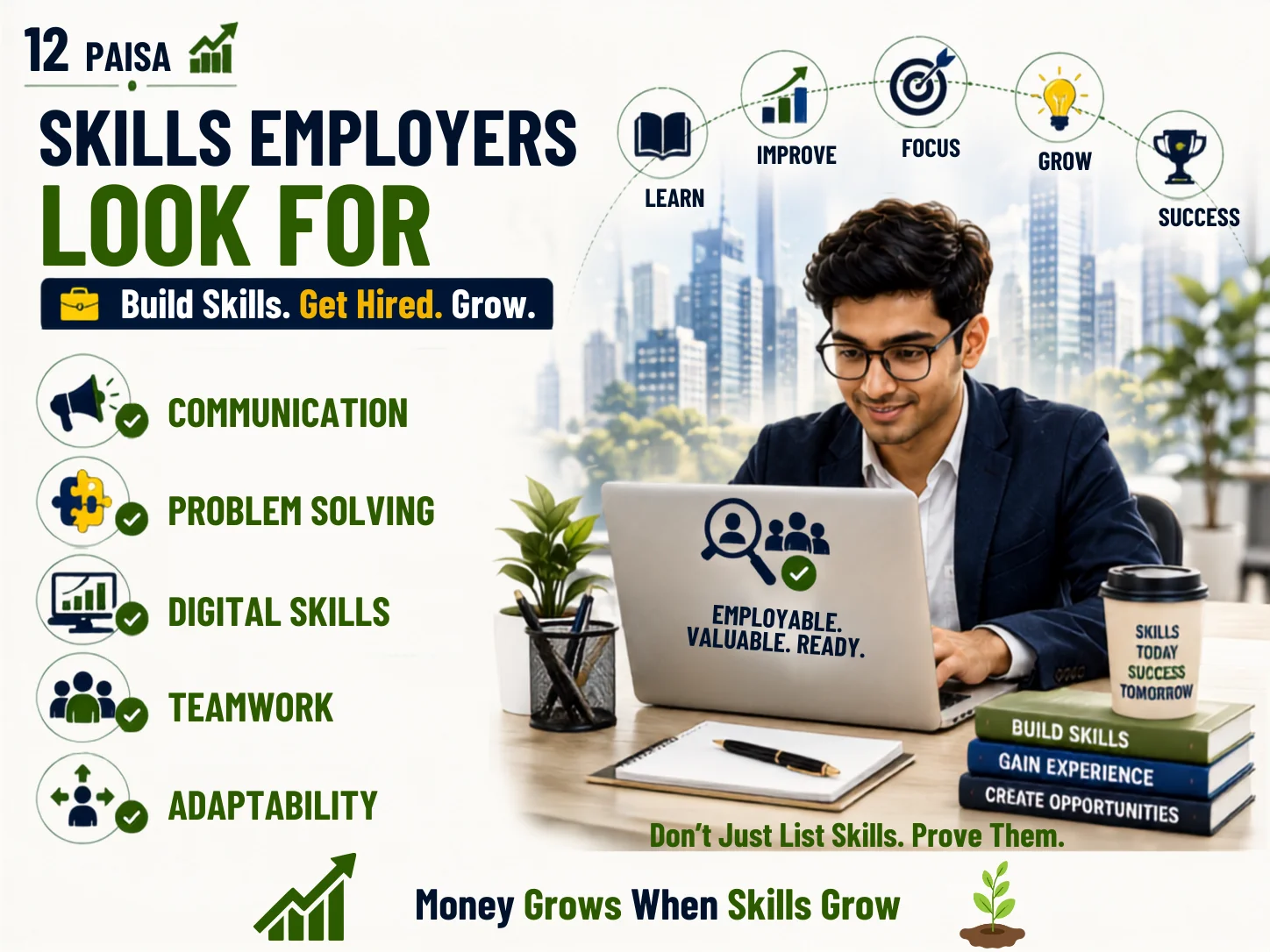
Final Conclusion
आज की Career Journey में Degree important हो सकती है।
लेकिन Degree अकेली पूरी story नहीं बताती।
Employer यह भी जानना चाहता है:
आप क्या कर सकते हैं?
और उससे भी important:
आपने पहले क्या करके दिखाया है?
यहीं Skills की importance सामने आती है।
Communication आपको ideas explain करने में मदद कर सकती है।
Problem Solving आपको real challenges handle करने में मदद कर सकती है।
Teamwork आपको दूसरों के साथ value create करने में मदद कर सकता है।
Digital Skills आपको modern workplace में comfortable बना सकती हैं।
Adaptability आपको change के साथ आगे बढ़ने में मदद कर सकती है।
Critical Thinking आपको information और decisions को evaluate करने में मदद कर सकती है।
Leadership आपको responsibility और initiative लेने के लिए तैयार कर सकती है।
और Continuous Learning इन सभी capabilities को समय के साथ update रखने में मदद कर सकती है।
लेकिन सबसे important lesson यह है:
Skills को केवल लिखिए मत। उन्हें साबित कीजिए।
एक Certificate कह सकता है:
“I completed a course.”
एक Project कह सकता है:
“I applied what I learned.”
एक Result कह सकता है:
“I created value.”
और यही progression Career Growth के लिए ज्यादा meaningful हो सकती है:
Learn → Apply → Prove → Improve
अगर आप Student हैं:
आज से Projects बनाइए।
अगर आप Fresher हैं:
अपने existing work को evidence में बदलिए।
अगर आप Job Seeker हैं:
Resume में claims के साथ examples जोड़िए।
अगर आप Working Professional हैं:
अपनी existing expertise में relevant Skills जोड़ते रहिए।
और हर learning cycle में एक simple rule follow कर सकते हैं:
Learn One → Build One → Prove One.
क्योंकि Career में सबसे valuable asset केवल आपकी Degree नहीं हो सकती।
सिर्फ आपका Job Title भी नहीं।
आपकी सबसे valuable long-term asset हो सकती है:
आपकी Ability to Create Value.
और Value create करने की ability:
Knowledge
Skills
Experience
Continuous Learning
से लगातार develop की जा सकती है।
यही Career Growth को Income Growth से जोड़ती है:
Better Skills
↓
More Value
↓
Better Opportunities
↓
Career Growth
↓
Income Growth
और आगे:
Income
↓
Saving
↓
Investing
↓
Financial Growth
इसलिए 12Paisa का message केवल:
“Money बचाइए।” नहीं है।
Message इससे बड़ा है:
अपने Skills को grow कीजिए।
क्योंकि:
Money Grows When Skills Grow.
Frequently Asked Questions (FAQs)
1. What skills do employers look for?
Employers role के अनुसार अलग-अलग Skills देख सकते हैं, लेकिन Communication, Problem Solving, Adaptability, Teamwork, Digital Skills, Leadership, Critical Thinking और Continuous Learning जैसी capabilities broadly useful हो सकती हैं।
2. Are skills more important than degrees?
Degree कई professions में important हो सकती है। लेकिन Degree के साथ practical Skills और experience जोड़ना stronger professional profile बनाने में मदद कर सकता है।
3. How can students develop employable skills?
Students Projects, Presentations, Group Activities, Internships, Personal Projects और Practical Learning के जरिए Skills develop और demonstrate कर सकते हैं।
4. How can I prove my skills without work experience?
Projects, internships, volunteer work, college activities और personal projects को evidence के रूप में use किया जा सकता है।
5. Are certificates enough to get a job?
Certificate learning का evidence हो सकता है, लेकिन practical application, Projects, Experience और Results आपकी capability को ज्यादा clearly demonstrate कर सकते हैं।
6. What is the most important skill employers want?
कोई एक universal “most important” Skill नहीं है। Role के अनुसार priorities बदलती हैं। Communication और Problem Solving जैसी transferable capabilities कई careers में useful हो सकती हैं।
7. How can I improve my employability?
एक practical path:
Identify Skill Gap → Learn → Practice → Build Project → Demonstrate → Improve
8. Should working professionals keep learning?
हाँ। Continuous Learning changing technologies, processes और career expectations के साथ adapt करने में मदद कर सकती है।
9. What is a Skill Stack?
एक Core Skill के साथ कुछ complementary Supporting Skills का combination Skill Stack कहलाता है।
उदाहरण:
Marketing + Communication + Analytics + AI Awareness
10. What is the 12Paisa Skill Rule?
Learn One → Build One → Prove One.
एक relevant Skill सीखिए, उससे practical work बनाइए और फिर उसे evidence के साथ demonstrate कीजिए।